Rising fuel prices, patchy availability and increasing pressure on operating margins have pushed many van and truck operators to look again at on-site fuel storage, often referred to as fuel bunkering. Long a familiar sight in larger haulage yards, bulk fuel tanks are no longer just the preserve of big fleets.
At its simplest, bunkering fuel means storing diesel or an alternative fuel on your own premises and refuelling vehicles in-house, rather than relying on public forecourts. Done correctly, it can offer greater control over fuel supply, reduce downtime and, in some cases, cut costs. Done badly, it can expose a business to serious financial, legal and environmental risk.
So is bunkering fuel right for your operation, and could it actually save you money?
Fuel bunkering involves installing an on-site storage tank, pump and associated equipment so vehicles can be refuelled at base. For operators running multiple vehicles from a single depot, the appeal is obvious.
Buying fuel in bulk can unlock lower per-litre prices, especially when suppliers are offering short-term discounts. It also removes the need for drivers to queue at forecourts, saving time and improving productivity. During periods of fuel disruption, having your own supply can provide valuable resilience and a degree of self-sufficiency.
For some fleets, bunkering also improves oversight. Fuel management systems can track exactly how much fuel is dispensed, when and to which vehicle, helping to identify inefficiencies or losses that might otherwise go unnoticed.
Installing a bulk fuel tank is not simply a case of dropping one into the yard and connecting a pump. Fuel storage in the UK is tightly regulated, with rules designed to prevent leaks, fires and environmental damage.
Diesel tanks must meet recognised construction standards depending on whether they are steel or plastic, and they must be bunded. A bund is an outer containment system designed to hold more than the full capacity of the inner tank, ensuring any leak or overflow is captured before it can reach drains or waterways.
Depending on tank size, location and local authority requirements, planning consent may be needed. Larger installations may also require an environmental permit. Tanks, pumps and pipework must be positioned to minimise the risk of impact from vehicles, with barriers or bollards installed where necessary.
Before installation, it is sensible to consult the Environment Agency (or equivalent bodies in Scotland and Northern Ireland), the local fire authority and the Health and Safety Executive to ensure all requirements are met from the outset.
This is usually the headline question, and the answer depends on scale and usage.
Buying fuel in bulk can deliver a saving of a few pence per litre compared with retail prices, particularly for fleets with predictable, high fuel consumption. Over tens or hundreds of thousands of litres a year, that can add up to a meaningful sum.
However, those savings need to be weighed against capital costs, maintenance, inspections and the administrative burden of managing fuel storage. Smaller fleets may find that any price advantage is quickly eroded unless utilisation is high.
There are also indirect savings to consider. Reduced time spent refuelling off-site, fewer detours and improved route planning can all contribute to lower operating costs, even if the headline fuel price saving is modest.
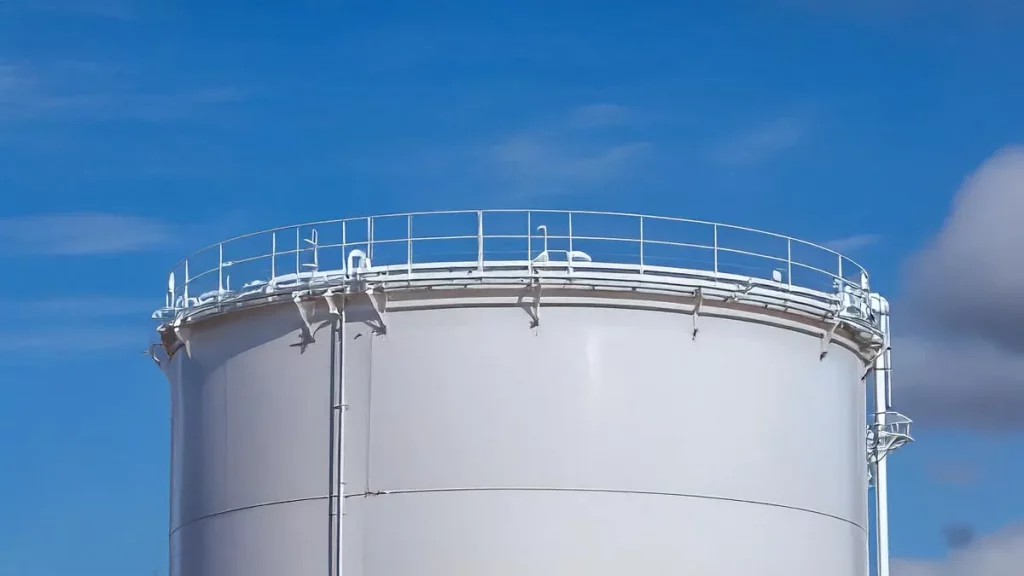
A large above-ground diesel tank, in the region of 60,000 litres, can cost tens of thousands of pounds before installation, groundworks and pumps are factored in. Smaller tanks are cheaper, but still represent a significant upfront investment.
Ongoing costs include regular inspections, maintenance, calibration of pumps, compliance checks and insurance. Fuel management systems, security measures and spill kits all add to the bill, but are essential rather than optional extras.
Operators should also consider the opportunity cost of the space taken up by a tank and refuelling area, particularly where yard space is already tight.
Storing fuel is safe when done properly, but the risks are real. A significant diesel leak can contaminate land and waterways, triggering expensive clean-up operations and potential prosecution. Responsibility sits squarely with the operator.
That is why bunding, overfill protection, leak detection and regular inspections are non-negotiable. Tanks should be checked routinely for signs of damage, corrosion or water ingress, and clear procedures must be in place to deal with spills.
Security is another consideration. Fuel theft is a persistent problem, and tanks should be protected with locks, alarms, lighting and, where appropriate, CCTV.
Fuel storage brings additional obligations under health and safety legislation. Risk assessments are required, covering hazards such as fire, explosion, spills and manual handling.
Staff must be trained in safe refuelling procedures, emergency response and the use of spill kits. Records of inspections, maintenance and incidents should be kept and reviewed.
Clear signage, emergency contact information and restricted access to pumps all help reduce risk. Even with diesel, which is less volatile than petrol, complacency can be costly.

The 110% bunding rule is a core requirement for on-site fuel storage in the UK. It states that any bulk fuel tank must sit within a containment system capable of holding at least 110% of the tank’s maximum capacity.
In practical terms, a 10,000-litre tank must be installed within a bund that can contain a minimum of 11,000 litres. This extra capacity allows for both the fuel itself and any rainwater that may collect inside the bunded area.
The purpose of the rule is simple: if the primary tank leaks, splits or is overfilled, the fuel must be fully contained on site. Without compliant bunding, escaping fuel can quickly contaminate drains, soil and nearby watercourses, leaving the operator liable for clean-up costs and enforcement action.
Secondary containment provides a second line of defence if the main fuel tank fails. It is designed to prevent fuel escaping into the environment and is a legal requirement for most commercial fuel storage installations.
The most common form of secondary containment is a bunded tank, where an outer shell completely surrounds the inner tank. If fuel leaks from the inner tank, it is safely captured within the outer bund rather than spilling onto the ground.
Secondary containment is not optional. Even relatively small fuel spills can trigger serious environmental damage, and businesses are held responsible regardless of whether the leak was accidental.
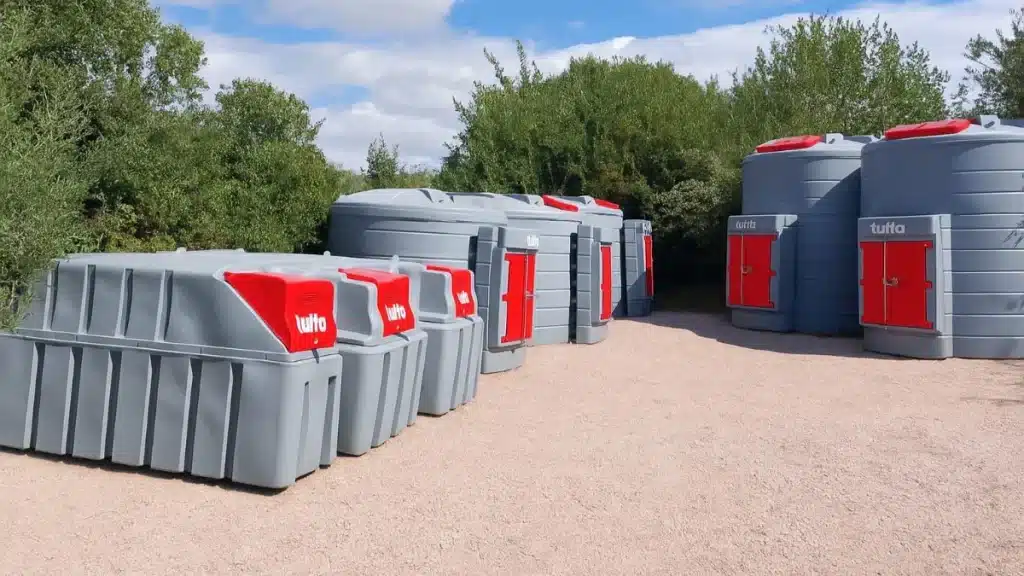
A bunded fuel tank is a tank with built-in secondary containment. Also known as an integrally bunded or double-skinned tank, it combines the storage vessel and the bund into a single unit.
Modern bunded tanks are factory-built, tested and designed to meet current environmental standards. For most operators, they are the simplest and safest way to comply with fuel storage regulations, particularly when installing a new system.
Older single-skin tanks can sometimes be retained by adding a separate bund wall or tray, but this approach increases complexity and ongoing maintenance requirements.
Yes. Bunding only works if it is properly maintained. Bunded areas should be checked regularly for damage, corrosion, debris and standing water.
Any rainwater that accumulates must be managed carefully, as discharging contaminated water from a bund can be treated as a pollution incident. Visual inspections should be recorded, and any signs of leaks or deterioration addressed immediately.
A damaged or poorly maintained bund offers little protection when it is needed most, which is why routine inspection is as important as the initial installation.
One of the less obvious benefits of bunkering is visibility. Modern fuel management systems can require drivers to authenticate themselves or the vehicle before fuel is dispensed, logging mileage, quantities and timing automatically.
This data can highlight inefficient vehicles, poor driving behaviour or unexplained increases in fuel use. In some cases, it can also deter or uncover internal fuel theft, which is more common than many operators like to admit.
Over time, analysing this information can lead to changes in vehicle choice, maintenance schedules or driver training that deliver savings beyond the fuel tank itself.
Diesel is no longer the only option for on-site refuelling. Some larger fleets are bringing gaseous fuels such as bio-CNG or bio-LNG in-house, particularly where vehicles return to base daily.
These systems differ significantly from diesel storage. They require specialist equipment, additional safety measures and, in many cases, much higher levels of investment. Trailer-based solutions can suit fleets with dozens of vehicles, while permanent installations may only make sense at much larger scale.
Space, power supply and planning constraints often become limiting factors, and for many operators, using public refuelling stations remains the more practical option.
HVO (hydrotreated vegetable oil) is attracting growing interest as a drop-in alternative to diesel, particularly for fleets looking to cut carbon emissions without changing vehicles.
One advantage of HVO is its storage stability. Unlike conventional diesel, which can degrade over time if exposed to water, heat or sunlight, HVO has a much longer shelf life and is less prone to contamination. It can usually be stored in existing diesel tanks, provided the installation meets current regulations.
For operators already bunkering diesel, switching to or blending with HVO can be a relatively straightforward way to reduce emissions without major infrastructure changes.
Fuel bunkering can make sense for fleets with high, predictable fuel use and the space, capital and management capability to run a compliant installation. The savings are rarely dramatic on fuel price alone, but when combined with improved efficiency, resilience and oversight, the business case can stack up.
For smaller operators, or those with limited yard space, the risks and costs may outweigh the benefits. As with most things in fleet management, the key is understanding your own operation, running the numbers carefully and ensuring that compliance and safety are treated as priorities, not afterthoughts.
Done right, bunkering fuel can be a useful tool. Done wrong, it can become an expensive distraction that could cost you a lot of money or even land you in hot water with the Environment Agency.
Published:
Last updated: