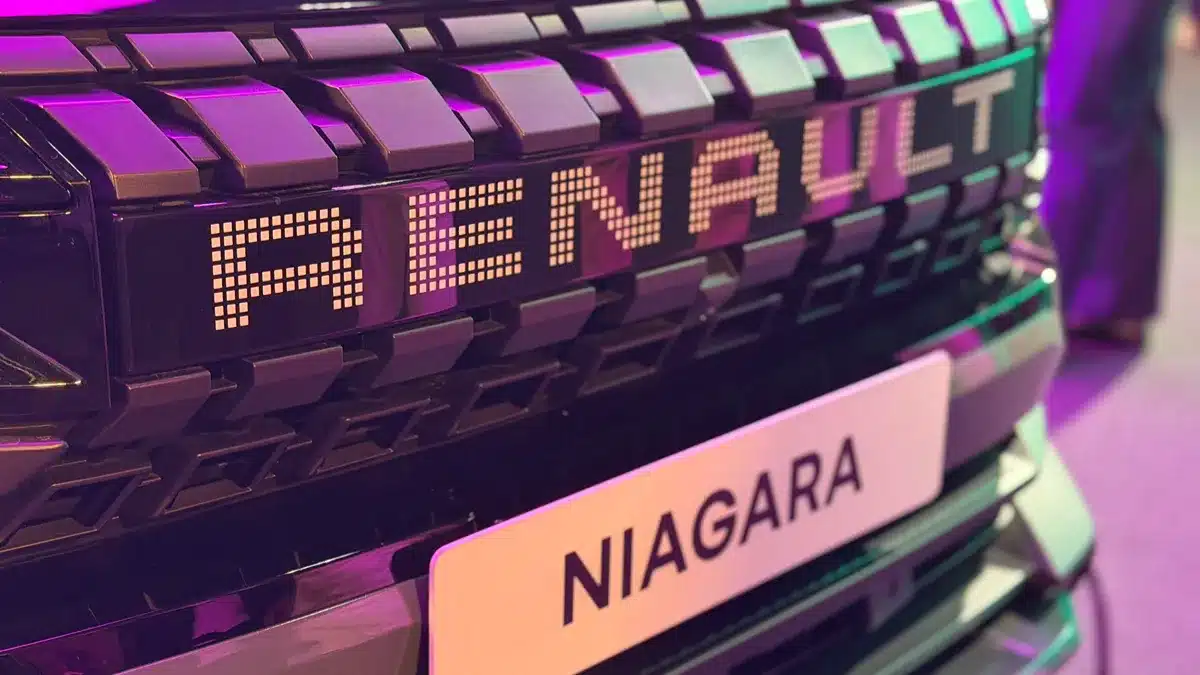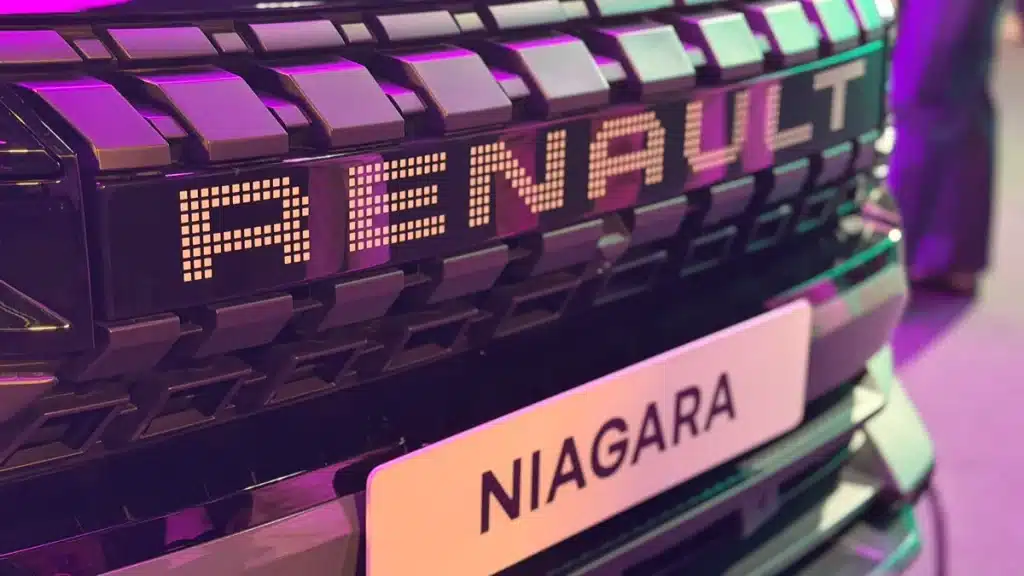
Renault has revealed the new Niagara, a completely new half-tonne pick-up truck.
Available with four-wheel drive and capable of carrying a 654kg payload, it's powered by a petrol engine, with hybrid versions already confirmed for later in its life.
It is also one of the most interesting Renault commercial vehicles of recent time, but there's a catch, you won’t be able to buy it in the UK.
Designed specifically for Latin America and built in Argentina, the Renault Niagara is intended to bridge the increasingly blurred divide between a working pick-up and a family SUV.
That means a 938-litre load bed and 233mm of ground clearance, on top of proper off-road capability and a decent payload. Given it's intended market, it's also available with Flex Fuel engines to allow it to run on biofuels, common in much of South America.
Despite its intended audience, it's no basic thing, though. It has a Google-powered infotainment, a multi-link rear suspension, as many as 26 driver assistance systems and what Renault claims is class-leading passenger space.
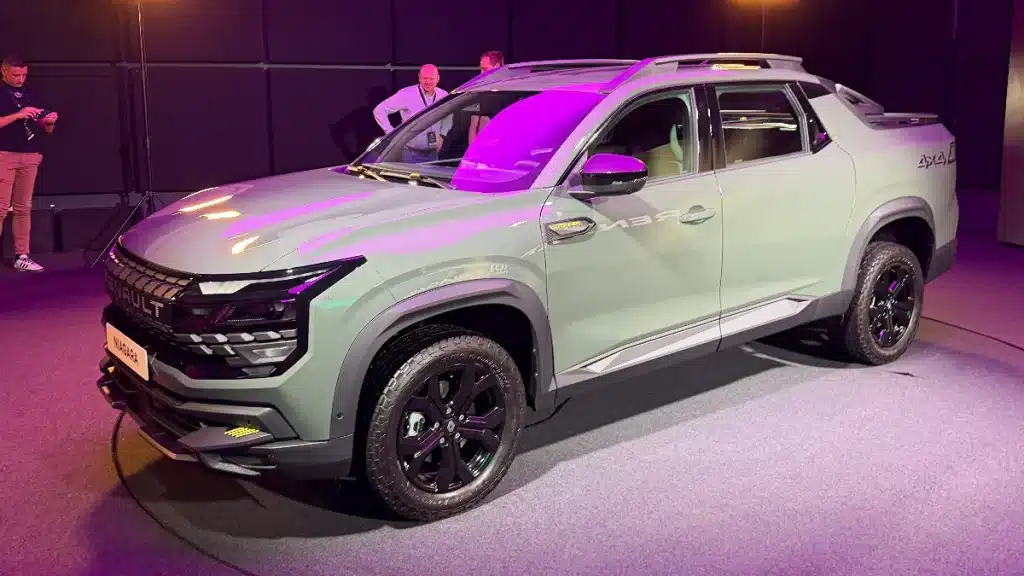
It is a considerably more ambitious vehicle than Renault’s existing Oroch pick-up, with Renault positioning Niagara in the heart of the Latin American half-tonne pick-up market against models including the Fiat Toro, Ram Rampage and Ford Maverick.
The Niagara also has significance well beyond the pick-up itself. It is the first vehicle launched under Renault’s new futuREady international product offensive, which will result in 14 new models for markets outside Europe by 2030.
The Renault Niagara is a five-seat, double-cab half-tonne pick-up developed primarily for buyers in South America.
Although its working capabilities remain important, Renault says the changing way pick-ups are being used in Latin America means Niagara has deliberately been developed to feel much more like a C-segment SUV.
The result is a vehicle intended to be a working tool during the week but capable of becoming a conventional family vehicle at weekends.
That philosophy has influenced almost every part of the Niagara, from its passenger-focused interior and connected technology to its suspension and relatively modest payload compared with the one-tonne pick-ups familiar to UK buyers.
Renault sees Brazil, Argentina and Colombia as Niagara’s three principal markets, with sales later expanding into additional Latin American countries.
No. Renault has explicitly ruled out selling Niagara in Europe.
Speaking to Van Reviewer during the vehicle’s unveiling, Renault executives said the Niagara had been engineered specifically around Latin American regulations and customer requirements.
Renault says that European pick-up customers overwhelmingly buy vehicles in the one-tonne payload category, whereas there is an established market in Latin America for smaller, more passenger-orientated half-tonne models. That means it's not destined for this continent and nor will it likely stretch its legs elsewhere.
Renault has made the same decision about North America. Despite the size of the American pick-up market, Renault said the regulatory requirements and customer expectations in the US and Canada are different again, with larger vehicles, engines and payloads dominating the market. That makes a future European Niagara particularly unlikely.
The Niagara measures 4.94m long in four-wheel-drive form, while the two-wheel-drive version is slightly shorter at 4.91m. It is around 1.83m wide and 1.72m tall, making the Niagara significantly more compact than the current crop of one-tonne double-cab pick-ups sold in Britain, which are generally well over 5.2m long.
Renault has nevertheless deliberately tried to make Niagara look substantial. A tall bonnet, upright front end, pronounced wheelarches and unusually high load-bed sides give it more of the visual presence.
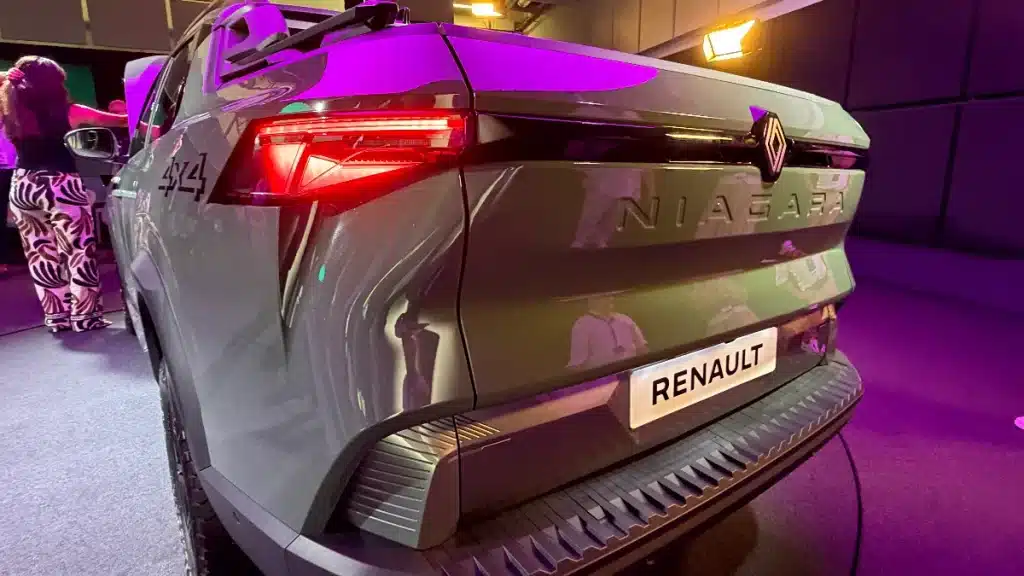
The integrated rear handle in the C-pillar also helps to make the side profile of the Niagara seem longer than it is.
Maximum Renault Niagara payload is 654kg, while its cargo bed has a capacity of 938 litres.
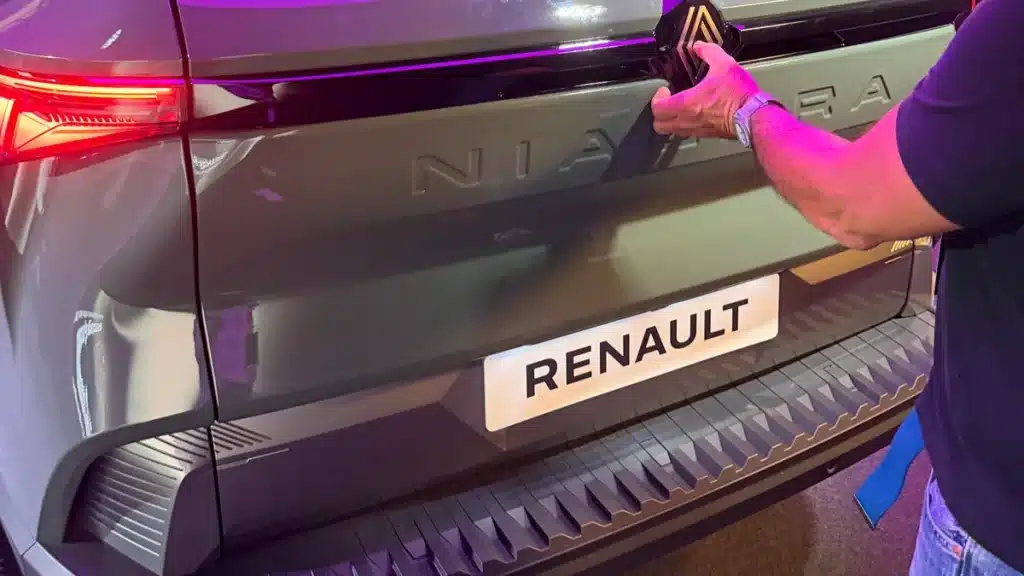
The load area also includes eight lashing points and a 12V power socket for accessories or tools. There's a protective bed coating as standard and Renault has also incorporated a cup holder into the tailgate.
A lockable sliding aluminium roll-top cover is also available, which provides protection from the elements for the load.
The Renault Niagara has a maximum towing capacity of 710kg for a braked trailer, which Renault says is best in class for the sector.
At launch, the Renault Niagara uses a 1.3-litre four-cylinder turbocharged direct-injection petrol engine. Depending on country, it will also be compatible with Flex Fuel.
There are two outputs. The front-wheel-drive Niagara 4x2 produces 156hp, while the four-wheel-drive version has 160hp. Maximum torque is 270Nm.
Two transmissions will be offered, with a conventional six-speed manual gearbox or a six-speed wet dual-clutch EDC automatic.
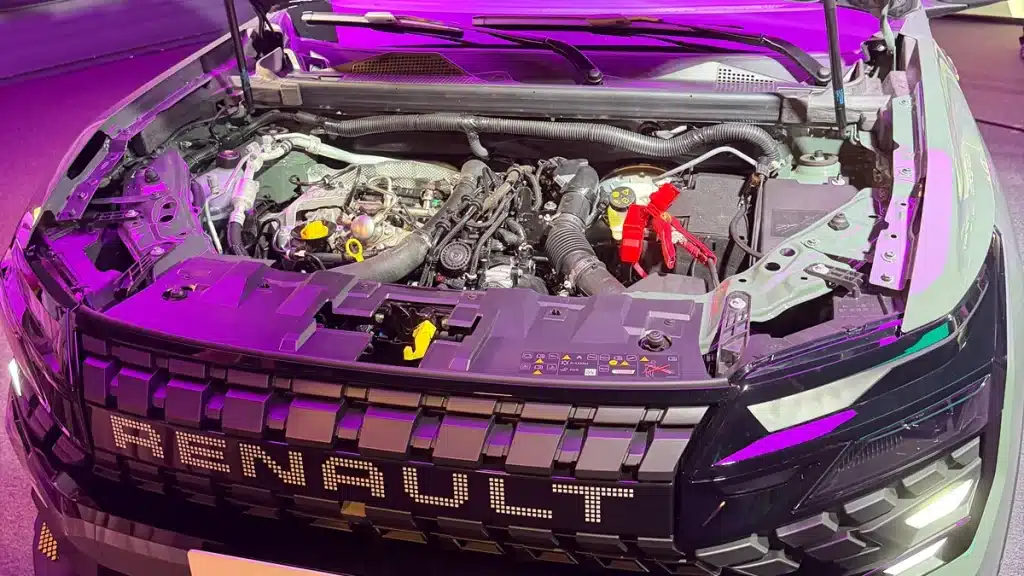
Yes. Renault has confirmed that a hybrid Niagara will follow the initial petrol models but they're not yet revealing exactly how the hybrid system will work. One thing that was made clear, however, is that it will not initially be a plug-in hybrid.
Renault executives said the priority for this market remains range and the ability to operate in remote areas where charging infrastructure cannot be assumed.
The first Niagara therefore launches with conventional internal-combustion power and mechanical four-wheel drive, before hybridisation is added later.

The initial Niagara 4x4 has a mechanically driven rear axle using an electronically controlled multi-plate clutch.
During normal road driving the Niagara operates in front-wheel drive. When the system detects that additional traction is required, torque can automatically be transferred to the rear wheels. In the most demanding conditions it can split torque 50:50 between the front and rear axles.
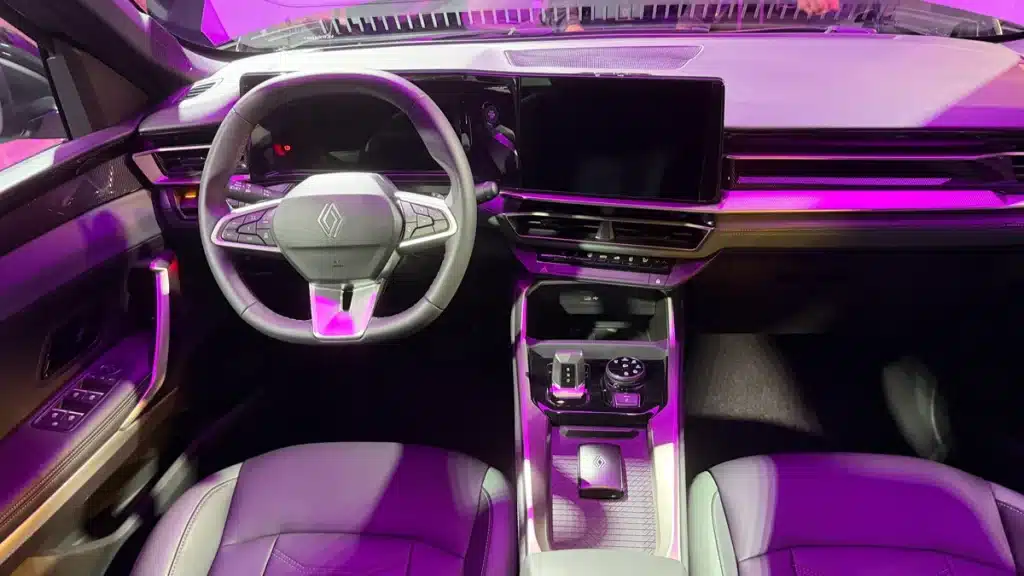
There's also a rotary controller in the centre console, with driving modes and control of the four-wheel-drive system.
The four-wheel-drive Niagara has 233mm of ground clearance. Two-wheel-drive versions have 223mm.
Renault quotes an approach angle of 22.1 degrees for the 4x4 and 22.3 degrees for the 4x2.
No. Rather than using the separate ladder-frame chassis construction common to traditional working pick-ups, Niagara is based on Renault Group’s new RGMP pick-up architecture.
Renault says components including the suspension geometry and rear axle arrangement have been developed specifically around South American requirements rather than adapted wholesale from one of its European products.
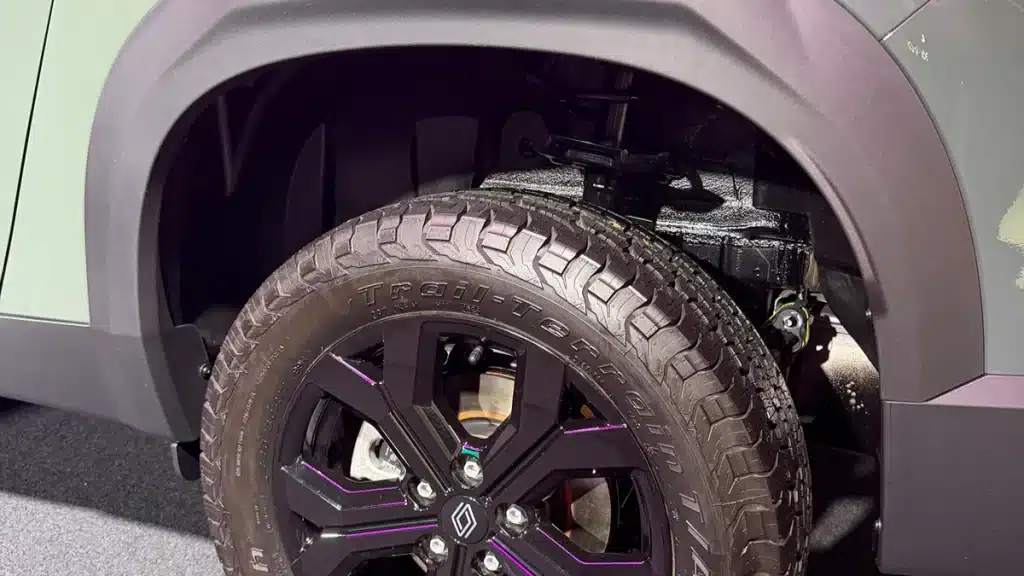
One of Niagara’s more interesting engineering choices is its multi-link independent rear suspension.
Traditional working pick-ups frequently use a live rear axle and leaf springs because of their load-carrying ability and durability. Renault instead wanted to prioritise ride quality without sacrificing Niagara’s 654kg payload capability.
Renault says the specially tuned suspension, springs, dampers and geometry reduce the natural frequency of body movement by 30%, with the intention of reducing vibration and improving stability over poor surfaces.
The SUV influence becomes even more obvious inside. Rather than giving Niagara an overtly commercial cabin, Renault has concentrated heavily on perceived quality, passenger space and technology.
The central infotainment touchscreen measures 10.1 inches, while the digital driver’s display is 10.2 inches. Depending on trim, the dashboard and door sections are upholstered, with contrast stitching and metallic or gloss trim. There is also ambient interior lighting with up to 48 colours.
We also spotted subtle details during our walkaround of the truck, with small Renault emblems visible on the inside of the sports hoop, and the diamond emblem visible throughout in the various plastic trims.
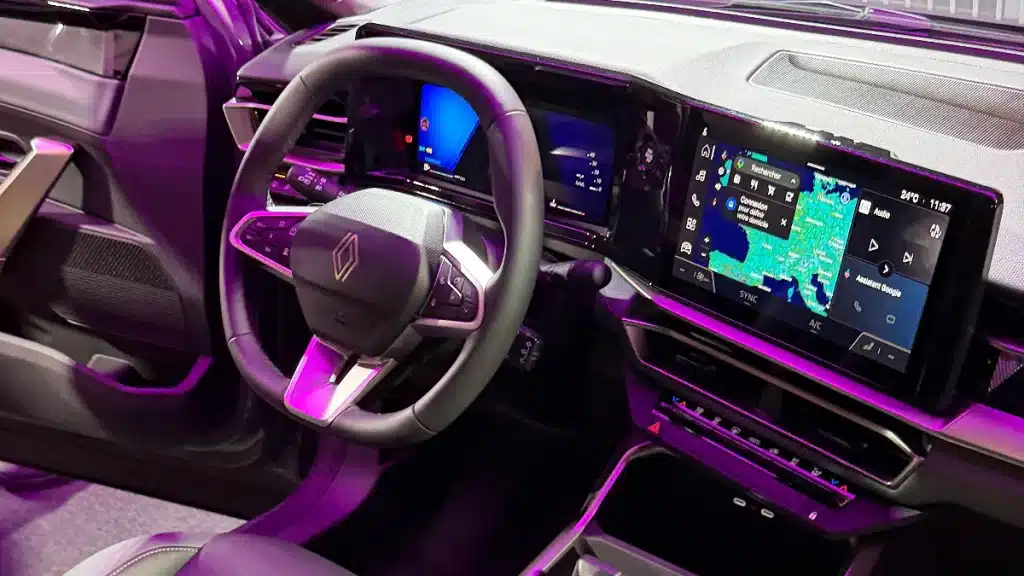
Renault claims 200mm of rear knee room, which it says is best in class, while the rear seatback is angled at 25 degrees to give passengers a more natural and comfortable seating position.
There is also a particularly useful 36-litre concealed storage compartment behind the rear bench, which gives the loadspace it's curious looking staggered shape.
Yes. The Niagara uses Renault’s OpenR Link infotainment system with Google built-in, giving it integrated Google Maps, Google Play and voice-control functionality.
More unusually for the segment, the system will incorporate Google Gemini. Rather than relying solely on fixed voice commands, the Google AI system is designed to allow occupants to speak more conversationally, ask more complicated questions and switch languages during a conversation.
Renault says Niagara will be available with as many as 26 driver assistance systems.
The list includes adaptive cruise control with Stop & Go, lane departure warning, lane keeping assistance, traffic sign recognition, driver attention monitoring, blind-spot warning and automatic emergency braking.
It can also have front, rear and side parking assistance, a 360-degree camera, rear cross-traffic alert and reverse automatic emergency braking.
Niagara will be produced at Renault’s Santa Isabel factory in Córdoba, Argentina.
The project was led from Latin America, with the Niagara being designed at Renault’s Brazilian design centre and developed jointly by engineering teams in Brazil and Argentina, before being assmebled at Santa Isabel.
Renault says prototypes covered almost 800,000km during development, with testing taking place in Argentina, Brazil and Colombia as well as at Renault’s European development facilities.
Not exactly. Renault is keen to distinguish Niagara from the smaller Oroch rather than describe it as a straightforward successor.
Oroch helped establish Renault in the Latin American half-tonne pick-up market and more than 250,000 have been sold since its launch in 2016, according to Renault.
But Niagara moves substantially further up the market. It uses an entirely new platform, is larger, introduces four-wheel drive and automatic transmission, and offers considerably more technology. The Oroch will, however, be removed from sale once the Niagara is launched.
Renault believe the Niagara willl be a rival to other compact pick-ups like the Fiat Toro, Ram Rampage and Ford Maverick. None of which are available in Europe, confirming that this is not Renault’s answer to a Ford Ranger or Toyota Hilux.
Renault says Niagara will begin reaching Latin American markets in early 2027.
Argentina and Brazil will be the initial markets, with Brazil regarded by Renault as offering the biggest volume opportunity. Colombia is another key market and further Latin American countries will follow.
Niagara is the first vehicle in Renault’s latest international product offensive, futuREady, which includes plans for 14 new models for international markets by 2030.
The aim is for half of Renault brand sales to be generated outside Europe. It also wants electrified models (hybrids and BEVs) to account for 50% of its sales mix in those international markets.
No. Not yet. Renault previously sold the Alaskan in Europe, a close relative of the Nissan Navara which enjoyed limited success.
When asked whether the Renault could return to that market, Renault brand CEO Fabrice Cambolive indicated that if it were to happen a pick-up truck would likely be through a partnership rather than with an entirely self-developed vehicle.

Because Niagara gives a useful preview of how Renault is thinking about its next generation of commercial vehicles.
A new Master has already arrived, the completely new Trafic E-Tech Electric is imminent and Renault says further developments for Kangoo and Trafic are also coming.
Renault management has gone as far as describing 2027 as “the year of the LCV” for the company and the Niagara is an important part of its global offering and growth strategy.