The UK new van market recorded its seventh consecutive month of growth in October 2026, with registrations increasing by 11.4%. Electric van sales climbed by 58%, although manufacturers remain well behind government targets, while the Ford Transit Custom continued to dominate the best-selling vans chart.
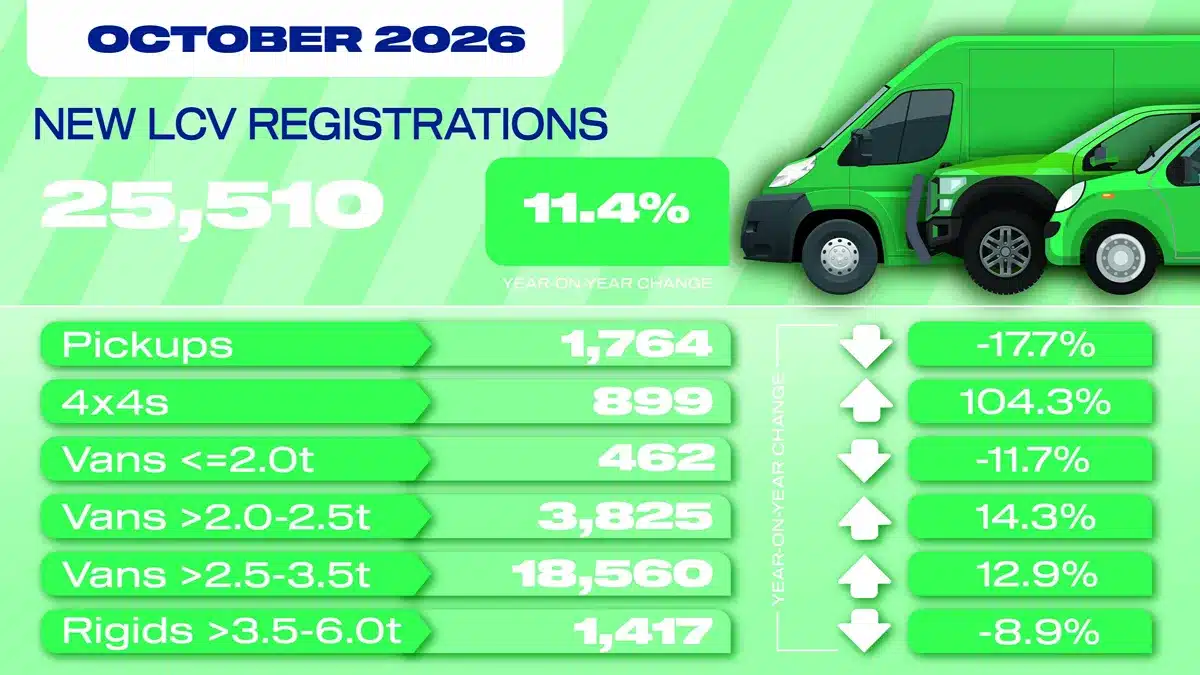
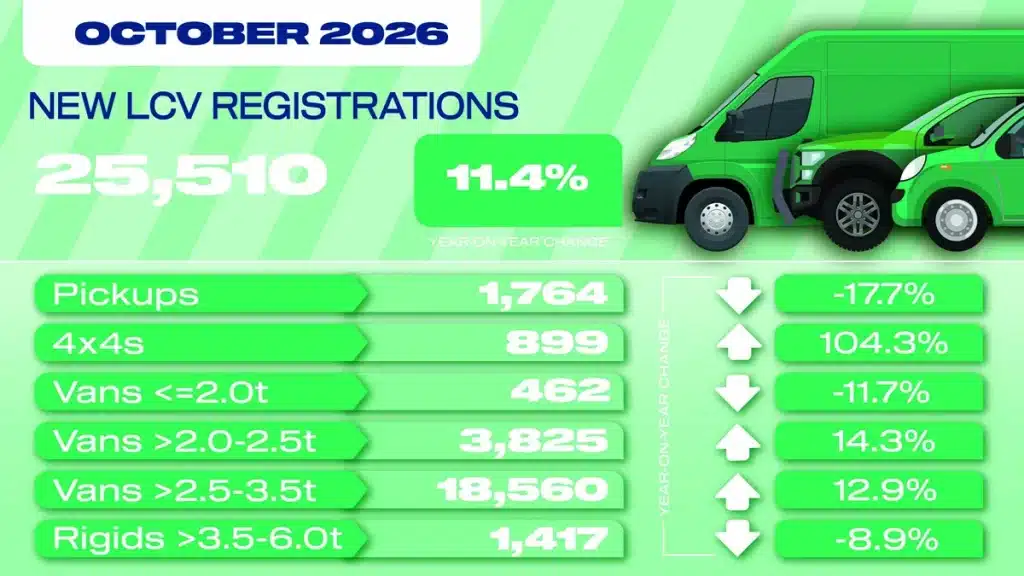
The UK light commercial vehicle market continued its recovery in October, with 25,510 new vans, pick-ups and 4x4s registered, according to the latest figures from the Society of Motor Manufacturers and Traders (SMMT).
Registrations increased by 11.4% compared with October 2025, marking the seventh consecutive month of growth. The improvement takes the year-to-date total to 276,885 vehicles, an increase of 4.8% compared with the same period last year.
Growth was largely driven by demand for larger vans, while the pick-up market continued to struggle following changes to the tax treatment of double-cab models.
Electric van registrations also delivered their strongest October on record, although the industry has warned that the transition to zero-emission vehicles remains significantly behind the government’s mandated targets.
Large vans weighing between 2.5 and 3.5 tonnes continued to account for the overwhelming majority of new registrations.
A total of 18,560 large vans were registered during October, an increase of 12.9% compared with the 16,442 recorded in the same month last year.
This gave the category a 72.8% share of the overall light commercial vehicle market.
Medium-sized vans, weighing between 2.0 and 2.5 tonnes, also performed strongly, with registrations increasing by 14.3% to 3,825 units.
However, the smallest vans continued to lose ground. Registrations of vehicles weighing up to 2.0 tonnes declined by 11.7% to just 462 units.
The figures underline the growing importance of larger vehicles within the UK market, with operators continuing to favour vans offering greater payload and load capacity.
The trend is even more pronounced across the year as a whole.
Large vans have accounted for 199,761 registrations so far in 2026, an increase of 13.9% and approximately 72.2% of the total market.
Medium vans have increased by 5.5% to 45,833 registrations, while small vans have fallen by 19.3% to 6,234 units.
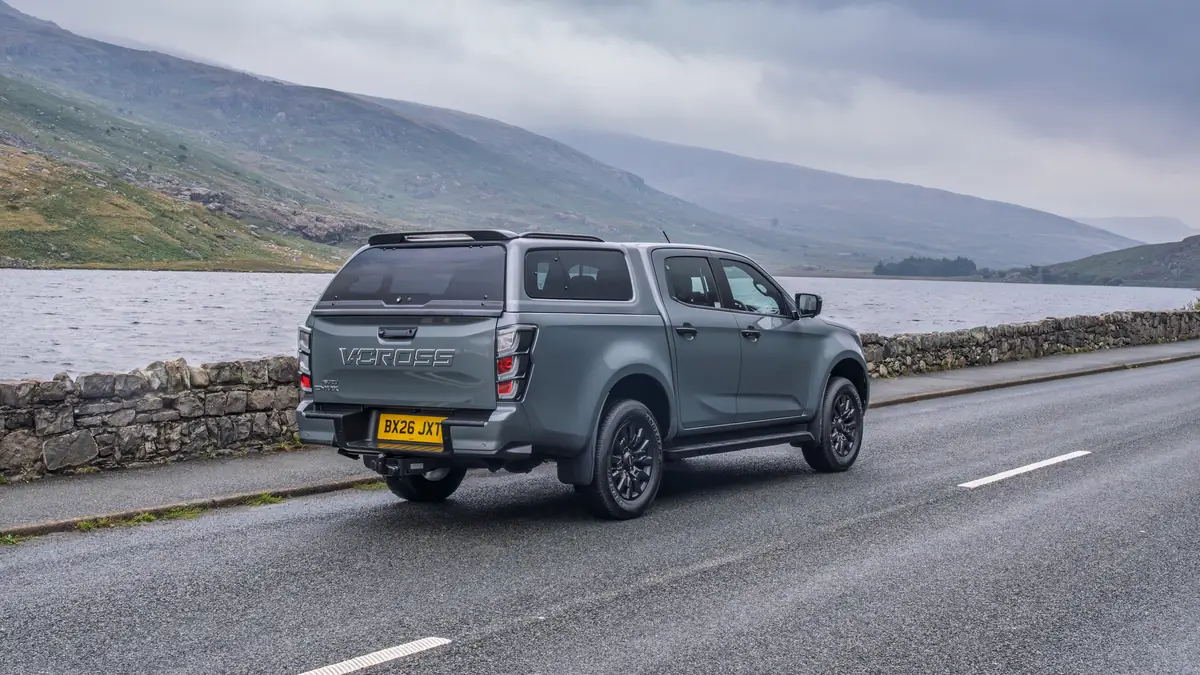
The UK pick-up market remains one of the weakest-performing segments of the commercial vehicle industry.
October registrations declined by 17.7% to 1,764 units, compared with 2,143 during the same month in 2025.
However, the year-to-date figures reveal the true extent of the downturn.
Just 14,936 pick-ups have been registered during the first ten months of 2026, compared with 31,731 during the equivalent period last year.
That represents a decline of 52.9%, with the market losing more than half its previous volume.
The downturn follows changes to the taxation of double-cab pick-ups, which are now generally treated as cars for benefit-in-kind and capital allowance purposes.
These changes have significantly reduced the financial advantages previously associated with operating double-cab pick-ups as company vehicles.
By contrast, the separate 4x4 category recorded substantial growth.
Registrations more than doubled in October, increasing by 104.3% to 899 units. Year-to-date registrations have climbed by 70.4% to 10,121 vehicles.
Nevertheless, the increase in 4x4 registrations has been insufficient to offset the much larger decline in the pick-up market.
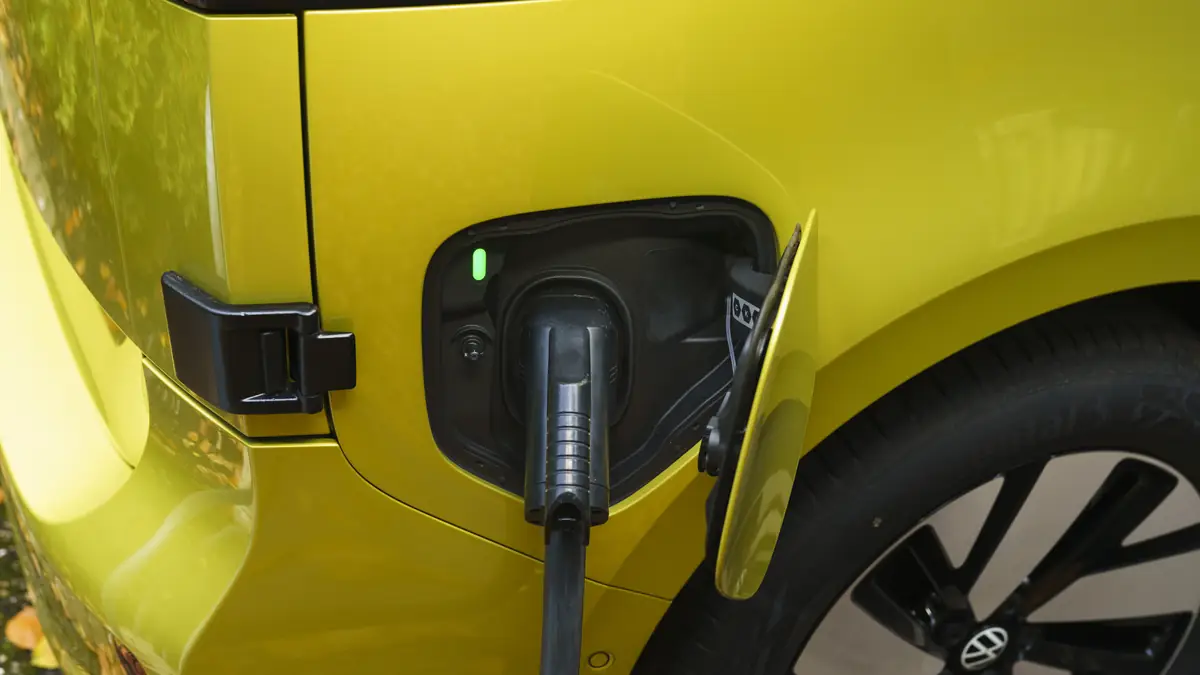
Battery-electric vans delivered one of the strongest performances of the month, with registrations increasing by 58% to 3,369 units.
This compares with 2,132 registrations in October 2025 and represents the strongest October on record for electric van uptake.
Electric vehicles accounted for 12.9% of the market during the month, compared with 9.2% a year earlier.
Diesel registrations also increased, rising by 7.3% to 20,735 units, although diesel’s market share declined from 83.7% to 79.5%.
Other powertrains, including petrol and hybrid vehicles, accounted for 1,994 registrations, an increase of 22.8%.
| Powertrain | Registrations | Change | Market share |
|---|---|---|---|
| Battery electric | 3,369 | +58.0% | 12.9% |
| Diesel | 20,735 | +7.3% | 79.5% |
| Other | 1,994 | +22.8% | 7.6% |
| Total | 26,098 | +13.1% | 100% |
Source: SMMT. Powertrain figures include battery-electric vehicles up to 4.25 tonnes and therefore cover a wider vehicle weight range than the headline LCV registration figures.
Despite the improvement in electric van registrations, diesel continues to dominate the market.
Across the first ten months of 2026, diesel registrations reached 230,151 units, accounting for 82.1% of the market covered by the powertrain figures.
Electric van registrations increased by 26.7% to 30,728 units, giving battery-electric models an 11% year-to-date share.
Other powertrains accounted for 19,527 registrations, equivalent to 7% of the market.
The figures demonstrate that electric van demand is increasing considerably faster than the overall market, but diesel remains the preferred choice for the vast majority of buyers.
Despite October’s strong performance, the SMMT has warned that electric van registrations remain well below the levels required under the government’s Zero Emission Vehicle (ZEV) Mandate.
The mandate sets a 24% target for zero-emission van sales in 2026, rising to 34% in 2027 and 46% in 2028.
However, the SMMT’s latest industry forecast expects electric vans weighing up to 3.5 tonnes to achieve a market share of just 10.4% across 2026.
That would leave the market 13.6 percentage points below the headline mandate target.
The outlook for subsequent years is similarly challenging.
Electric vans are forecast to achieve a 14.9% share in 2027 and 18.8% in 2028, both less than half the respective annual mandate targets.
Manufacturers have introduced more than 40 zero-emission van models, while government incentives, including the Plug-in Van Grant and Depot Charging Scheme, have helped support demand.
Nevertheless, the SMMT says manufacturers have also been forced to offer substantial discounts to stimulate electric van sales and reduce their exposure to mandate compliance costs.
The organisation is calling for an urgent review of the mandate, alongside longer-term purchase incentives, improved public charging infrastructure and faster grid connections for depot charging installations.
Mike Hawes, SMMT Chief Executive, said: “Seven months of new van market growth reflects a slight recovery in buyer confidence after 2025, but the fragility of this confidence makes the EV transition particularly tough to deliver.
“While electric van uptake is accelerating rapidly, demand remains far behind the optimistic and unrealistic expectations of the mandate. Government’s review must provide clear and meaningful trajectory change before the year ends, not marginal tinkering, to avoid damaging the market, and the businesses and economic growth which depend on this sector.”
The Ford Transit Custom maintained its position as the UK’s best-selling light commercial vehicle in October, recording 2,963 registrations.
It finished comfortably ahead of the Mercedes-Benz Sprinter, which secured second place with 2,020 registrations.
The larger Ford Transit took third position with 1,863 units, followed by the Volkswagen Transporter with 1,449 registrations.
The Volkswagen Crafter completed the top five with 1,144 registrations, narrowly ahead of the Peugeot Partner on 1,134 units.
Renault’s Trafic occupied seventh place with 1,034 registrations, while the Vauxhall Vivaro followed with 995.
The Ford Ranger was the only conventional pick-up to appear in the monthly top ten, taking ninth place with 794 registrations despite the wider decline in pick-up demand.
The Renault Master completed the ranking with 727 registrations.
| Position | Model | Registrations |
|---|---|---|
| 1 | Ford Transit Custom | 2,963 |
| 2 | Mercedes-Benz Sprinter | 2,020 |
| 3 | Ford Transit | 1,863 |
| 4 | Volkswagen Transporter | 1,449 |
| 5 | Volkswagen Crafter | 1,144 |
| 6 | Peugeot Partner | 1,134 |
| 7 | Renault Trafic | 1,034 |
| 8 | Vauxhall Vivaro | 995 |
| 9 | Ford Ranger | 794 |
| 10 | Renault Master | 727 |
Ford’s dominance becomes even clearer when looking at year-to-date registrations.
The Transit Custom has accumulated 42,326 registrations during the first ten months of 2026, more than twice the total achieved by the second-placed Ford Transit.
The larger Transit has recorded 19,858 registrations, followed by the Mercedes-Benz Sprinter with 16,317 units.
The Volkswagen Transporter occupies fourth place with 14,919 registrations, while the Peugeot Partner completes the top five with 13,365.
The Renault Trafic, Vauxhall Vivaro, Ford Ranger, Volkswagen Crafter and Land Rover Defender complete the year-to-date top ten.
| Position | Model | Registrations |
|---|---|---|
| 1 | Ford Transit Custom | 42,326 |
| 2 | Ford Transit | 19,858 |
| 3 | Mercedes-Benz Sprinter | 16,317 |
| 4 | Volkswagen Transporter | 14,919 |
| 5 | Peugeot Partner | 13,365 |
| 6 | Renault Trafic | 12,766 |
| 7 | Vauxhall Vivaro | 12,186 |
| 8 | Ford Ranger | 7,747 |
| 9 | Volkswagen Crafter | 7,650 |
| 10 | Land Rover Defender | 7,598 |
The Transit Custom’s lead is particularly significant. Its 42,326 registrations represent approximately 15.3% of all light commercial vehicles registered so far this year.
Combined, the Transit Custom and larger Transit have achieved 62,184 registrations, equivalent to approximately 22.5% of the entire market.
October’s rankings also demonstrate the strength of Ford’s competitors in the large van sector.
The Mercedes-Benz Sprinter, Volkswagen Crafter and Renault Master all appeared in the monthly top ten, while the Volkswagen Transporter, Renault Trafic and Vauxhall Vivaro maintained strong positions in the medium van market.
The Peugeot Partner’s sixth-place finish is also notable given the continued decline in registrations of smaller vehicles.
The SMMT expects the overall new light commercial vehicle market to increase by 4.2% in 2026, reaching approximately 329,000 registrations.
Although the latest figures suggest that buyer confidence is recovering, the market continues to face significant challenges.
Large vans remain the principal source of growth, while the pick-up market has been severely affected by taxation changes and the smallest van categories continue to contract.
Electric van registrations are accelerating, but the gap between actual demand and government targets remains substantial.
With the industry forecasting that this gap will widen further in 2027 and 2028, the outcome of the government’s ZEV Mandate review could prove critical to the direction of the UK van market over the next few years.