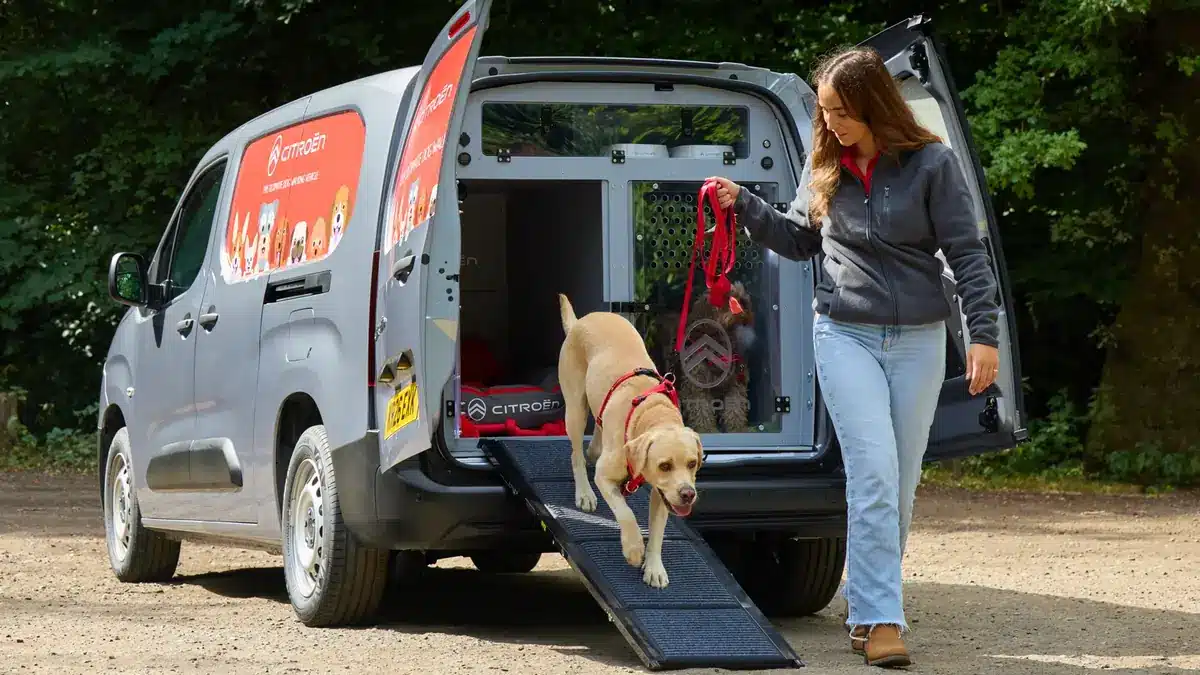
Citroën has revealed a specially adapted Berlingo van for professional dog walkers, with climate-controlled dog compartments, cameras and washing facilities designed around canine welfare.
The Pawlingo concept was developed with animal welfare charity Blue Cross and uses the small van’s load area to accommodate two dogs in separate travel spaces.
The conversion is intended to show how an everyday commercial vehicle could be adapted for businesses that spend much of their working day transporting animals.
Citroën has not announced plans to put Pawlingo into series production, so it remains a demonstration of what a specialist conversion might offer rather than a model customers can order.
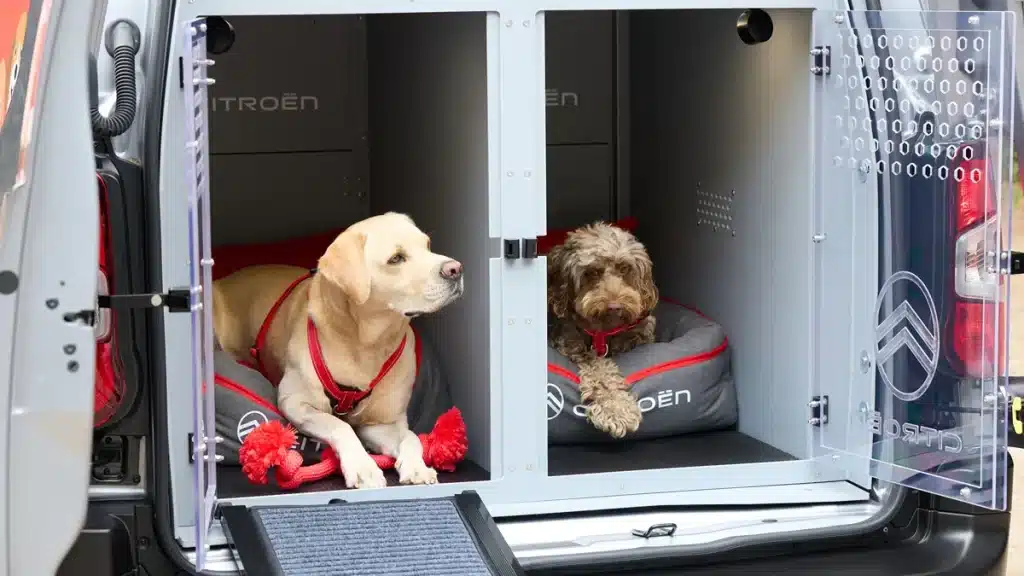
At the rear are two individual compartments fitted with dog beds inspired by Citroën’s Advanced Comfort seating technology. Transparent doors allow the occupants to be seen, while cameras provide additional monitoring. Citroën says the air-conditioning system can be set between 15°C and 22°C, with the intention of helping dogs remain comfortable during journeys.
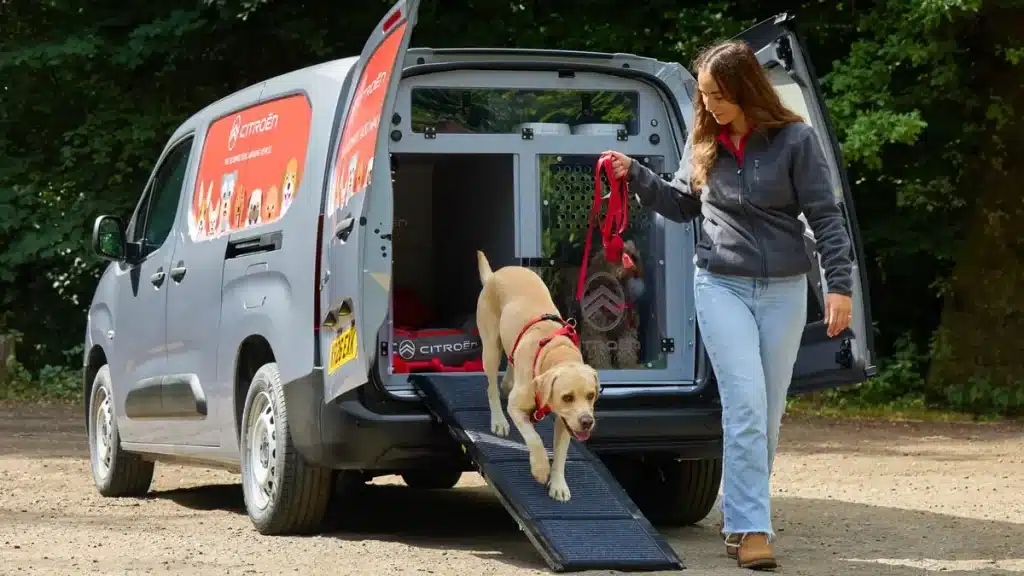
Practical equipment includes a built-in shower for cleaning muddy paws after walks and drying robes for wet dogs. A separate dry area holds harnesses, leads, waste disposal equipment and treats. A rear access ramp provides a route into and out of the accommodation, as shown in Citroën’s photographs of the concept.
Blue Cross advised on the layout and welfare considerations. The charity highlighted the importance of resting space, appropriate temperatures and monitoring when animals are being transported for work.
Citroën commissioned research involving 2,000 UK dog owners. Of those questioned, 56% said they worried about their dog’s comfort when travelling, while 47% identified a comfortable resting place as the most important improvement. Keeping cool was the next most popular answer, selected by 21%.
The research found that 31% had used a professional dog walker, rising to 57.4% among London respondents. Of those who had used a dog walker, 90% considered welfare during transport important, but only 53% felt confident that dog-walking vehicles were properly equipped for comfort.
Across all respondents, 51% said they would be more likely to use a dog walker whose vehicle had been specifically adapted for canine comfort. The results are based on the manufacturer’s commissioned survey and do not establish how many operators would pay for such a conversion.
Greg Taylor, managing director of Citroën UK, said: “With more dogs travelling as part of professional walking services, owners rightly expect their pets to be transported in comfort.”