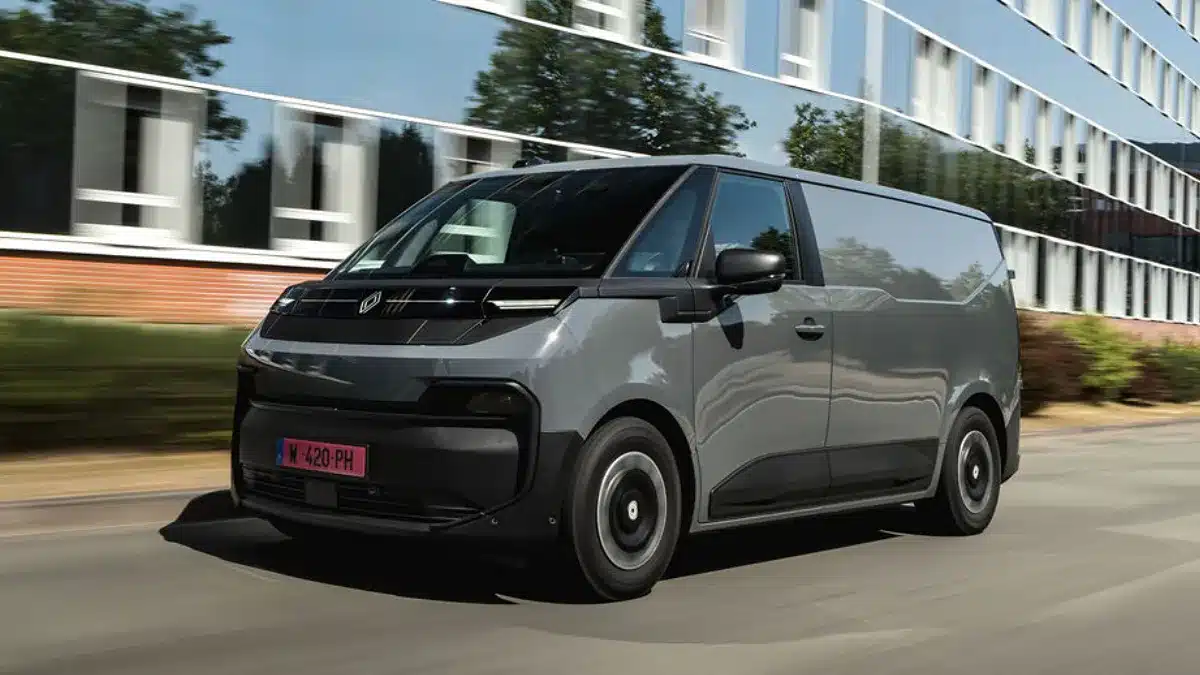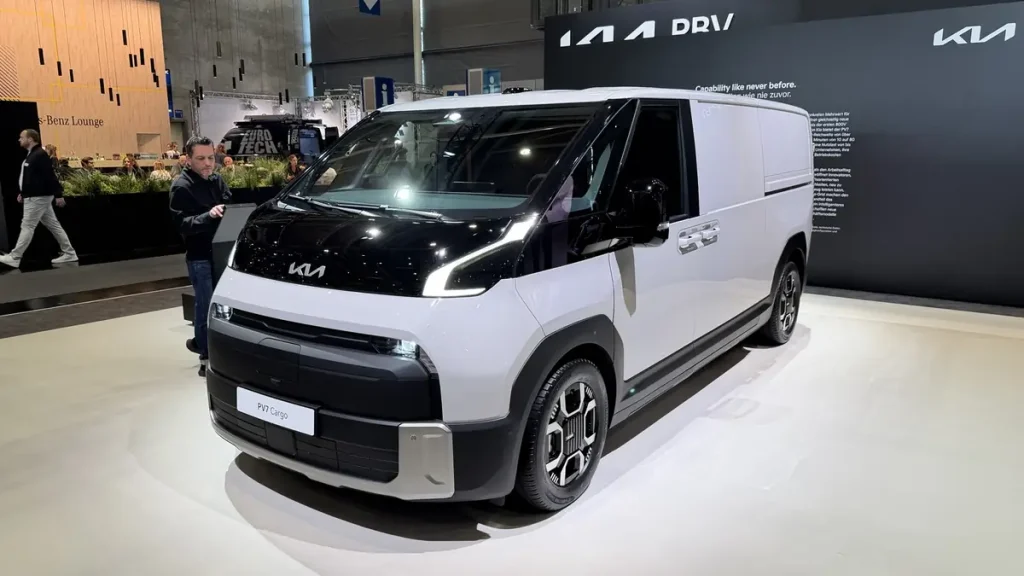
The new Kia PV7 will get a battery as large as 96.2kWh and ultra-fast 800V charging when it arrives in Europe in 2027.
Revealed at IAA Transportation in Hanover, the larger sibling to the Kia PV5 will be available with two battery capacities and promises more than 460km – around 286 miles – of WLTP range in Long Range Cargo form.
Perhaps more significant for high-mileage operators, however, is the introduction of an 800V electrical system capable of dramatically reducing charging times.
Kia will offer 71.5kWh and 96.2kWh nickel cobalt manganese (NCM) battery packs.
Depending on market and configuration, the front-mounted electric powertrain will produce up to 200kW, equivalent to around 272hp, and 420Nm of torque.
Front-wheel drive will be standard initially.
Kia has, however, confirmed that an all-wheel-drive derivative is planned for later in the PV7's life.
The Long Range Cargo version will have an official WLTP range of more than 460km, according to Kia's preliminary figures.
Converted to miles, that's more than 286 miles.
Final homologated figures will depend on model and specification and have yet to be announced.
The larger battery and longer range should allow the PV7 to tackle significantly higher-mileage work than many current electric vans, particularly when combined with its rapid-charging capability.
Kia's E-GMP.S platform uses an 800V electrical architecture.
Using a 350kW DC rapid charger, Kia expects the PV7 to complete a 10-80% charge in the mid-20-minute range.
The figure is still marked as TBC, so final production charging times could change before the van reaches customers.
Nevertheless, it puts charging speed at the heart of the PV7 proposition.
Rather than simply fitting an increasingly large battery to extend range, rapid charging potentially allows vans to recover substantial amounts of energy during relatively short breaks.
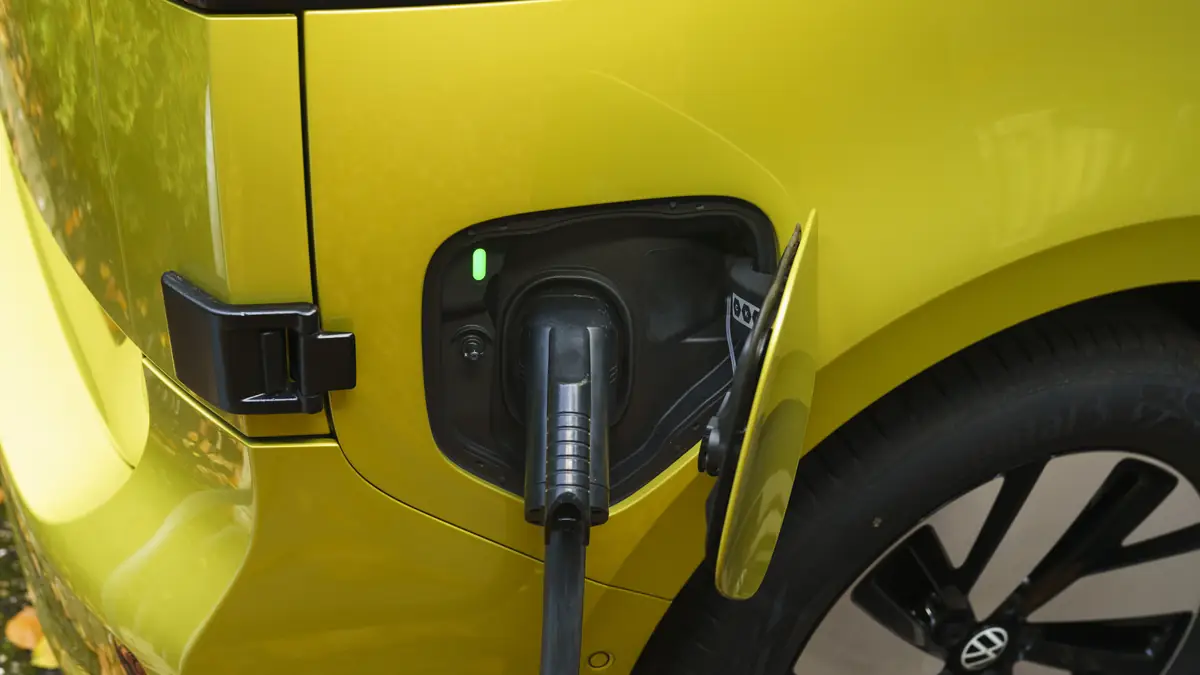
One particularly interesting feature is the availability of two charging-port positions.
The standard connection is located at the front and accommodates both AC and DC charging.
Customers can additionally specify an AC charging port towards the rear of the vehicle.
That could be particularly useful for commercial fleets, where vans may have to reverse into parking spaces or loading bays and cable position can dictate how easily vehicles connect to depot chargers.
Vehicle-to-Load functionality is also included, allowing the high-voltage battery to supply electricity to tools, equipment and other devices.
Power can be accessed through outlets inside and outside the vehicle.
PV7 Cargo also gets a heavy-load driving mode that adapts the vehicle's behaviour according to the payload being carried.
The new PV7 Passenger and Cargo will launch in Europe and Korea during the second half of 2027.
Published:
Last updated: