Kia wants to bring more commercial vehicle conversions into its own production process to help converters and establish itself as a force across all areas of the LCV market.
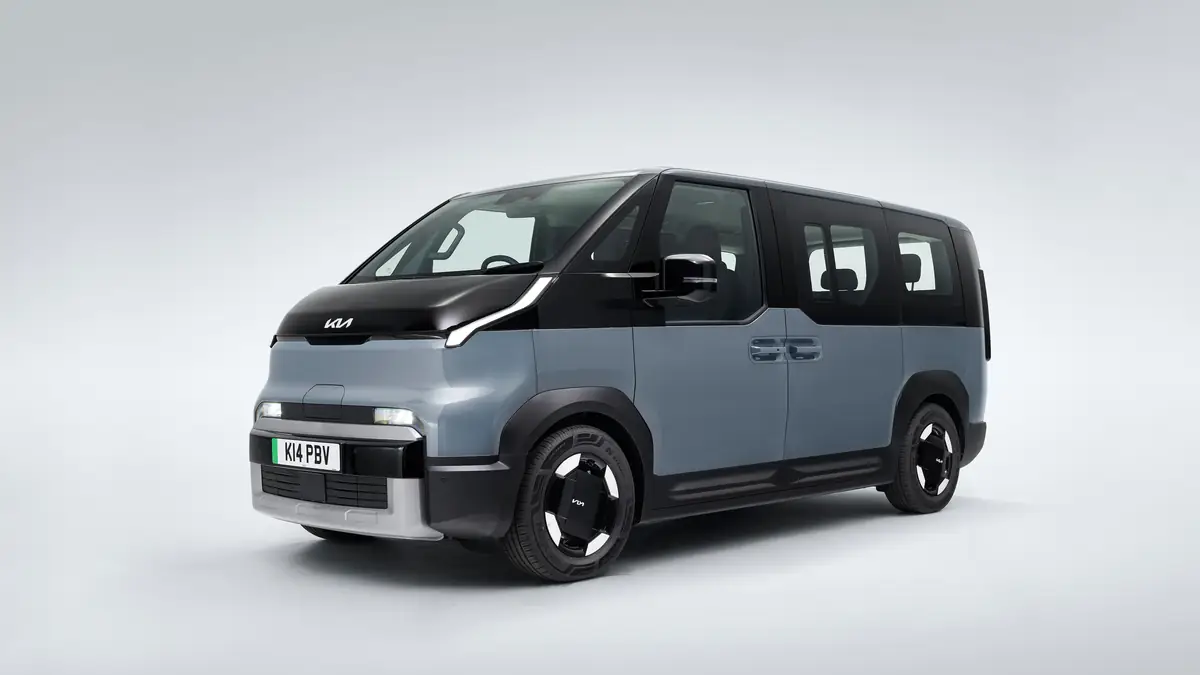
Kia launched the PV7 medium sized van last week at the IAA Hannover trade show, where, speaking after the reveal, president and CEO Ho Sung Song said greater factory flexibility would be one of the key ways the company plans to challenge established commercial vehicle manufacturers. Song identified the conversion process between vehicle manufacturer and end user as being one of the major problems Kia found when studying the LCV market.
“There is a modification process. This modification process always causes a problem,” Song said, pointing particularly to cost and environmental impact.
Kia’s answer has been to develop dedicated PBV production facilities capable of producing a far greater variety of vehicles than a conventional passenger car factory. Kia’s new PV5 facility will soon be capable of producing more than 20 derivative models, with a second plant being prepared for the larger PV7 and PV9, as well as their variants. That approach should allow work traditionally completed after a vehicle leaves the factory to be incorporated into Kia’s production process.
Read our Kia PV5 Cargo review
“All this flexibility now is done by modification between the plant and the user. But we want this modification into our production line,” he said.
However, Song said the strategy does not mean eliminating specialist converters altogether. Instead, Kia wants to provide vehicles that require less work before they can be adapted for individual applications.
Using camper vans as an example, Song said vehicles could be prepared for conversion by cutting an aperture into the roof, removing additional processes and potential quality problems.
See our Kia van reviews homepage
Kia’s aim, he said, is to provide more suitable donor vehicles, reducing work for converters as well as lowering costs and improving quality assurance.
The strategy is also intended to help Kia compete with manufacturers that have decades of experience in commercial vehicles.
“I know that this market has been [served by] other competitors a long time. So, I believe it is not an easy one,” Song said.
“When we started the PV5, we didn’t have enough knowledge and experience,” he said. “The only way for us to do that, we had to listen to many voices from our end users and reflect as much as possible into our product,” he added.
Song said more than 50,000 PV5s had been sold across Korea, Europe and other markets by July 2026. Kia is also negotiating with potential fleet customers for more than 17,000 additional vehicles, covering applications including utilities and delivery operations with 470 vehicles already delivered to facilities and energy services company Equans, alongside 400 for Swedish installation and services business Bravida and 116 vehicles for Dubai Taxi Company.