The UK’s zero-emission vehicle (ZEV) mandate has yet to deliver the expected surge in electric van sales, with battery-electric light commercial vehicles representing just 9.2% of the market so far this year against a 16% target for 2025.
That was the frank assessment of Renault Trucks UK & Ireland managing director Carlos Oliveira Rodrigues at a media briefing in London, where he warned that policy remains too focused on manufacturers and not enough on creating real-world demand.
“The market in 2025 is down roughly 10% year-to-date,” he said of the LCV sector. “And when we look at the ZEV Mandate, it has not delivered what was expected… BEV currently represents 9.2% of the market against a mandate of 16%.”
“For us as an industry, the ZEV Mandate is not delivering yet what it should,” he added. “We need more support, we need more help, and the signals sent recently when it comes to electric vehicles are not very positive.”
Rodrigues drew a parallel with the heavy truck market, where electric models remain below 1% of registrations. In both vans and trucks, he argued, the burden of compliance sits overwhelmingly on OEMs, while operators struggle with cost, infrastructure and operational constraints.
“It’s probably the same as trucks: the pressure is only on the OEMs and we cannot achieve it without the pull,” he said. “We need to stop the push and we need to improve [the pull], otherwise this is not going to happen.”
For van operators, many of the issues are familiar: higher acquisition prices for BEV models, uncertainty over residual values, limited charging at home and depot, and worries about real-world range in multi-drop or regional work.
Rodrigues stressed that many fleets are engaged and want to decarbonise, but remain constrained by economics and practicalities. “It needs to make business sense first and foremost,” he said.
Despite the wider market’s struggles, Renault Trucks insists it is hitting its own ZEV obligations.
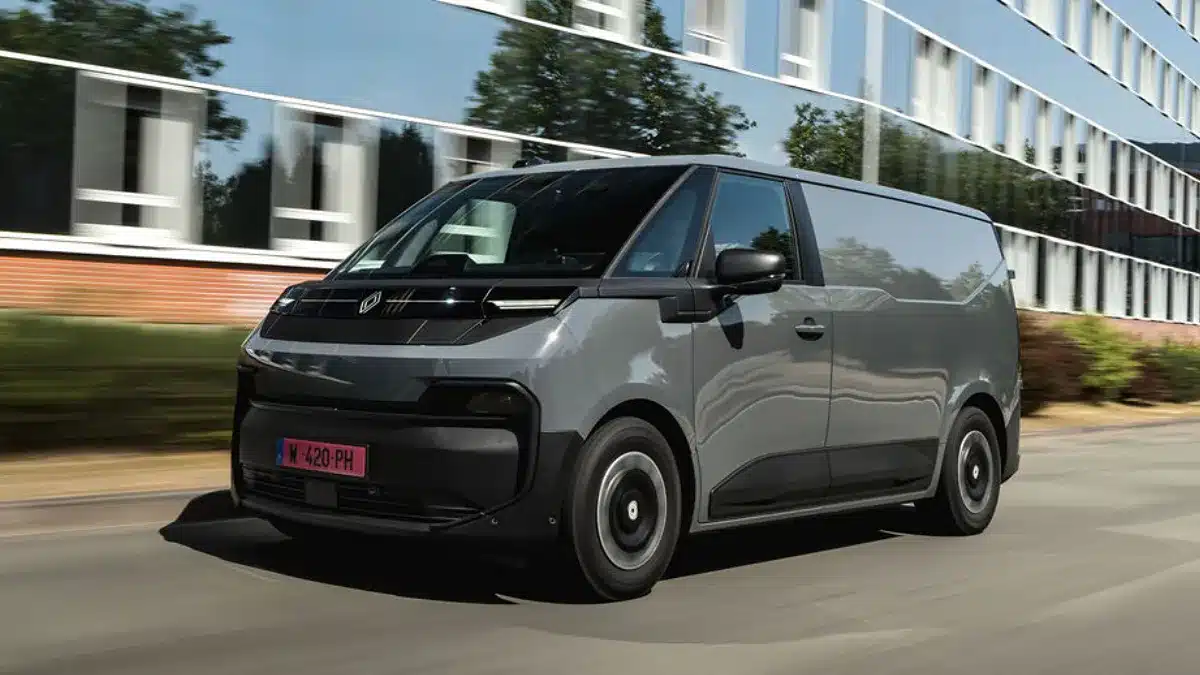
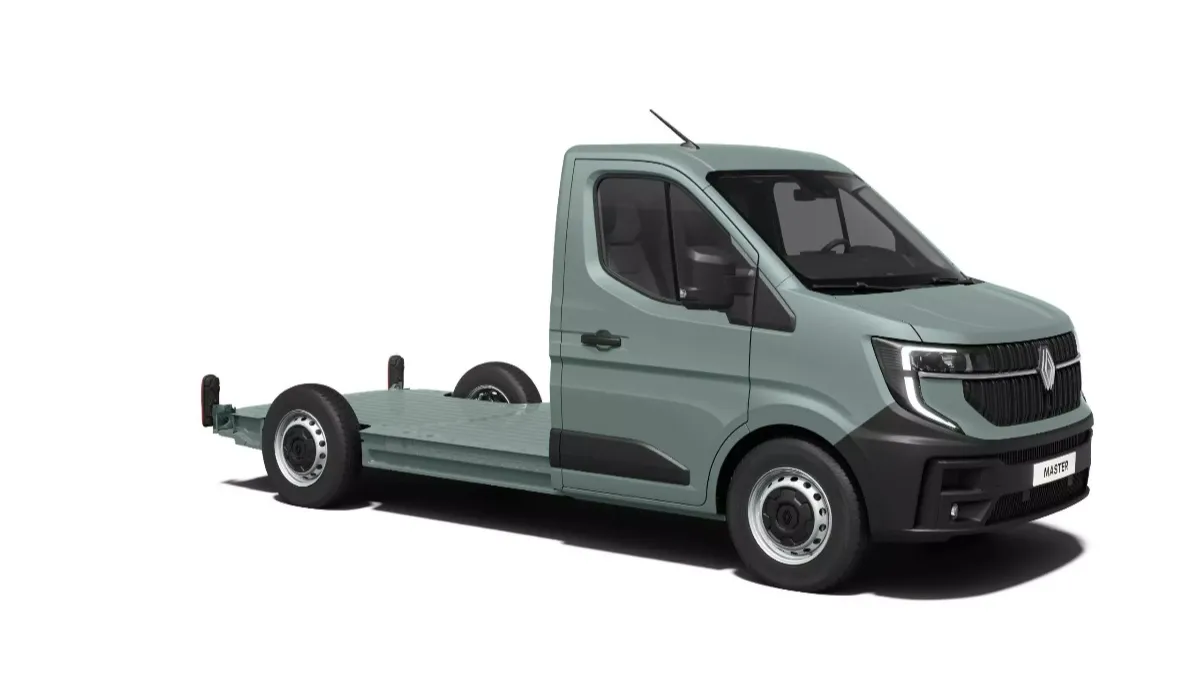
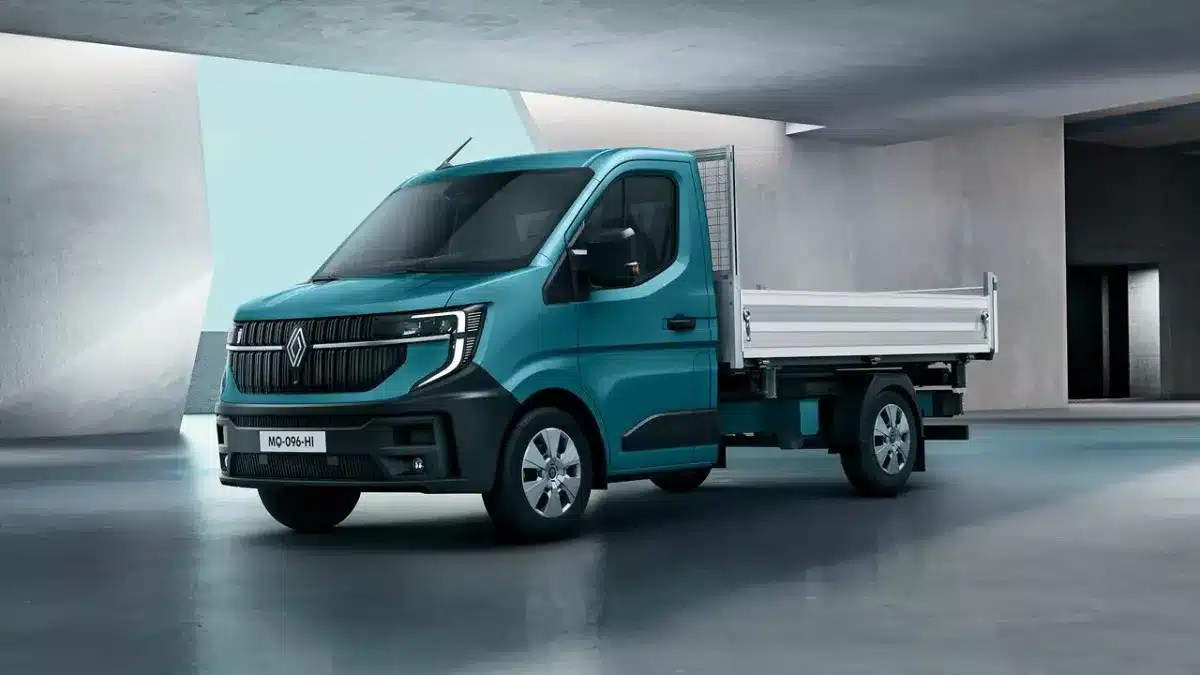
The brand’s flagship LCV, the Renault Master Red Edition – offered in both diesel and E-Tech battery-electric form – has been a bright spot, with customers reporting strong performance on range, charging speed and total cost of ownership.
“For Renault Trucks, this year we have introduced a new Renault Master Red Edition, a Master 4 – super product,” Rodrigues said. “Reception from the customers has been fantastic, both on diesel and E-Tech.”
On the electric side in particular, he said customer feedback suggests the latest generation is “probably the most productive vehicle out there” in its segment.
“Thanks to this product and our leadership on E-Tech, we have done our job and we have achieved the ZEV Mandate – last year and this year – for Renault Trucks,” he said. “Again, leading from the front. It’s not easy, but as an industry, the ZEV Mandate is not delivering yet what it should.”
With more than 95% of the new Master range now available, two further models are due to arrive in 2026 to complete the line-up from van to platform cab.
Renault Trucks’ other key LCV line, the Trafic range, has had what Rodrigues described as a “steady” year in 2025.
Customers, he said, value the higher standard specification, the new nine-speed automatic gearbox and the individuality brought by the Red Exclusive trim level. Trafic will continue alongside Master into 2026, providing a two-pronged offering across key segments.
“Traffic will continue in 2026 to be part of our range,” Rodrigues said. “We will continue to drive the Trafic accreditation forward and, with the two products, provide a true commercial partner offering.”
Renault Trucks has also been quietly rolling out a network of dedicated Van Centres across the UK – either standalone sites or defined areas within existing facilities – to ensure LCV customers receive the same uptime-focused support as heavy truck operators.
“A few years ago, we decided we needed to do something different for the van operators,” Rodrigues said. “We started to have Van Centres. But we didn’t talk about it until now.”
The network now has 13 Van Centres either open or imminent, with Southampton cited as a flagship site, operated by dealer Sparks.
“Of course, all our sites can fix and repair and maintain vans,” Rodrigues noted. “But where it makes sense in terms of capacity and customer demand, we wanted to provide that additional service. Southampton is a second-to-none operation and the feedback has been excellent.”
Rodrigues made clear that, irrespective of the ZEV Mandate’s teething problems, the broader decarbonisation direction is set.
He pointed to EU CO₂ reduction requirements for HGVs – 15% by this year and 30% by 2030 – and the growing influence of Science Based Targets initiative commitments among major corporates, many of which will expect lower-carbon transport partners across both truck and van fleets.
“The mechanisms are there to allow OEMs to catch up if they are a bit late,” he said of the regulatory landscape. “But it’s not going away.”
For now, Renault Trucks is positioning itself as both a compliant manufacturer and a pragmatic partner, keen to stress real-world performance and total cost of ownership rather than abstract promises.
“If you look at everything we do – MHD, LCV, electric or diesel – our main focus is to make sure the customers who invest in our brand and our assets get the most of it,” Rodrigues said. “For us, productivity is not a feature; it’s the baseline.”