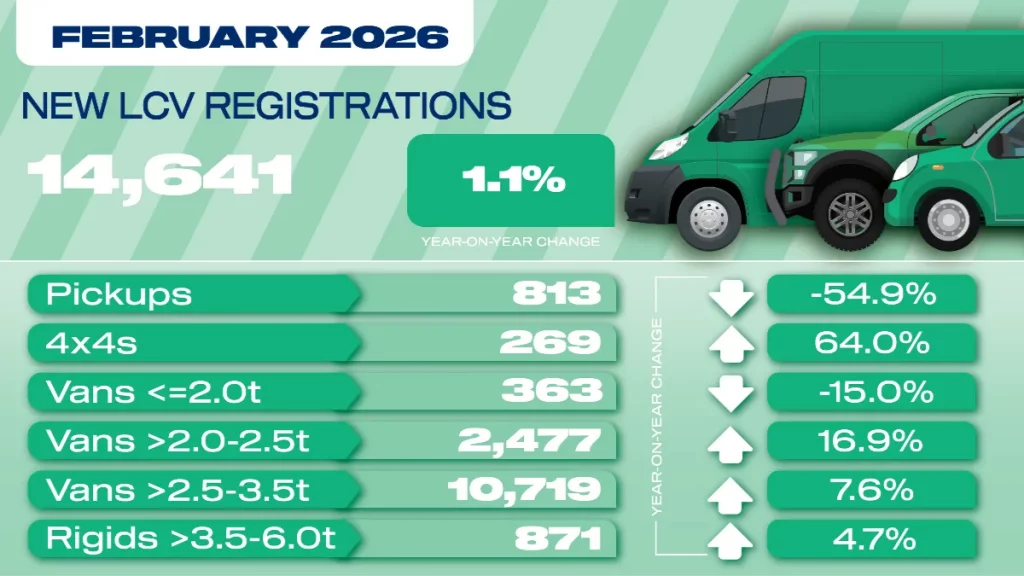
UK new light commercial vehicle registrations rose by 1.1% in February, with 14,641 vans, pickups and 4x4s entering service, according to the latest figures from the Society of Motor Manufacturers and Traders (SMMT).
The modest growth follows a 12-month period of decline and represents the second increase in three months.
However, the shorter month and proximity to March's plate change means that February traditionally represents a small portion of annual volumes, typically accounting for around 5% of yearly registrations.
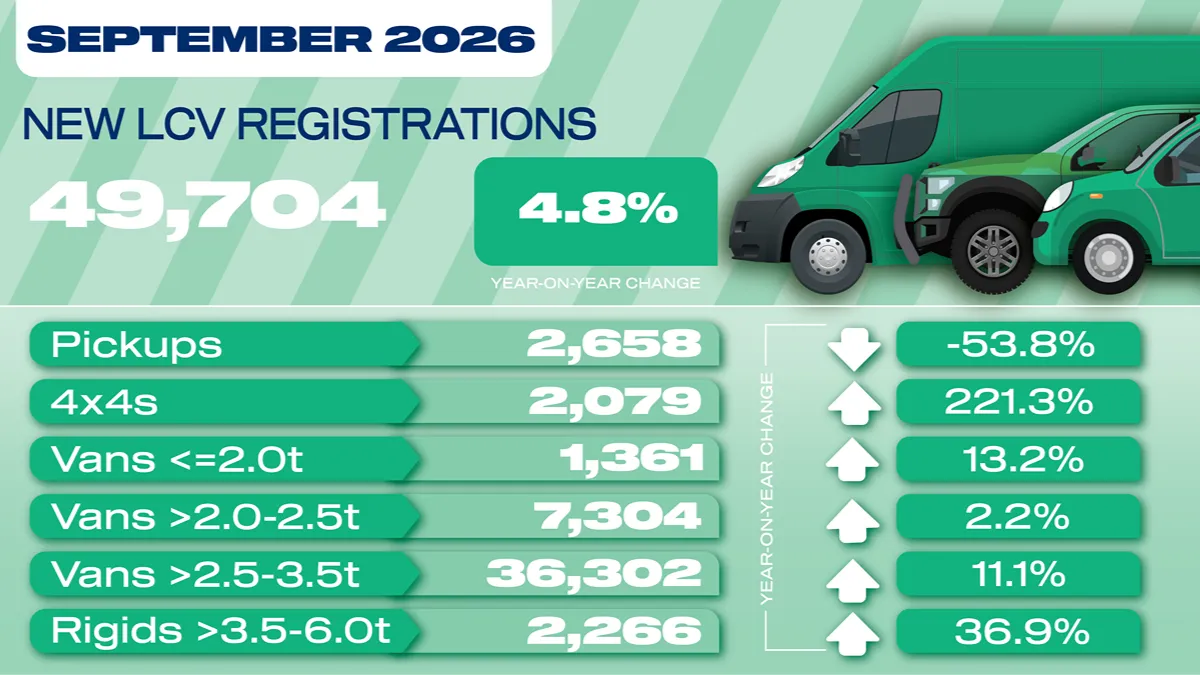
The increase was driven largely by demand for large vans. Registrations of models weighing 2.5–3.5 tonnes rose 7.6% to 10,719 units, accounting for 73.2% of all vans registered during the month.
Vans in the 2.0–2.5 tonne segment also performed strongly, climbing 16.9% to 2,477 units, while 4x4 registrations rose sharply, up 64.0% to 269 units.
The gains were partially offset by continued weakness in the pickup market, which fell 54.9% to 813 units. The decline reflects the impact of changes to the tax rules of double-cab pickups introduced last year, affecting both benefit-in-kind rates and capital allowances.
Smaller vans weighing less than 2 tonnes also declined, with registrations down 15% to 363 units.
Electrification continued to advance, with battery-electric van registrations rising 42.2% year-on-year to 2,009 units. Electric vans accounted for 13.5% of the market during the month.
However, the figure remains well short of the 24% share required under the UK’s zero-emission vehicle mandate for 2026. Diesel models still dominated the market, representing almost eight in every ten new registrations.
Across the first two months of the year, total LCV registrations reached 32,203 units, down 3.9% compared with the same period in 2025.
Battery-electric van demand over the period rose 33.9% to 3,853 units, but their market share of 11.8% remains less than half the mandated target.
The SMMT said recent policy measures, including the extension of the Plug-in Van Grant to 2027, the introduction of a Depot Charging Scheme and proposed changes to planning rules for private charger installations, should help support the transition to zero-emission fleets.
Mike Hawes, SMMT chief executive, said the sector still faces a significant gap between regulation and real-world demand.
“The van market’s modest growth in February is welcome, as is another month of rising demand for electric models,” he said. “Pickup registrations, however, continue to lag given last year’s fiscal changes, while EV uptake remains far below the level required by regulation.
“That is unsustainable and therefore requires a wholesale review of the transition to ensure we have a framework that is realistic, deliverable and affordable.”
| Rank | Model | Registrations |
|---|---|---|
| 1 | Ford Transit Custom | 2,433 |
| 2 | Ford Transit | 1,675 |
| 3 | Vauxhall Vivaro | 872 |
| 4 | Renault Trafic | 782 |
| 5 | Mercedes-Benz Sprinter | 751 |
| 6 | Volkswagen Transporter | 722 |
| 7 | Peugeot Partner | 536 |
| 8 | Ford Ranger | 475 |
| 9 | Citroën Berlingo | 438 |
| 10 | Ford Transit Connect | 408 |
| Rank | Model | Registrations |
|---|---|---|
| 1 | Ford Transit Custom | 5,173 |
| 2 | Ford Transit | 2,398 |
| 3 | Vauxhall Vivaro | 2,246 |
| 4 | Volkswagen Transporter | 1,830 |
| 5 | Renault Trafic | 1,577 |
| 6 | Mercedes-Benz Sprinter | 1,231 |
| 7 | Ford Ranger | 1,185 |
| 8 | Citroën Berlingo | 934 |
| 9 | Nissan Primastar | 906 |
| 10 | Renault Master | 888 |