Ford says its Ranger Plug-in Hybrid’s Pro Power Onboard system produces consumes less fuel when powering equipment on site than a conventional generator and is cheaper to run.
That's according to a series of tests commissioned by Ford at its advanced emissions testing facility at Dunton. The Ford Ranger PHEV’s 6.9kW Pro Power Onboard system was compared against a commonly used 4kW portable petrol generator across a range of typical worksite scenarios, with the onboard power producing lower harmful emissions than a conventional portable petrol generator.
The tests simulated power demands ranging from charging cordless tool batteries through to running an electric heater and boiling a kettle. According to Ford, the Ranger PHEV consistently outperformed the generator for emissions once its engine and exhaust after-treatment systems had reached operating temperature.
Ford said the most significant differences were seen in harmful pollutants such as nitrogen oxides (NOx), carbon monoxide and hydrocarbons. The company claims the generator emitted around 15 times more nitrogen oxides than the Ranger PHEV at low power outputs, increasing to more than 9,000 times more at the highest load tested. Average carbon monoxide emissions were said to be more than 450 times higher, while hydrocarbon emissions were between 15 and 110 times greater.
Read our Ford Ranger PHEV review
Ford also measured carbon dioxide emissions during the tests. It said the Ranger PHEV initially produced more CO₂ from a cold start, but after around five minutes and at power demands above 2kW, the generator generated more CO₂ for the same electrical output.
Alongside emissions, Ford compared fuel consumption while producing 4kW of electrical power with the Ranger PHEV operating under different battery charge conditions.
The hybrid pickup used less fuel than the standalone generator in every scenario tested. With the vehicle warmed up, Ford says Pro Power Onboard consumed around half as much fuel as the generator, while maintaining battery charge reduced fuel use to around one-third.
Read our Ford Ranger PHEV Wildtrak review
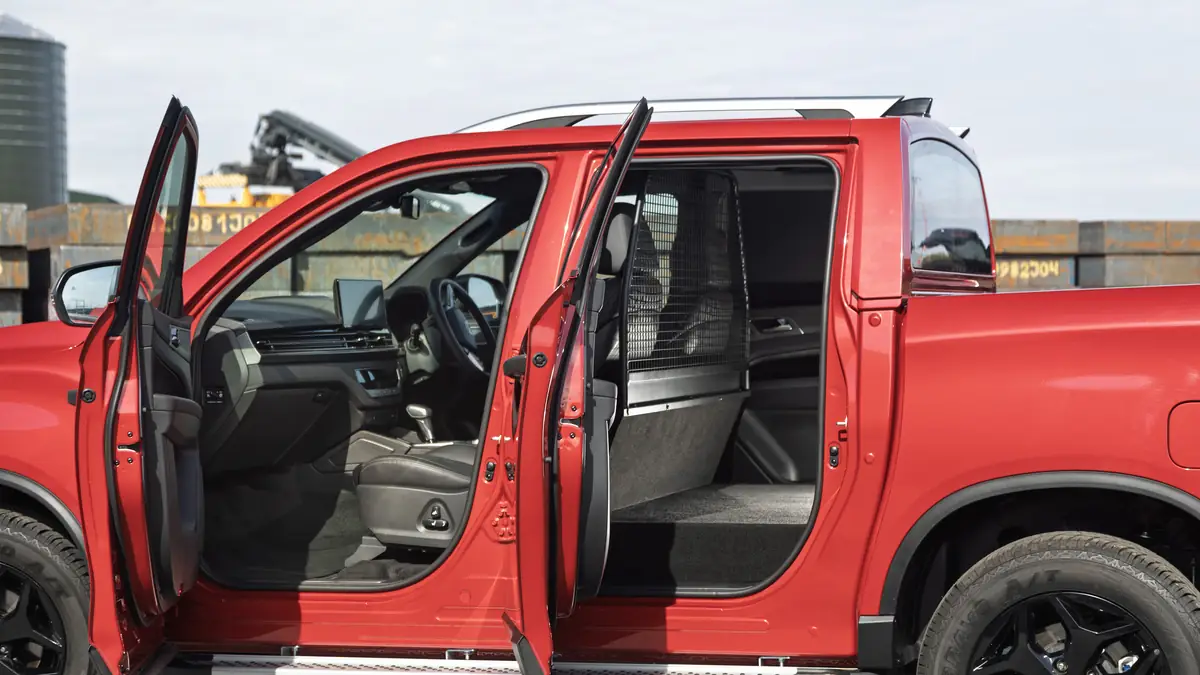
Ford believes its findings strengthen the business case for eliminating portable generators from the back of a pickup altogether. As well as lower fuel costs, operators would gain additional load space and payload capacity while removing the need to transport petrol.
Ford also says the health benefits could mean workers spend less time operating alongside equipment producing high levels of exhaust emissions.