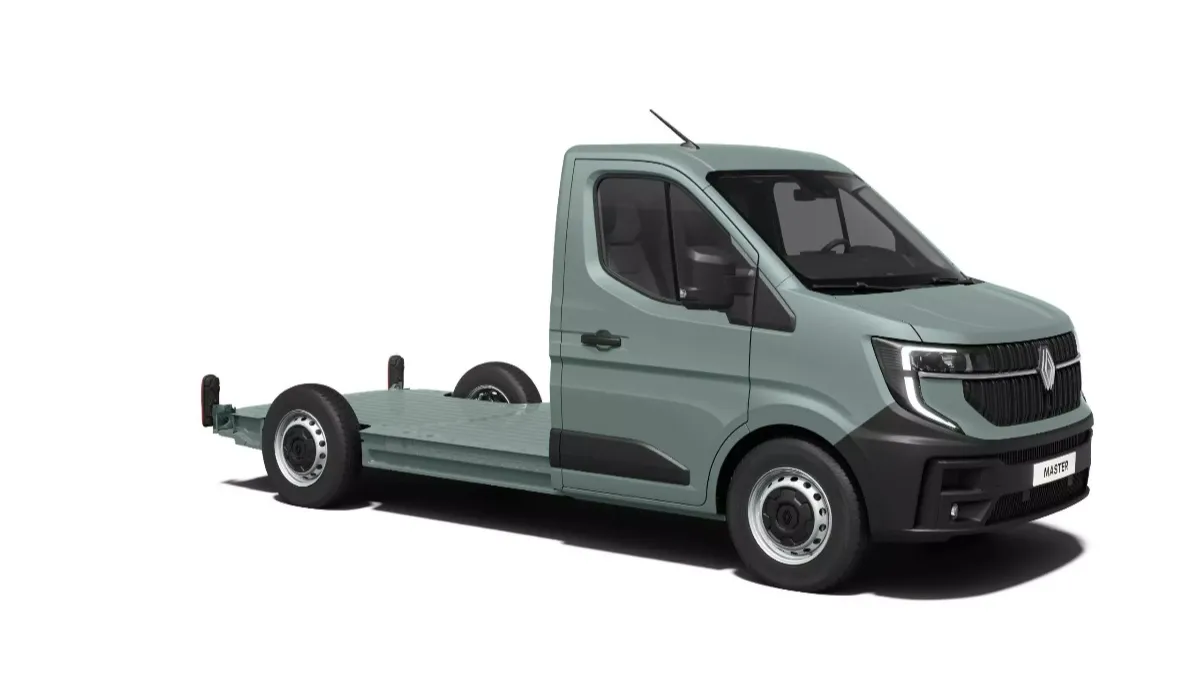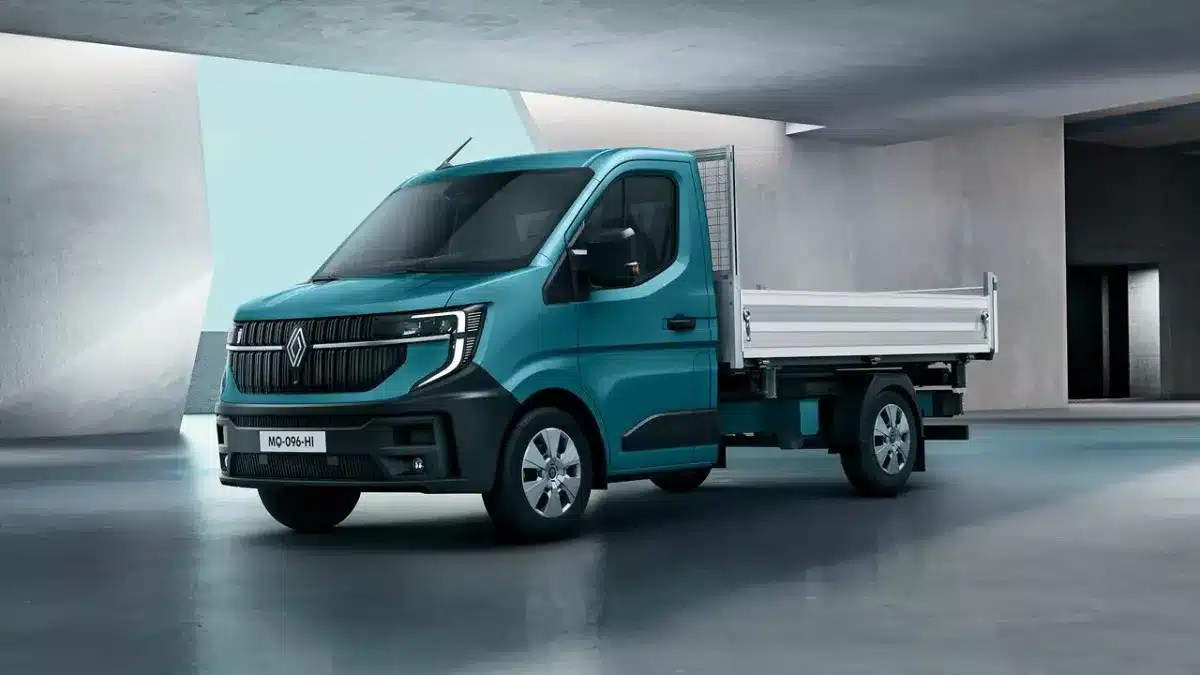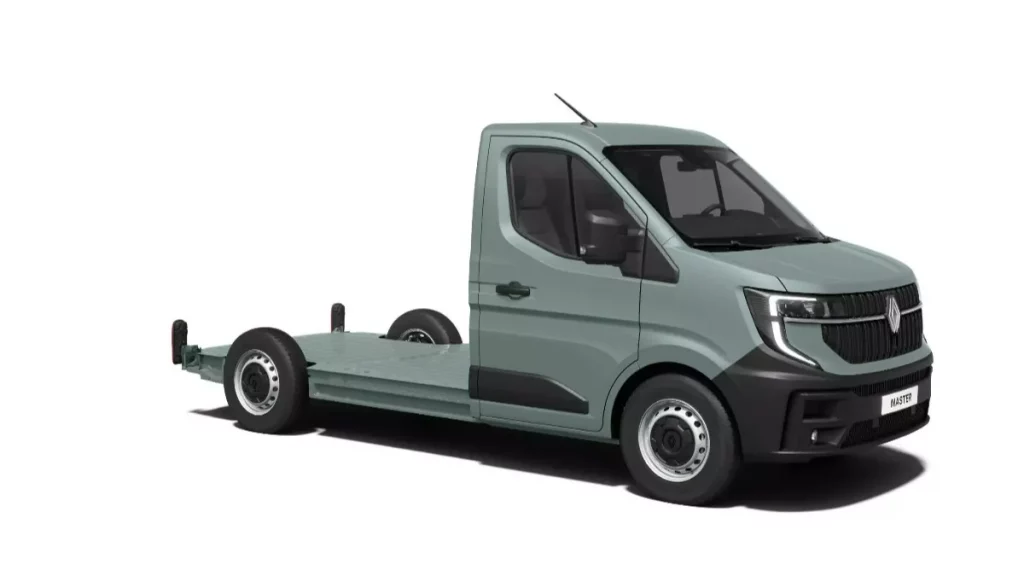
Platform and chassis cabs rarely grab headlines, yet they underpin a huge proportion of the specialist vehicles working on UK roads. From dropsides and tippers to bespoke utility and municipal bodies, the success of a conversion often depends less on the finished body and more on the platform it is built upon.
This is where the Renault Master range comes into its own, offering a flexible, well-thought-out foundation designed to support a wide range of body types and operating requirements.
At the heart of the conversion range for the Master is a choice of chassis or platform cab, with two wheelbase lengths, giving converters the freedom to match body length to the job.
The shorter ML configuration provides a compact and manoeuvrable base, while the longer LL option allows for a greater usable body length. This flexibility makes the platform suitable for everything from an urban dropside for construction or clearance, to a longer-bodied box where load space is the priority.
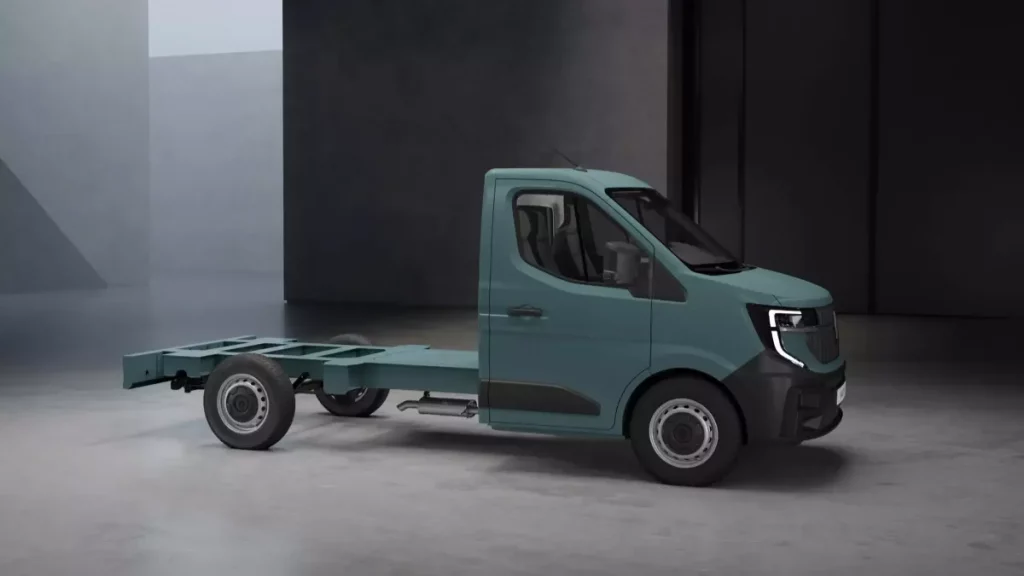
Importantly the Master Platform Cab's dimensions are shared across both diesel and E-Tech electric versions of the Master Platform Cab.
For bodybuilders, this consistency simplifies the conversion process, allowing the same body designs to be adapted across different powertrains without fundamental changes to mounting points or layout.
It also gives operators confidence that choosing an electric variant does not mean compromising on body size or functionality.
The arrival of the Master E-Tech Platform Cab adds another dimension to this flexibility.
Renault has ensured that electrification does not come at the expense of usability, with the electric platform retaining the same fundamental architecture as its diesel counterpart.
High-capacity AC and DC charging capability supports demanding operating schedules, while the integration of the battery and electrical systems has been designed to work seamlessly with specialist conversions.
Payload and weight options further reinforce the Master’s versatility. Available at both 3.5 tonnes and 4 tonnes gross vehicle weight, the platform can be specified to suit a wide range of duty cycles.
Lighter applications benefit from generous payload capacity, while higher-GVW versions provide the headroom needed for heavier or more specialised bodies. The balance between front and rear axle capacities has been carefully considered, helping to support stable, compliant builds across the range.
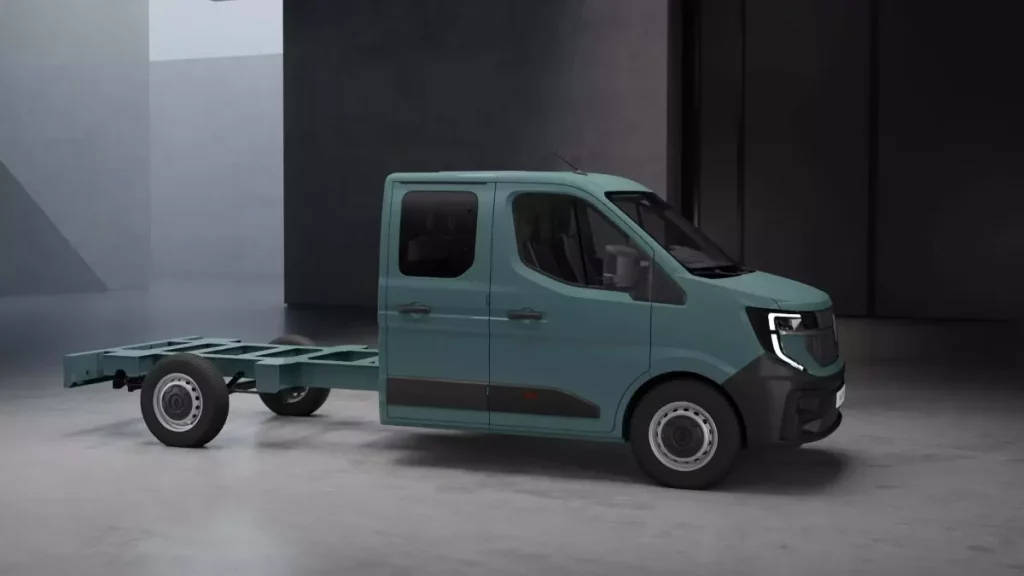
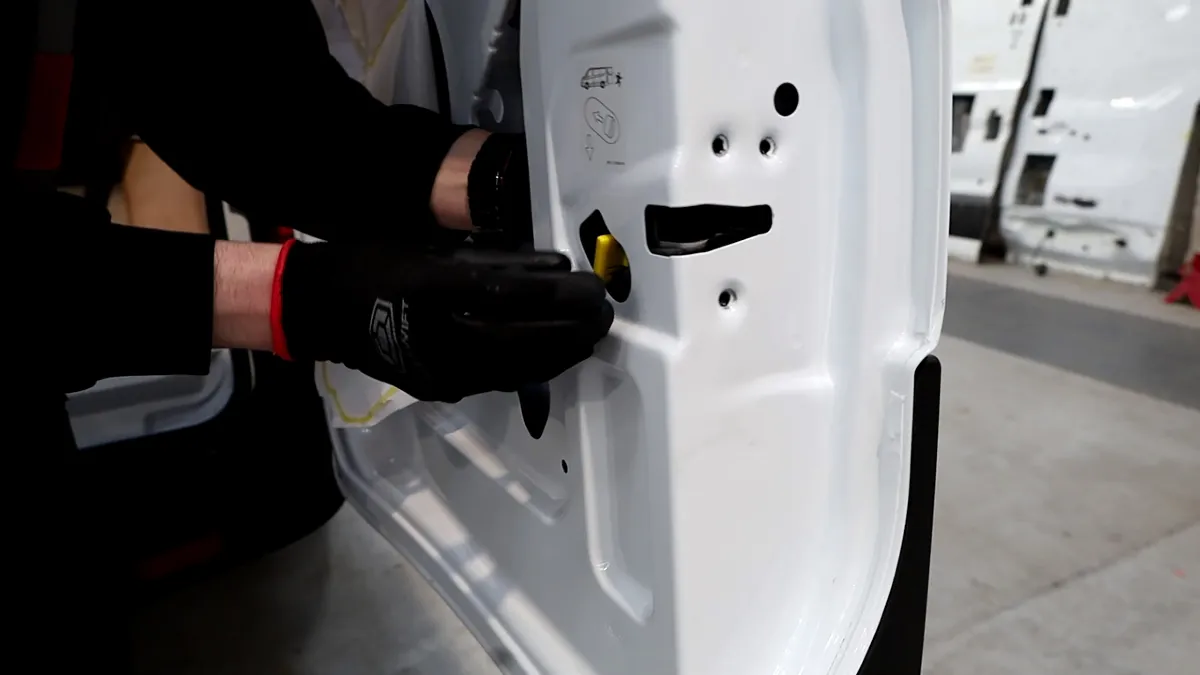
From a bodybuilder’s perspective, the Master Platform Cab is clearly designed with conversion in mind. Features such as the conversion interface box and power cut-down functionality simplify the integration of auxiliary equipment, while the straightforward cab and chassis layout provides clear access for mounting and wiring.
These details may not be immediately visible to end users, but they make a tangible difference during the build process and throughout the vehicle’s working life.
Inside the cab, the focus is on practicality. The availability of a passenger bench seat with integrated mobile office features reflects the reality of how many platform cabs are used day to day, particularly in trades and fleet operations.
Storage solutions, multiple power points and durable materials all contribute to a working environment that supports long days on the road or on site.
Safety and driver assistance systems also play an important role, particularly for fleet operators running specialist vehicles in busy urban environments.
Technologies such as active emergency braking, lane keep assist and intelligent speed assistance are fitted as standard, helping to reduce risk and support compliance without adding complexity for the driver.
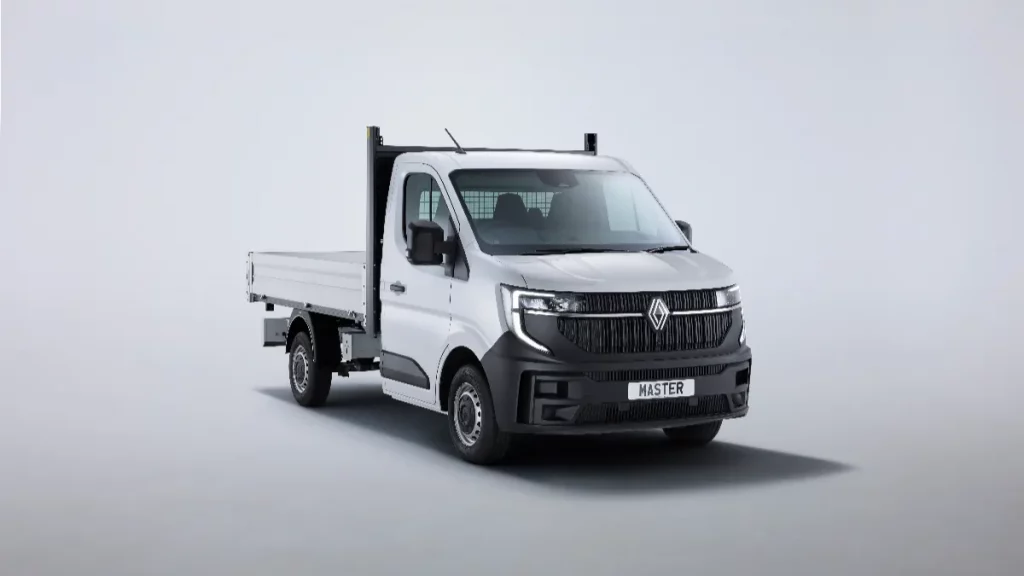
Taken as a whole, the Renault Master Platform Cab is not defined by a single standout feature, but by the way its dimensions, weights and systems come together to support a wide range of conversions.
Whether specified with a diesel engine or as part of Renault’s growing E-Tech line-up, it provides a consistent, adaptable base that allows bodybuilders and operators to focus on delivering vehicles tailored to the job at hand.
| Renault Master Platform Cab dimensions | Ml35 | LL35 |
|---|---|---|
| Wheelbase | 3583 | 4213 |
| Overall length | 5682 | 6312 |
| Front overhang | 965 | 965 |
| Rear overhang | 1133 | 1133 |
| Front track | 1760 | 1761 |
| Rear track | 1730 | 1730 |
| Overall width (without door mirrors) | 2080 | 2080 |
| Overall width (with door mirrors) | 2466 | 2466 |
| Overall width (with extended door mirrors) | TBC | TBC |
| Overall height (unladen) | 2236 | 2236 |
| Floor sill height (min / max) | TBC | TBC |
| Ground clearance (min) | TBC | TBC |
| Cargo area length at floor | 3830 | 4775 |
| Renault Master Platform Cab weights | E-Tech ML35 | E-Tech ML40 | E-Tech LL35 | E-Tech LL40 | Diesel ML35 | Diesel LL35 |
|---|---|---|---|---|---|---|
| Gross Vehicle Weight | 3500 | 4000 | 3500 | 4000 | 3500 | 3500 |
| Gross Train Weight | 5000 | 5500 | 5000 | 5500 | 6000 | 6000 |
| Maximum Payload | 1349 | 1802 | 1242 | 1691 | 1679 | 1572 |
| Kerb Weight | 2151 | 2198 | 2258 | 2309 | 1821 | 1928 |
| Max Weight on front axle | 1950 | 2070 | 1950 | 2070 | 1950 | 1950 |
| Max Weight on rear axle | 2000 | 2370 | 2000 | 2370 | 2100 | 2100 |
| Braked trailer capacity | 1500 | 1500 | 1500 | 1500 | 2500 | 2500 |
| Unbraked trailer capacity | 750 | 750 | 750 | 750 | 750 | 750 |
Published:
Last updated: