Drive a van for work? Looking at renewing your van insurance soon? Here’s what you need to know about fake van insurance scams and how to avoid being taken for a ride you really don't want
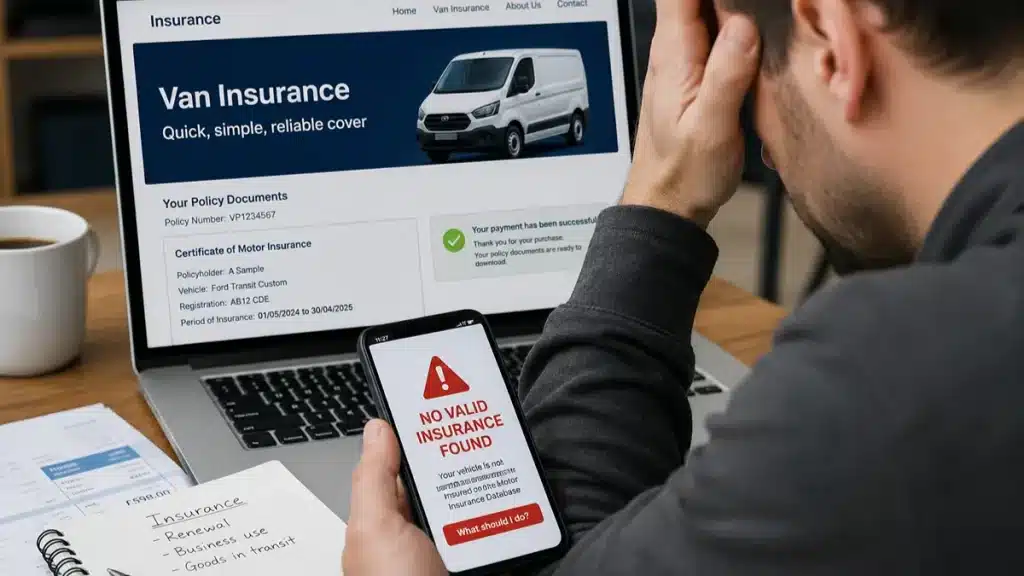
Ghost broker fraud is growing across the UK, leaving thousands of motorists unknowingly driving without insurance, we look at the increasing problem of fake van insurance and fake car insurance scams and how to spot them before you get stung.
A ghost broker is someone pretending to sell legitimate vehicle insurance.
Rather than arranging genuine cover, they may create fake documents, alter a real policy using false information, or cancel the policy after you’ve paid them.
The paperwork can look entirely authentic, making the scam difficult to spot. The main thing to know is that you'll have paid your money and you won't be covered.
Commercial vehicle insurance can be expensive. If you've tried to get a quote recently you'll notice that prices are sky high, but that problem is even worse if you fall into any of the following categories:
Ghost brokers exploit this by advertising prices that seem far lower than legitimate insurers can offer. They want you to feel relieved that you can actually get cover that won't cost the earth. It's a confidence trick as old as time. Offer you something you need when you're in a pretty desperate situation, then take advantage.
It's definitely not easy to tell, but there will be signs. The first tell is always the price, but you can often smell a rat due to several tell-tale signs. Here's what to look out for...
If every insurer is quoting around the same price and one offer is hundreds of pounds less, treat it with caution.
Many ghost brokers only communicate via Facebook Messenger, WhatsApp or Instagram. If you can't get them on the phone - particularly a landline - be cautious. Even then, you need to exercise some care.
Legitimate brokers don’t usually ask customers to pay into someone’s personal account. Brokers will handle hundreds if not thousands of policies. It simply doesn't make sense for them to be an individual, sole trader. Most will likely be a limited company of some sort, which although not a sign of legitimacy does require a small amount of checks these days to validate who they are.
Paying into a personal bank account is a massive red flag for most transactions over the internet that would ordinarily be done by a large company.
No registered address, no FCA registration and no landline should all raise alarm bells.
Fraudsters often claim a deal expires within hours to stop customers checking their credentials. Never be convinced to do something because of a time pressure. Insurance prices do change, but legitimate companies will usually honour the price for at least 24 or 48 hours. Many will even hold the price for longer.
If someone is telling you that the price is only valid for a few hours then consider your options. Pressure selling is a known tactic used by scammers.
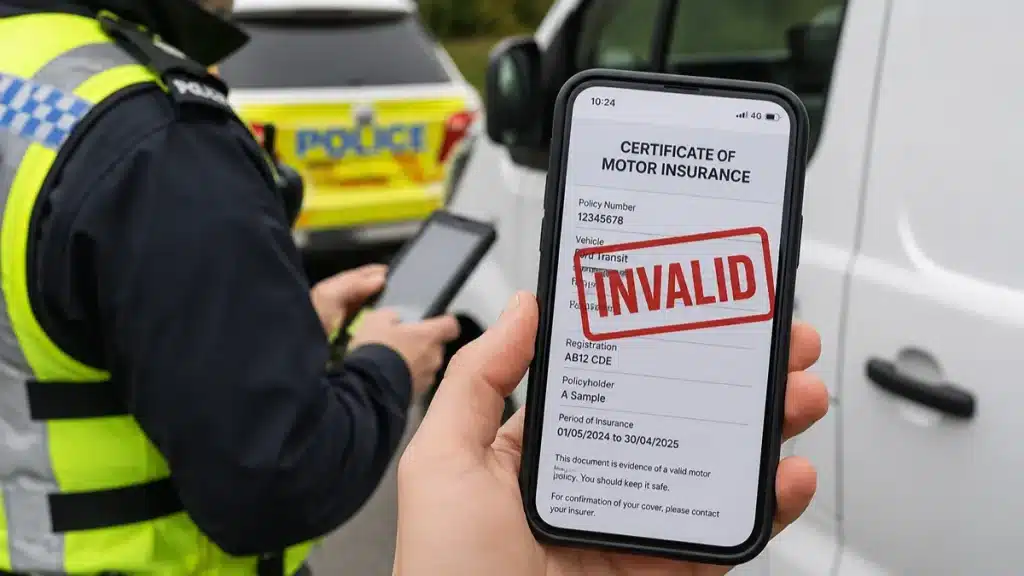
Unfortunately, even if you’ve been scammed, the law generally treats you as driving without insurance. That means that the police will treat you as if you never had any intention of insuring the vehicle.
Unsurprisingly the penalties are quite harsh.
Possible consequences include:
Think about it... what situation would that leave you in. If you're a self-employed driver, that could mean losing work while the issue is resolved, at the very least, or worse still losing work altogether and your business or livelihood collapsing.
Before buying you need to make some checks that the broker is real, the bank account is legitimate and that you will be getting a policy.
Here's what to look at before you buy your van insurance:
This is what you should look at after buying your van insurance:
Act immediately. The problem won't go away or be magically resolved. Remember if you start driving your car or van and you are stopped you will be prosecuted for driving without insurance.
Contact the insurer, report the fraud to Action Fraud, and seek legal advice if you’ve already been stopped by police or discover your policy isn’t valid.
The sooner the problem is identified, the more options may be available to minimise the consequences.
Published:
Last updated: