Mercedes-Benz next-generation VAN.EA and VAN.CA architectures could see it broaden its commercial vehicle range into new segments, according to Mercedes-Benz Vans boss Thomas Klein.
Mercedes has concentrated its recent investment on replacing its medium Vito and large Sprinter vans, while also withdrawing from the small van sector, ending its Citan range, but speaking to Van Reviewer, Klein refused to permanently close the door on a return to smaller vehicles.
“We’ve taken the decision to reallocate the funds and our power to the mid-size and the large-size van segments,” Klein said at IAA Transportation in Hanover, last week.
“That’s what we’re executing on at the moment. That’s why we have exited the small van business.”
However, Klein acknowledged that compact vans remain an important part of the European market.
“Walking around here at the fair, you can see that’s still a very veritable part of the market,” he said.
While stressing that Mercedes currently has no plans to return, Klein stopped short of ruling it out altogether.
“You will always have to leave a door open to some extent, but again, at the moment, we have no plans to enter that segment, but that’s not to say we don’t look at what is out there.”
What is the size of a Sprinter? Read our van dimension guides to find out
For now, therefore, a new Citan isn’t on the Mercedes product plan. But the flexibility being built into its next generation of vans potentially gives the manufacturer more options should the market make a compelling case for a return.
Klein also didn’t rule out a return of a new mid-size commercial van in the United States, although he would not be drawn on what size of LCV it might be.
Skateboard chassis and new multi-size platforms have meant that the familiar small, medium and large van categories are becoming less distinct.
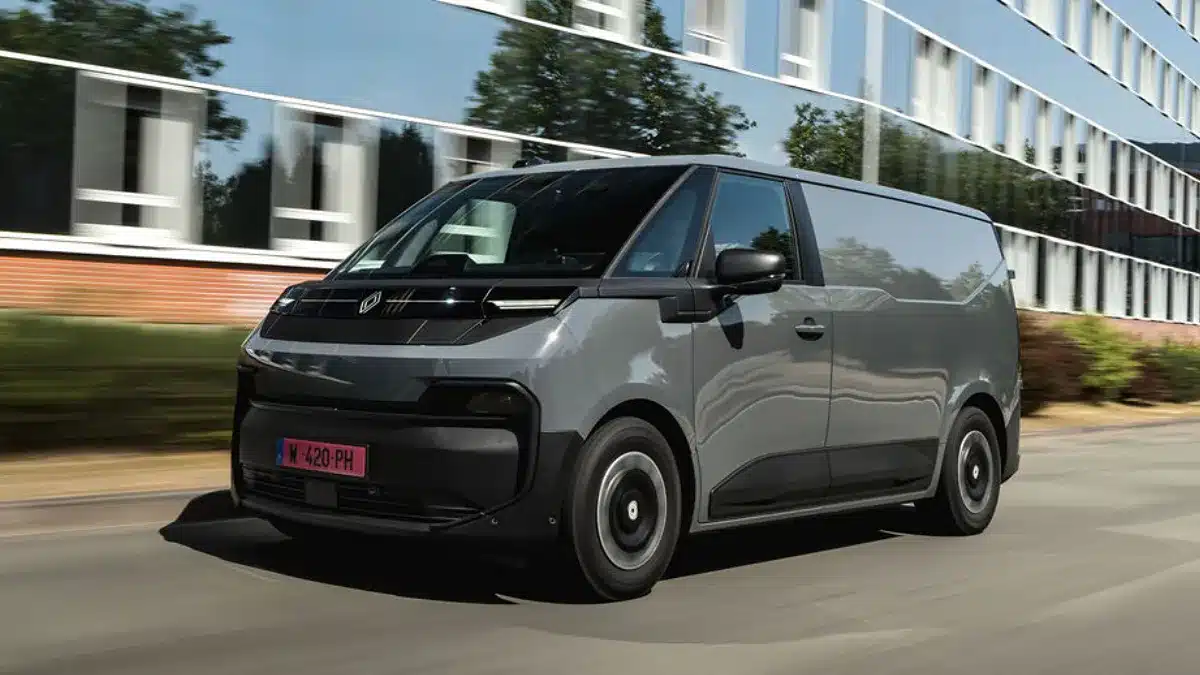
At IAA Transportation 2026, where Mercedes unveiled a new version of its Boulder (pictured above), there was a growing number of manufacturers display vehicles that sit between established segments, raising the prospect that traditional van classifications could become less important as manufacturers look for different combinations of load volume, footprint and payload as traditional boundaries separating medium and large vans are becoming increasingly blurred.
Asked whether Mercedes could use its new architecture to create vehicles of different sizes in response to that trend, Klein pointed towards the flexibility built into the platform.
“That’s actually our duty to listen to what the market requires and then see how we can make that happen on the platform,” Klein said.
“The adaptability, the flexibility, the modularity of the platform allows us to do this,” he added.
Read our blog Behind The Boulder
According to Klein, Mercedes has already investigated a wide range of possibilities for the architecture, although its first priority remains replacing the successful vehicles it sells today.
“We’ve looked at many alternatives of what you could do on the platform. Our starting point is to replace what has been very successful and well received.”
Mercedes is also bringing bodybuilders into the development process early, inviting partners to Stuttgart to see what the new platform can accommodate and allowing them to begin planning future conversions.
But Klein acknowledged that the established divisions between the medium and large van sectors are already changing.
“The boundaries become less distinct. You see [that in] some of those crossover models at the moment. Still, I believe for many of the very traditional use cases, they are looking for what we offer today and for some kind of replacement. But again, it’s our job to observe what the market wants and to adapt to that.”
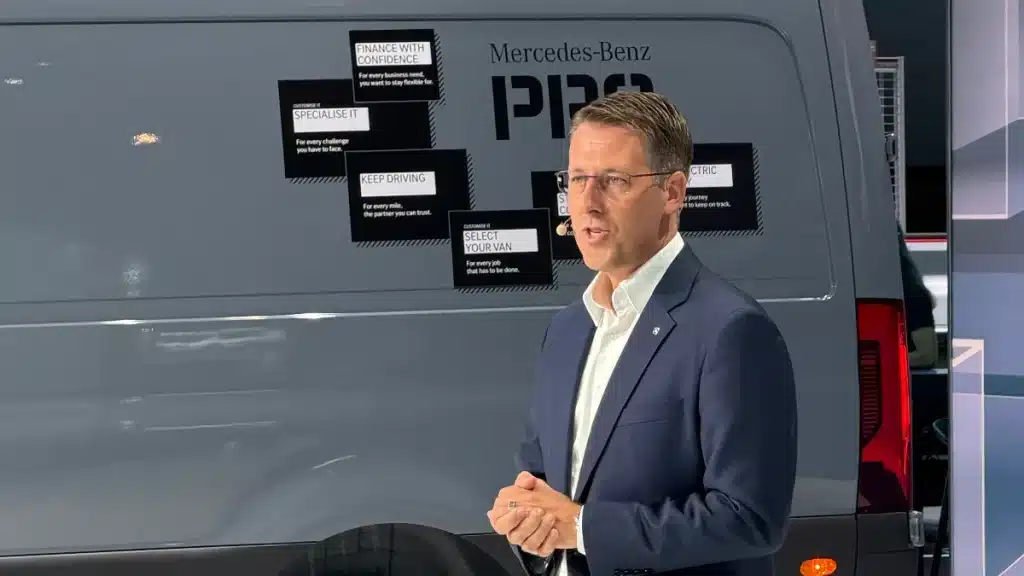
The flexibility of the new architecture could also allow Mercedes to enter markets where it currently has gaps in its range.
One of the most obvious is the United States where Mercedes currently sells no mid-size van, following the withdrawal of the Metris (the American-market version of the Vito) in 2023.
Klein believes the introduction of Mercedes’ new generation of vehicles creates an opportunity to expand its US business.
“We do not offer any mid-size vans in the United States at all at the moment,” Klein said, referencing the new passenger-focused VLE – the first model to be built on the VAN platform.
Asked whether America could get the Metris back, Klein replied: “Mid-sized commercial vans in the United States is something worth looking at.”
“With the new platform, I think it’s more strategic, more flexible, more modular, and this new architecture will also come to the US. So there are opportunities for us,” added Mercedes-Benz Vans head of sales and marketing Matthias Geisen