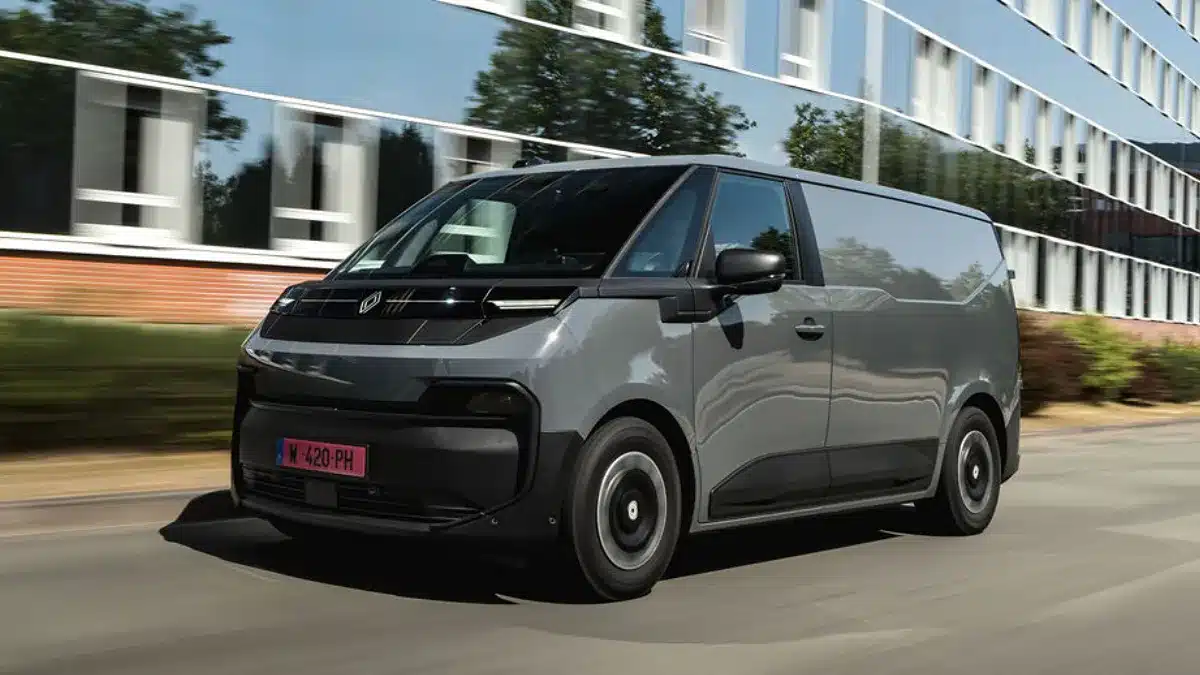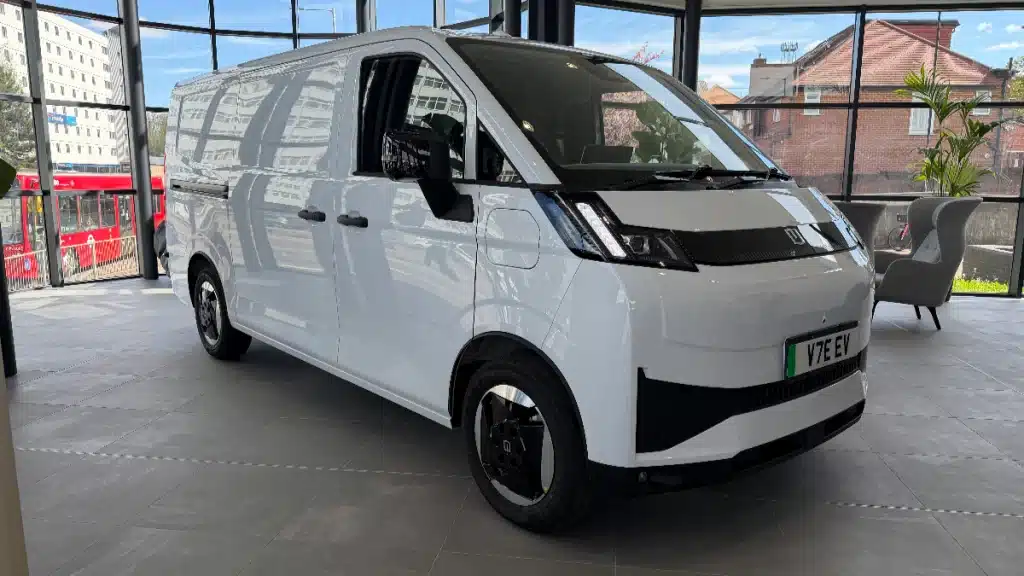
Farizon V7E will be the smallest model in the range but has a 7 cubic metre capacity to match the L1H1 SV
Farizon has expanded its UK electric van line-up with the launch of the new V7E, a compact, two-seat model designed to sit beneath the larger SV while delivering comparable load-carrying capability but in a smaller footprint.
The V7E is offered with 50kWh and 67kWh battery options, delivering up to 204 miles of WLTP combined range, alongside payload of up to 1,338kg and a class-leading 6.95m³ cargo capacity. Fast charging at up to 100kW DC enables a 20–80% top-up in as little as 18 minutes, while prices start from £28,000, excluding VAT, delivery charges, registration and road tax. Importantly it also doesn't include the Zero Emission Van Grant.
Despite being positioned below the SV, the V7E matches it for outright load volume.
“The cargo capacity is exactly the same,” said Farizon UK boss Calum James. “If I was going to call out three things about this, it would be range, it would be payload, but also be cargo capacity.”
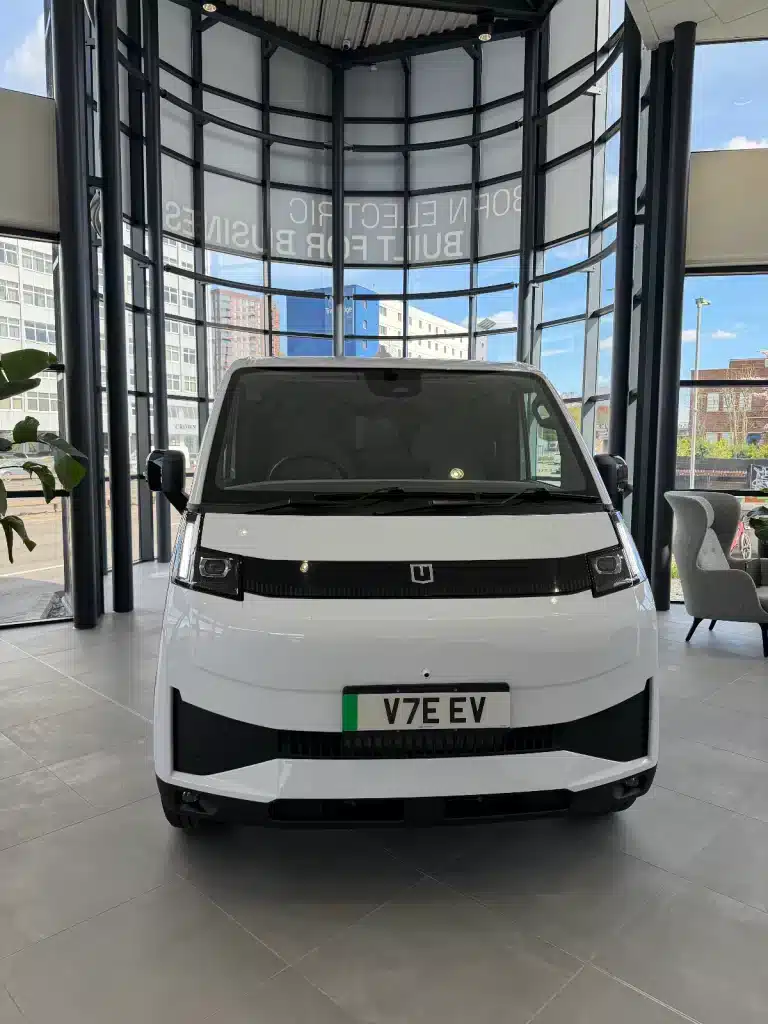
That figure is achieved through clever packaging. The V7E measures just under 5.0 metres in length and is around 400mm narrower than the SV, yet retains identical load volume thanks to a longer usable load area, higher roofline and lower floor. Load length extends to 2,730mm, with 1,690mm width above the wheelarches and a 1,435mm load height, while a 500mm cargo floor improves accessibility.
Farizon has also focused on practicality, with twin sliding side doors as standard, each offering a 1,100mm opening, and 270-degree rear doors for easy loading. The load bay will be lined with a hard-wearing PVC floor in production models, while the van is capable of carrying three Euro pallets.
Compared with the SV, the V7E trades outright size and performance for simplicity and cost. The SV offers greater power, higher towing capacity and a three-seat layout, but the V7E undercuts it significantly on price while maintaining similar payload and cargo volume.
“There are some key differences,” said James. “The powertrain on that is much more powerful… and obviously, the range is bigger on the SV as well.”
Read our Farizon SV review
The V7E’s narrower body and tight turning circle are expected to make it particularly effective in urban environments, without being limited to city-only use. “We don’t want to pin this as only an urban vehicle but we see this being really, really capable in urban inner-city environments.”
Inside, the V7E adopts a simplified two-seat layout, reflecting its intended use case.
“I think this sort of pigeonholes it… more for that single driver sort of market,” James admitted, although he added that the van still “bridges the gap between both worlds” by combining SME-friendly features with fleet-level capability.