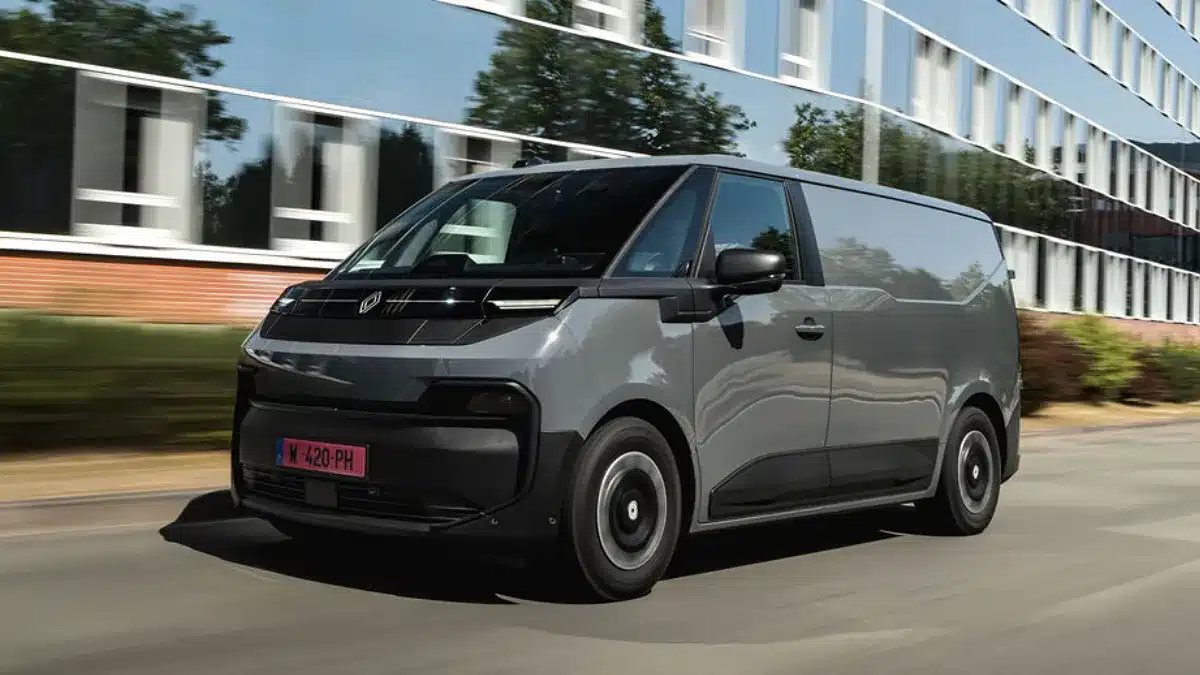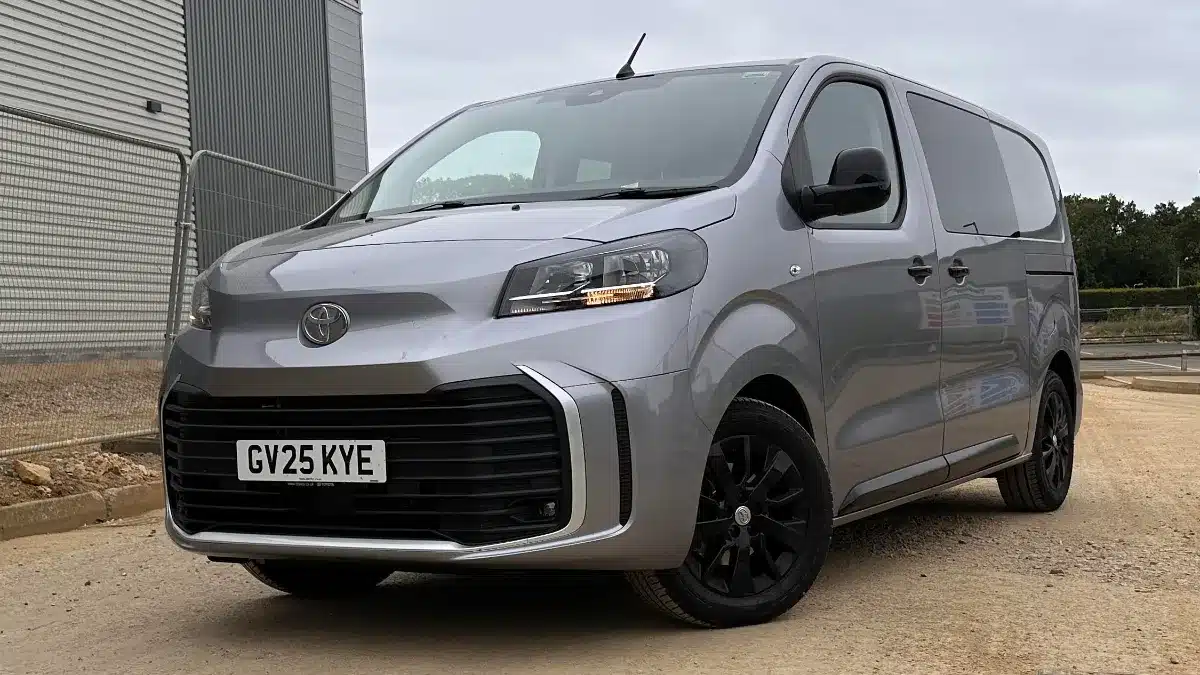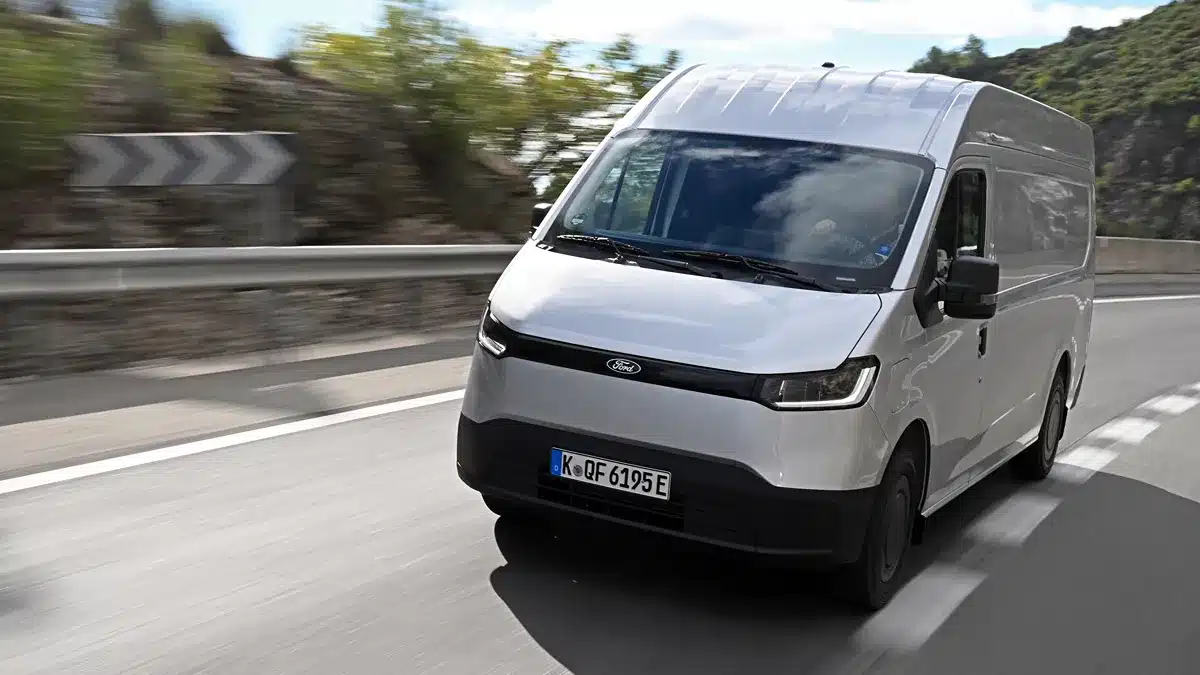
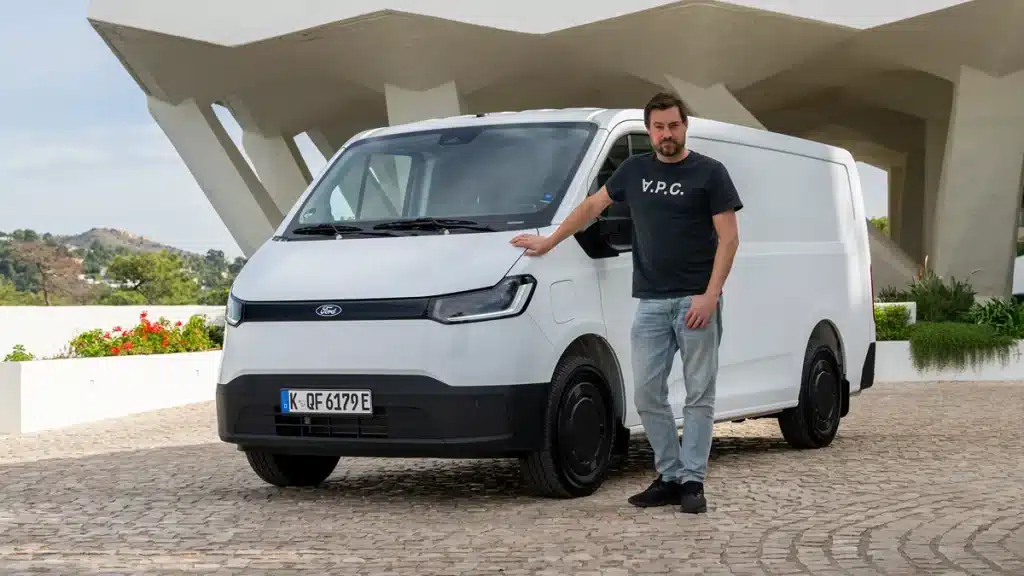
Electrification hasn’t been easy for anyone, manufacturers have spent a fortune and customers are reluctant to pay a premium. That’s why the Ford Transit City, the latest electric only and newest name in the Transit range, is an interesting proposition for both prospective new van buyers and Ford.
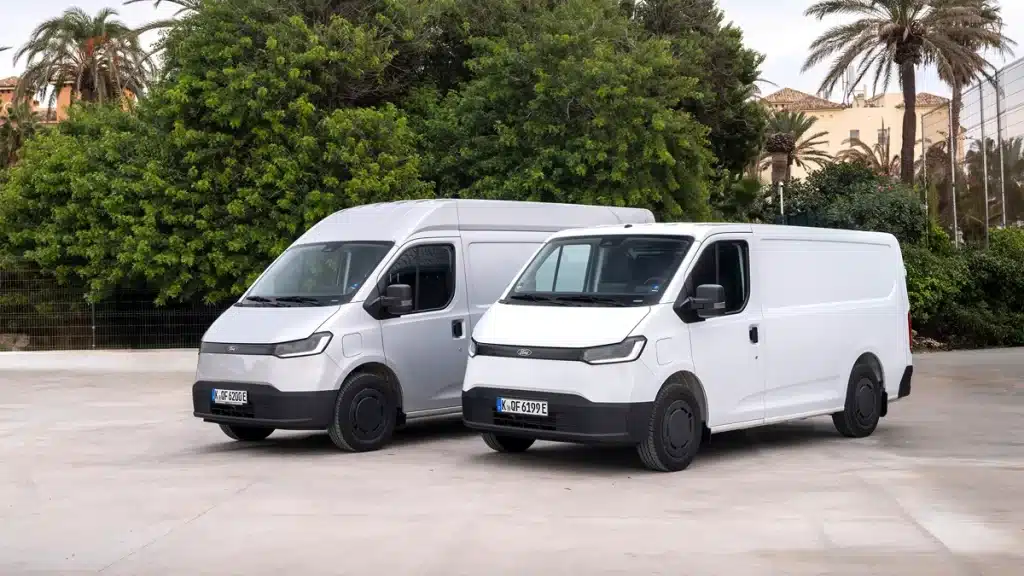
The medium electric Transit City van comes in two sizes, and there’s only one trim level to choose from. It’s a stripped-down version built with a price in mind and a certain type of customer and operation.
Sitting in the Ford van range above the E-Transit Courier for size, but slightly overlapping the Ford E-Transit Custom dimensions, it beats the latter on price, and comes close to matching the smaller van. It is then a medium-sized for small van money, which makes it an ideal solution for fleets looking to electrify without the cost.
Built as part of a joint-venture with Chinese manufacturer JMC, you’d be forgiven for thinking that this is a quick badge-swap exercise carried out by Ford to compete with emerging electric van threats, but the reality is a little more nuanced. JMC has been a partner of Ford’s for more than 30 years. They’ve been building Transit vans under licence in China and have produced more than a million.
Read our guide to the Ford Transit City dimensions
During the launch, one Ford exec pointed out that while the name might be a new one to many, the relationship goes back further than Ford’s dealings with Koch Group, who are now responsible for making much of the Ford commercial vehicle range, in Turkey and Romania. Ford hasn’t simply put its plans for a new van out to tender to snag the cheapest offer to remain competitive. Nor is it a ‘Temu Transit’ as many people have referred to it.

Although made by JMC, in Nanchang, China, Ford says the Ford Transit City development has treated like any other of its products, which means they’ve put in place some strict quality and engineering processes to ensure it meets their own standards. While it’s built on the same platform as the JMC Touring electric vehicle, Ford says there are some fundamental differences.
To start, everything in front of the A-pillars is different, but there’s also a completely new high-volt battery system, and this van is also front-wheel drive only. Ford says it has been specifically designed for the European customer, with ride comfort, safety and ergonomic differences. As a result, Ford reassures us that they’ve fully engineered the Transit City to be worthy of the Ford badge and the Transit name.
With that in mind, it may come as something of a surprise to learn that it doesn’t share any components with the E-Transit Custom. Ford’s best-selling van diesel van, and best-selling electric model, remains entirely separate from the City, which helps to justify the price increase it has over the newest model.
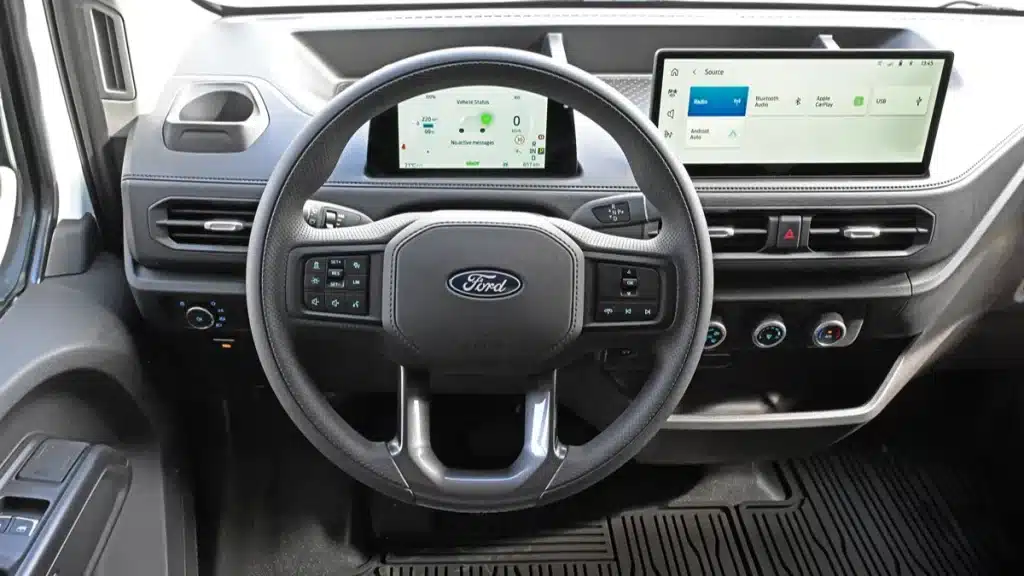
As mentioned, there’s only one trim, which is a cunning strategy used to keep the price down. That means there isn’t an extensive price list and hundreds of options.
In fact, Transit City chief programme engineer Simon Robinson rather neatly summed up the difference to us at the launch by explaining that with the body sizes, colours and chassis model there will be just 21 possible combinations of the Transit City at launch. That he says is “fewer versions than there are steering wheel configurations on a Transit Custom”.
That really does put the new model into perspective compared to what we’ve come to expect from a Transit model, however, that doesn’t mean Ford has scrimped on the content.
Despite its budget friendly aims and fleet-focused customer base, the Transit City gets many of the items you’d find on its mid-level trims.
Most notable is the 12-inch touchscreen, which looks just as good as the screens found in its other vans or pick-ups, with Apple CarPlay and Android Auto connectivity.
There’s also air conditioning as standard, keyless start, front and rear parking sensors, a rear view camera and a heated driver’s seat.
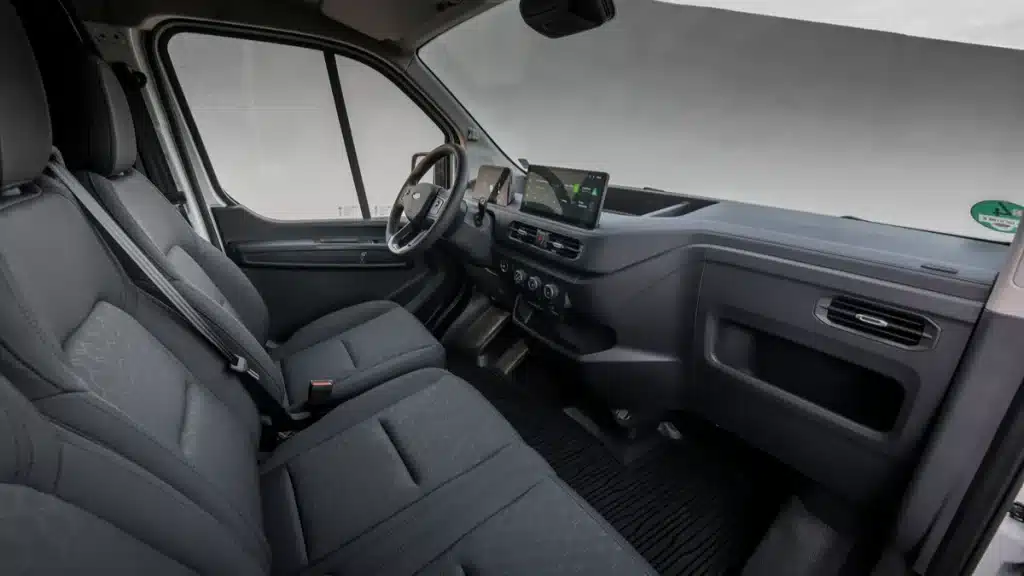
There’s also all the safety systems you would expect as well as adaptive cruise control and lane departure warning.
Transit City is also fully integrated with the Ford Pro connected ecosystem thanks to optional plug-in hardware for fleet management systems, bringing live tracking and telematics to the van to help monitor vehicle status but also manage job tracking and other productivity tools.
The only choice you really have to make for the Transit City is which of the four colours, white, black, blue or silver, you’d like it in.
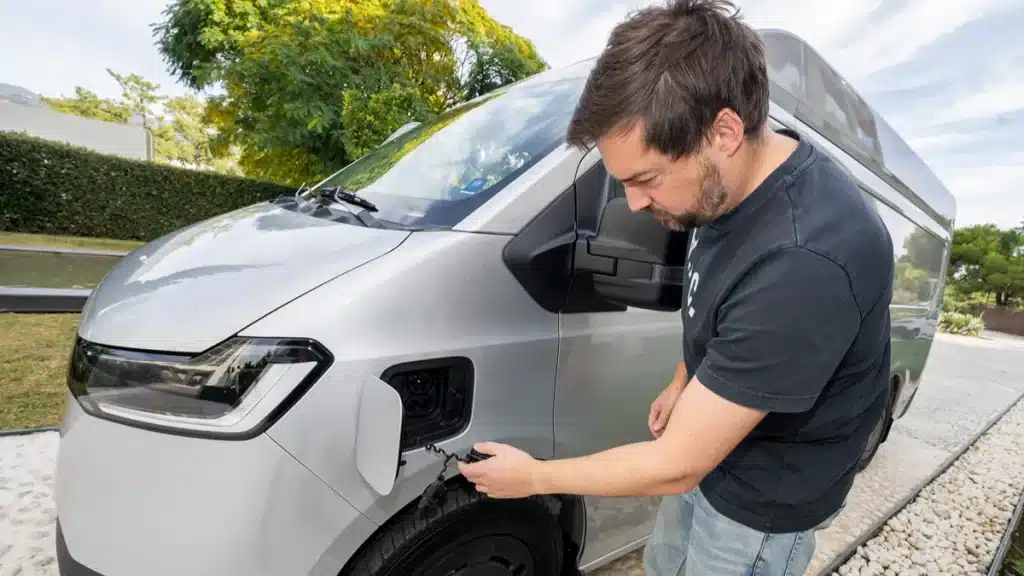
Power comes from a 110kW e-motor which sends power to the front wheels. Batteries take the form of a 56kWh LFP battery, which Ford says will deliver a range of up to 158 miles (254km) range. That’s for the short wheelbase model, while the larger van has a WLTP range of 139 miles (224km).
The batteries for the Transit City are supplied by Chinese manufacturer CATL, and they’re charged using a 400V architecture. That means the Transit City is capable of fast charging using a DC power supply at speeds of up to 87kW.
However, the average is said to be 67kW which means the battery will go from 10% to 80% in 30 minutes. That’s enough for 31 miles of range (50kmw) in around 10 minutes. An 11kW AC charging will take around five hours to charge from 10% to 100%.

Here’s the crucial part about the Transit City, because on paper it’s all about value and TCO, but that’s often not something that is reflected in the driving experience.
We took the Transit City on around 3 hours of continuous driving, covering routes in traffic and on the open highways of southern Spain. There was a 400-450kg payload on board during our rest drive, and we weren’t holding back on the way we were driving.
During that time we tested out the Eco mode, as well as the normal settings – and there’s also a Slippery mode, which wasn’t really appropriate for sunny Spain. There was also brief occasions were we used the dedicated one-pedal driving mode, which we’ll go into in a moment.
A couple of observations from the drive are that it’s surprisingly good on range. Economy in town is pretty decent. We recorded around 3.88 miles per kWh or 16kWh per 100km. That’s not bad for a van with around a 50% payload. There were, however, also moment where the average economy was considerably worse, most notably on highways were the Transit City feels a lot less at home.
The van has clearly been optimised for one-pedal driving to improve efficiency and to help reduce brake wear, it’s regenerative braking is severe, even without the one-pedal function engaged. With the one-pedal mode turned on, though, the Transit City’s regenerative braking is really quite severe, which means it’s quite hard to modulate the throttle and have a smooth drive. While that’s ok when driving along in a city, on a faster road or particularly if you’re a passenger it soon becomes tiresome.
The steering is also lacking in feedback, and feels loose in the first few degrees of turn in. The lack of directness isn’t something you usually associate with Ford vans, as handling and driver feedback are amongst the best you’ll find in the van world.
Driver comfort is compromised slightly by not only a very hard seat, but also by a fixed position steering wheel. You can adjust the seat well to find a good position and we were able to get comfortable relatively easily, but be aware the one-size fits all might not suit everyone.
Those issues aside, the Transit City is surprisingly competent at everything else. Many of its Chinese rivals like the Farizon V7E or the Maxus eDeliver 7 are plagued by slow or buggy software systems. These either render the infotainment screen useless or more often tend to prompt numerous ADAS systems to be far too over zealous.
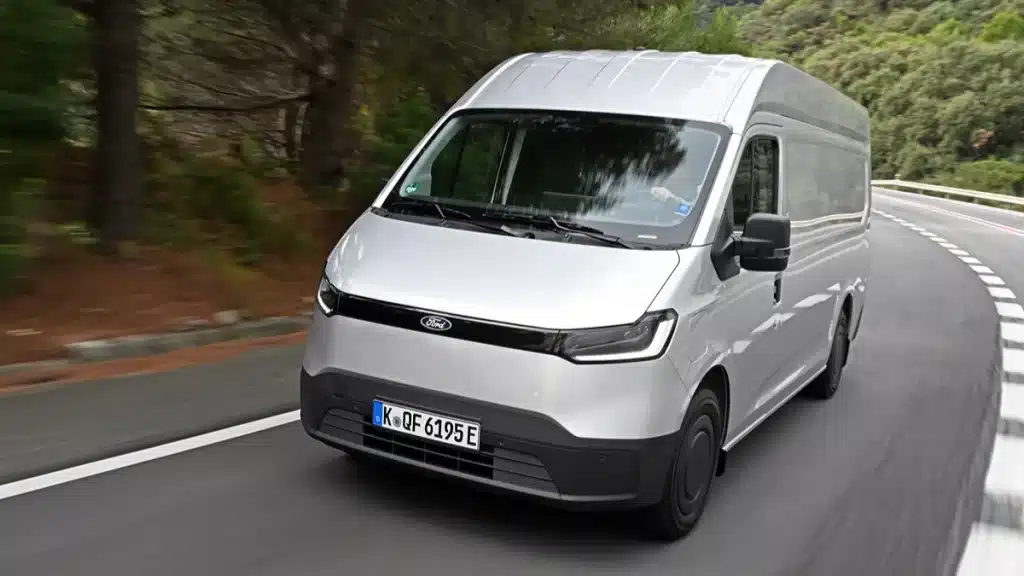
Thankfully the Transit City shows no signs of that. The Lane Departure system is forceful, but not intrusive, and while there’s a habit of warning you that you’re distracted far too quickly than you might like, it does it in a relatively unobtrusive manner. The level of interference and chastisement certainly feels like it’s been dialed back compared to other vans of a similar age that are trying to meet the latest GSR2 safety regulations.
We’d like a grab handle on the A-pillar, and the main passenger seat is a bit narrow, but only because the seatbelt clip angles the buckle back towards you, making it dig into your butt cheek.
Visibility is good all round, and even the cameras and parking sensors work well and without the usual lag you so often find on cheaper vans.
When Ford says it has built a model fit for Europe, it does feel like that’s the case, but perhaps the only true way to find that would would be to drive the JMC original.
Nevertheless, there’s not much of concern, providing you do intend to use it as a city runabout.
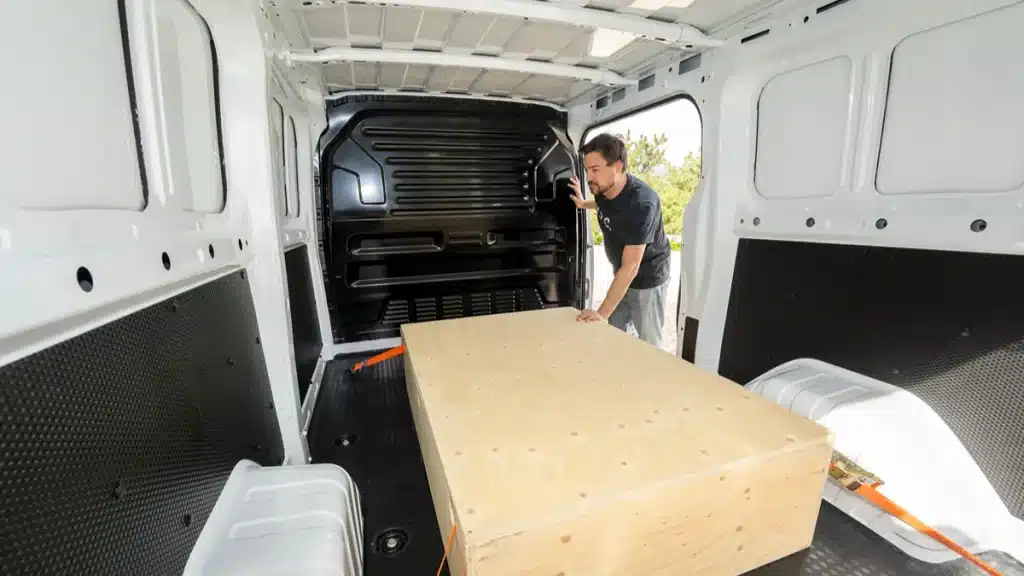
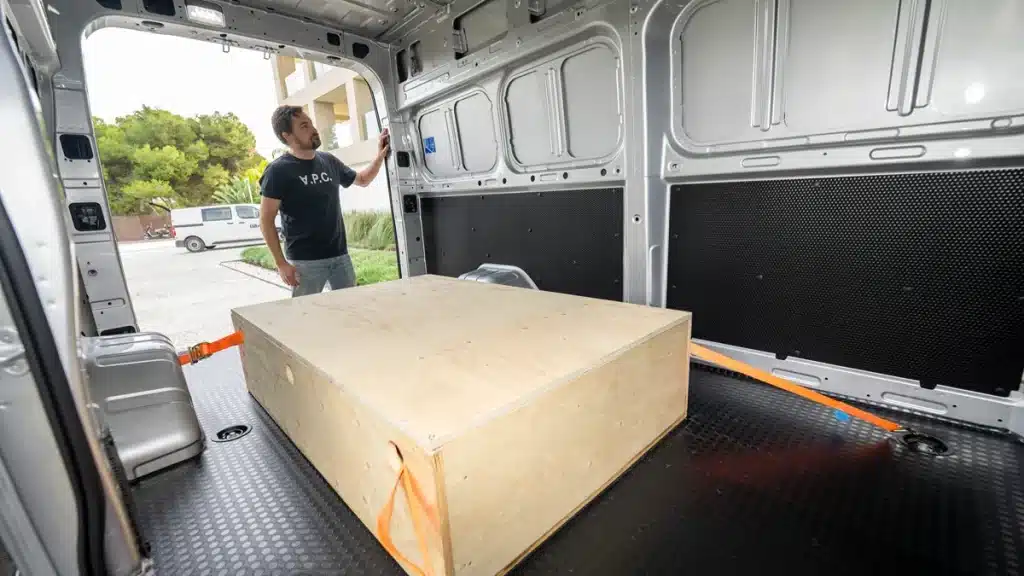
The Transit City is the fifth model in the Transit Range but it sits very much in the middle, both in price and size. Essentially it’s he size of the Transit Custom with a short wheelbase, low roof L1H1 that has a 6.4m3 load space and an L2H2 medium wheelbase, high roof versionthat has an 8.5m3 volume.
Comparing that to an E-Transit Custom which has a load volume range of between 5.8m3 and 6.8m3 due to the fact that it doesn’t have a high roof model.
Read our guide to the best medium electric vans
The bigger van is capable of transporting lengths of up to 3,070mm, while the smaller van has a maximum load length of 2,770mm. It measures between 4,985mm and 5,285mm. The Transit City has a height of between 1,991mm and 2,285mm and all models are 1,885mm wide.
Payload for the Transit City is a maximum of 1275kg for the L2H2, which has a gross vehicle weight of 3.3-tonnes, and 1,085kg for the L1H1 which is a 3-tonne van.
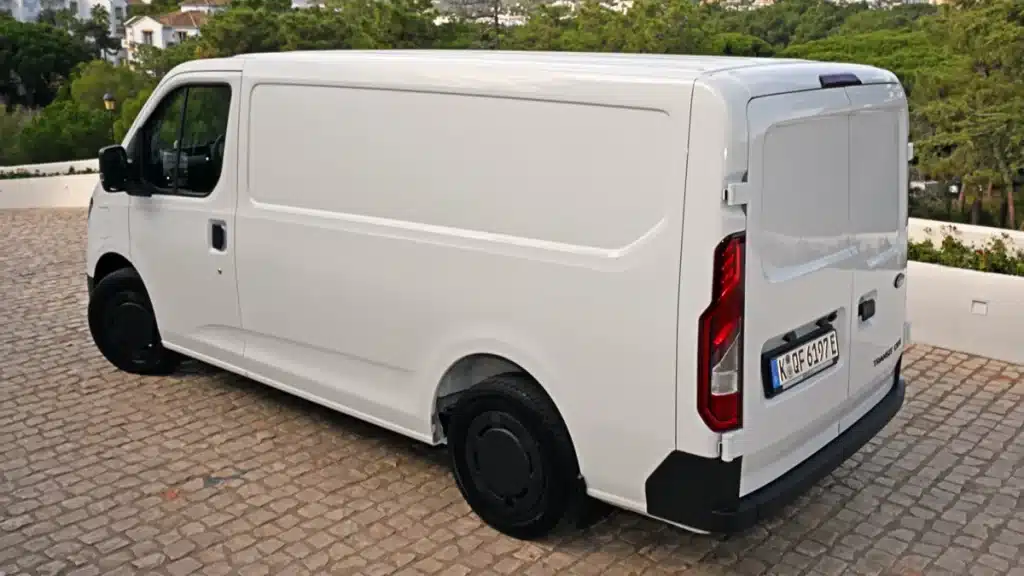
This is where the Transit City proposition gets really interesting. As you can see from above it’s medium van size. In fact, it’s actually a little bigger. But it is definitely small van money.
The Ford Transit City has a starting price of £29,000 at launch, but because it is a medium van there’s also £5,000 to be had off the purchase price. Compare that to a Ford E-Transit Courier which starts at £27,000, but is only eligible for a £2,500 discount., and suddenly the more expensive van becomes the cheaper one.
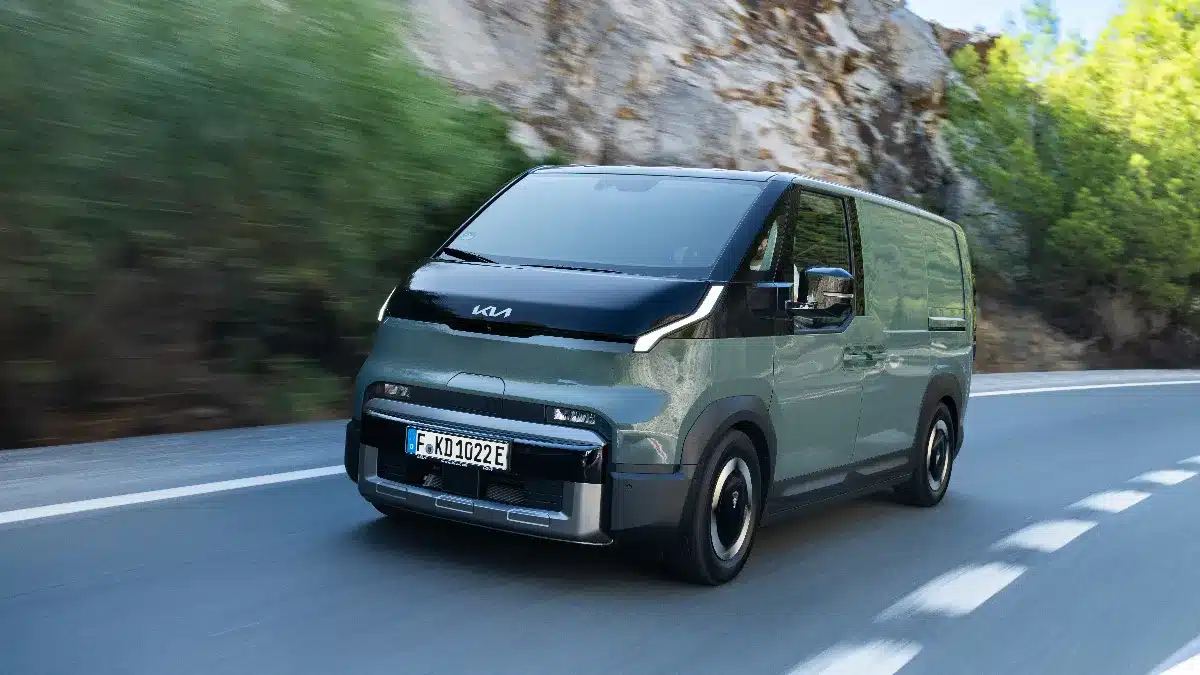
Of course every buyer for a medium van won’t necessarily be considering a smaller van as a direct rival, but when you compare the £24k price to that of a Kia PV5, which is broadly the same size they become much more comparable. The Kia is around £1500 cheaper after the grants, but is fractionally smaller, less usable with its cutaway floor and has a slightly smaller battery.
Transit City beats it for both payload and load length carrying, but the Kia wins comfortably in refinement.
Other competitors include the Farizon V7E, which is more closely matched in size and also fractionally cheaper, but it does suffer from many of those ADAS gremlins we’ve mentioned.
A Ford E-Transit Custom, for your reference, is currently £43,630 for the base model which gets you a smaller loadspace, less payload and smaller range (despite a bigger battery).
When the Transit City was announced, I said the Transit City feels like something a tech company would do, and I stand by that having now driven it.
It’s a cold and calculating product which has filled a price segment in the market that Ford were losing ground in. It’s also pretty basic compared to its other products, but that’s exactly the point.
Ford has done its research and realised its customers don’t need towing capacity on a medium sized city van – the Transit City has no towing rating – and they’ve capped the battery size and trim at the expected norms for a fleet or cost-conscious owner.
The Transit City is a fleet, last-mile delivery van. It will also work nicely in maintenance fleets, and city operators who want a low TCO. The added bonus of their being a chassis cab variant (which we’ll cover in more detail elsewhere) means that the Transit City fits into a market that Ford simply cannot tackle with the vastly more expensive E-Transit Custom.
The chassis cab is not only Ford’s first entry into the electric one-ton chassis cab segment, but the first in the market, which alone will surely secure the Transit City a healthy bank of orders.
The question as to whether or not you should buy one, though, comes down to the simple facts of cost and comfort. A Transit City is cheaper than an E-Transit Custom, more capable, and more productive, but if you want to be able to have some choices, cover a wide range of routes and be more at home in your van, then the Transit City won’t necessarily be for you.
Purely based on the fact that it's not a Transit Custom, the undisputed champion of the segment, the Transit City comes up short. It's far from a bad van though. In fact, it's a very good van in its genre. It's just a segment that few people are currently interested in, and one where a cheap and cheerful van is quite easy to overlook, no matter how accomplished it may be.
How much does the Ford Transit City cost?
The Ford Transit City launched at £29,000 excluding VAT, or £24,000 after the £5,000 plug-in van grant.
What is the range of the Ford Transit City?
Ford quotes up to 158 miles of combined WLTP range for the short, low-roof L1H1 and 139 miles for the longer, high-roof L2H2. Both use a 56kWh usable battery.
How long does the Ford Transit City take to charge?
Ford quotes 33 minutes to charge from 10% to 80% at up to 87kW on a DC charger. A 10–100% charge takes around five and a half hours on an 11kW three-phase AC supply.
How much can the Ford Transit City carry?
The L1H1 has a maximum payload of 1085kg and 6.4m³ of load space. The L2H2 increases those figures to 1275kg and 8.5m³.
Can the Ford Transit City tow a trailer?
The Ford Transit City has no towing rating.
What are the standard features of the Transit City?
How much does it cost to charge a Ford Transit City in the UK?
Ford estimates that a full charge of the Transit City’s 56kWh battery costs around £14 at a depot or £15 at home, based on the UK electricity rates it used. An off-peak home tariff can cut that cost further. The estimates exclude charging losses.
How much could a Ford Transit City save on fuel compared with a diesel van?
Ford estimates that a UK operator could save over £3,500 a year per van by charging at home, or over £4,200 on an off-peak tariff. The comparison uses a diesel Transit Custom and assumes around 16,400 miles of urban driving a year.
Does the Ford Transit City pay the London Congestion Charge?
Yes. With TfL Auto Pay, the Transit City qualifies for a 50% electric van discount, bringing the £18 daily charge down to £9. That saves £2,160 over 240 chargeable days. TfL says the electric van discount will fall to 25% from 4 March 2030.
Is the Ford Transit City cheaper to service than a diesel van?
Ford estimates that servicing and maintenance could cost up to 40% less than for an equivalent diesel van, depending on how it’s used. The Transit City has a two-year service interval with no mileage limit between scheduled services.
How long is the Ford Transit City battery warranty?
Ford covers the Transit City’s high-voltage components for eight years or 160,000km (about 99,400 miles), whichever comes first.