Stellantis has launched a new project called HVO Aurora, designed to help fleets track, verify, and certify their real-world use of Hydrotreated Vegetable Oil (HVO).
HVO is a renewable diesel made from waste cooking oil and animal fats, but the source and sustainability of the fuel has been marred in controversy and scandal. The Stellantis system aims to give businesses transparent proof of their carbon reductions without changing their vehicles or infrastructure.
Born out of Stellantis’ internal Star*Up innovation programme, HVO Aurora provides a cloud-based monitoring tool that records trip distance, fuel type and consumption, and then certifies the use of low-carbon fuel.
“HVO Aurora shows how we can reduce well-to-wheel emissions immediately, using solutions that work with the vehicles our customers already rely on,” said Luca Marengo, head of product and innovation for Stellantis Pro One.
“At Stellantis Pro One, we remain committed to providing practical and scalable ways to help businesses reduce full cycle emissions now. This project is a concrete step forward in building a cleaner future for mobility in Europe.”
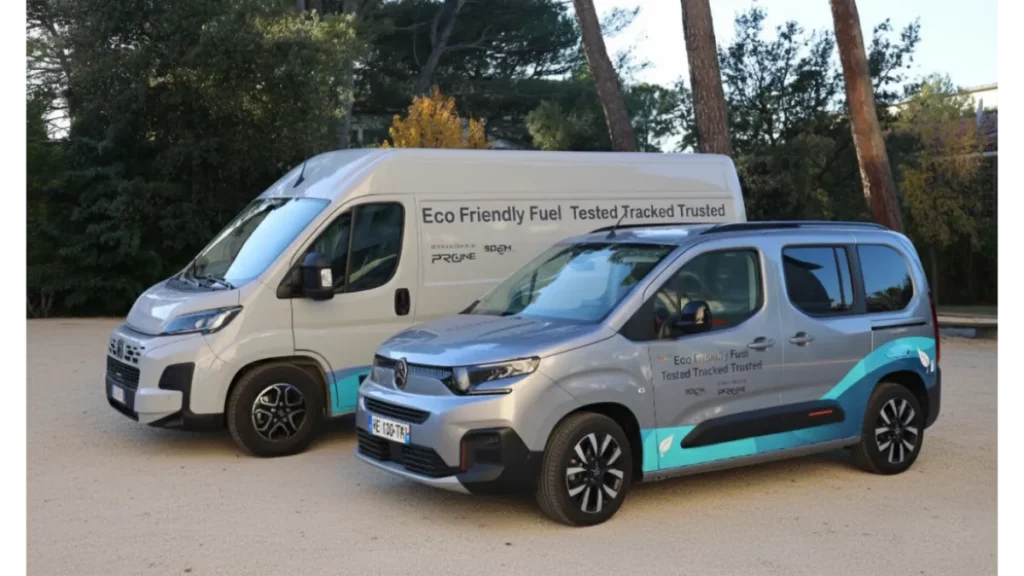
To demonstrate the technology in real-world conditions, Stellantis has launched a European road tour in partnership with French sensor specialist SP3H.
Two vans, a Citroën Berlingo and a Fiat Ducato, have begun a month-long journey across the continent.
Both are equipped with SP3H’s FluidBox Micro sensor, which can identify whether a vehicle is running on HVO and calculate CO₂ savings on the move.
The tour is intended to prove that existing diesel vans can immediately cut emissions using renewable fuel, with no modification required. Data from the FluidBOX platform will be transmitted live throughout the journey.
HVO Aurora sits alongside Stellantis’ electrification strategy as an additional pathway to lower emissions, particularly for light commercial fleets that cannot yet transition electric vans in the short term. All new Stellantis diesel cars and vans are already compatible with HVO fuel under the EN15940 standard, and many Euro 5 and Euro 6 vehicles can also use it without changes.
Stellantis says the project gives businesses a practical way to reduce their environmental impact today, using vehicles they already operate, while providing verifiable data on carbon savings.