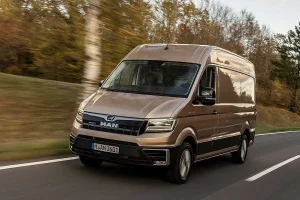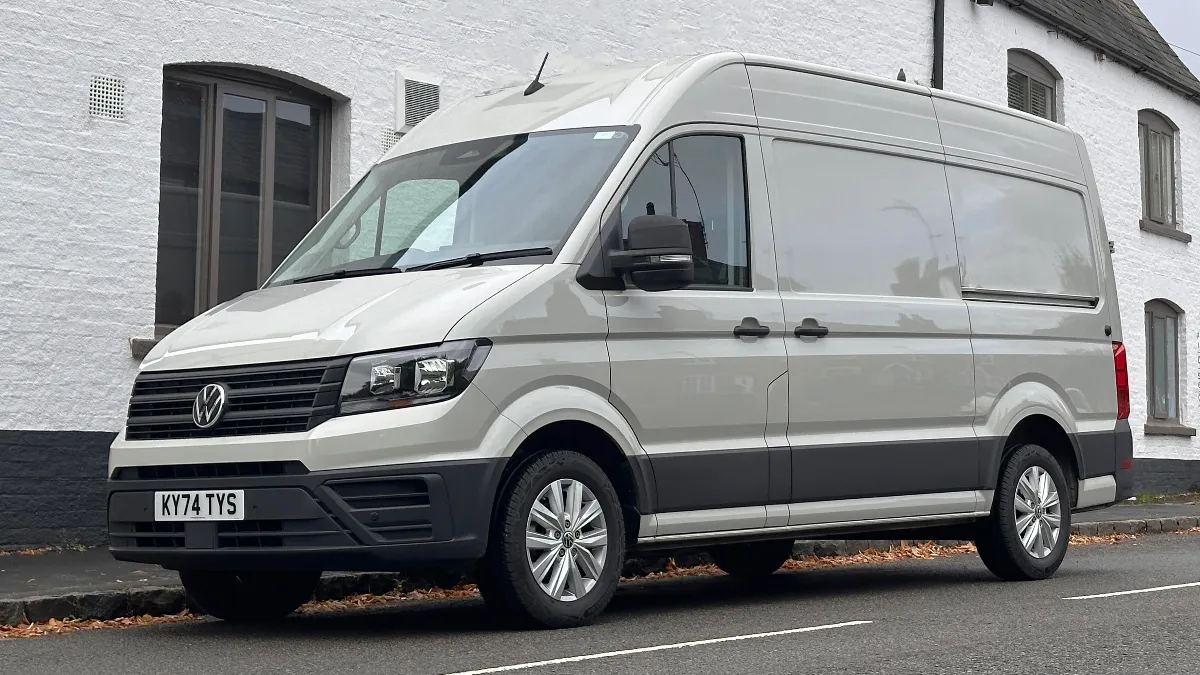
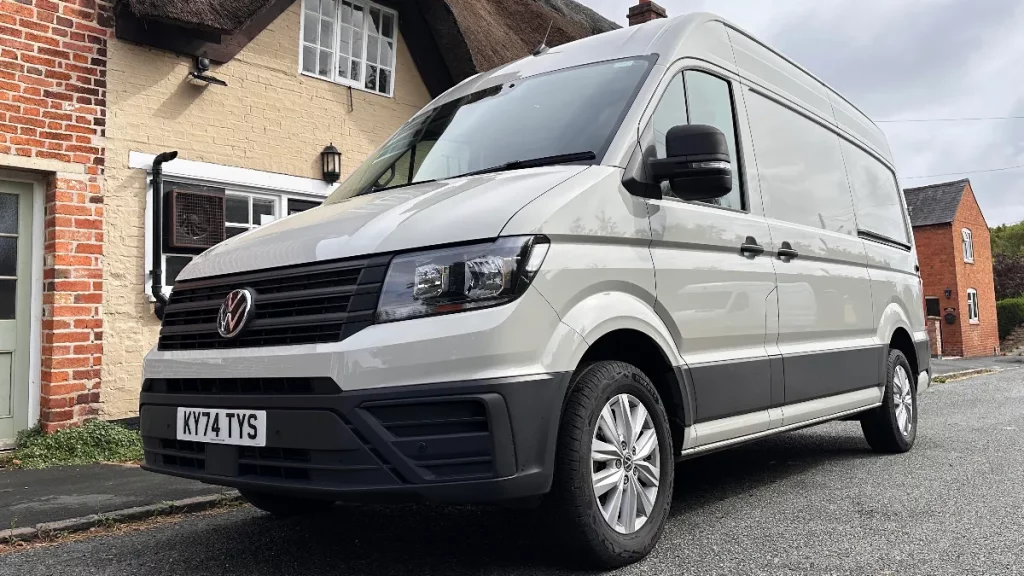
The Volkswagen Crafter is the biggest van in Volkswagen Commercial Vehicles’ line-up and, in many ways, the most complete blank sheet of paper design we've seen for a large van.
Built at Volkswagen’s Września plant in Poland, it was engineered from the outset as a large van rather than adapted from a smaller platform. The result is a product that feels cohesive, robust and crucially it's designed around the needs of professional operators.
In the UK, the Crafter is sold and supported through Volkswagen’s established van dealer network, and that focus shows. This is not a lifestyle derivative or a badge exercise; it is a serious working vehicle designed to compete directly with the Ford Transit, Mercedes-Benz Sprinter and the rest of the large van establishment.
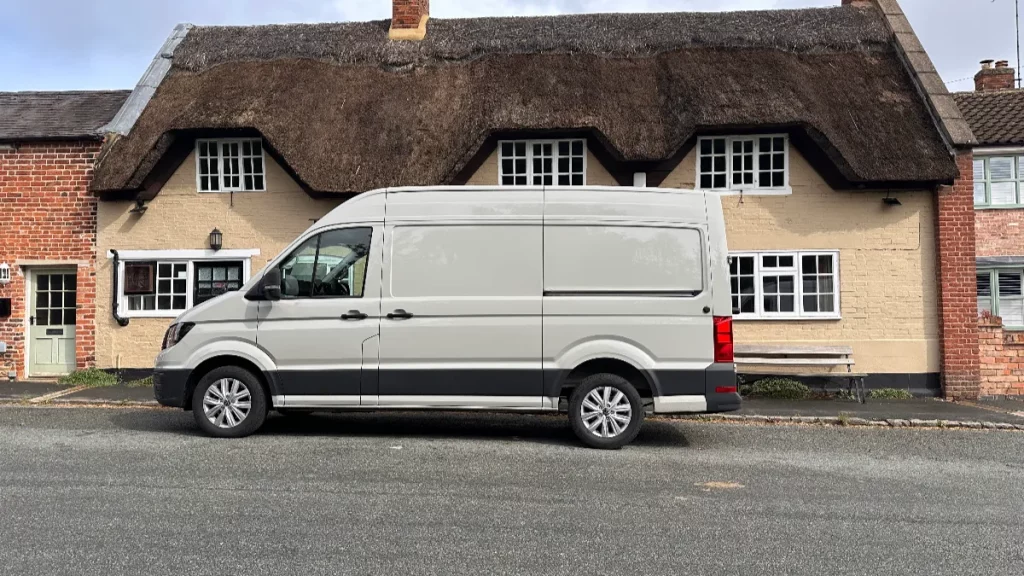
The Crafter panel van comes in three sizes, stretching from just under six metres to nearly 7.4 metres in its longest form.
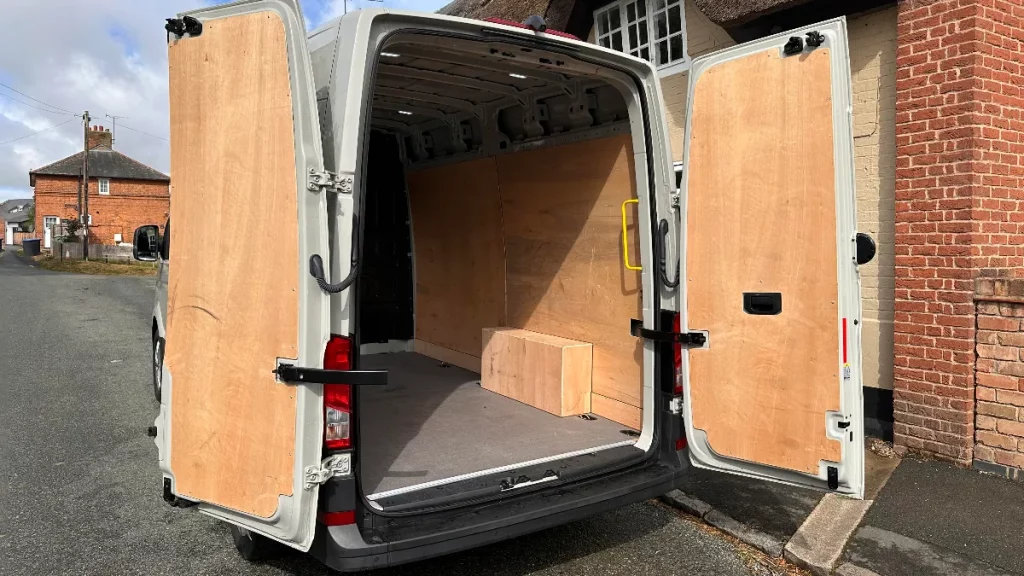
Buyers can choose between two wheelbases and up to three roof heights, culminating in a super high roof version that offers well over two metres of internal standing height. In its largest configuration, load volume exceeds 18 cubic metres, making it suitable for everything from parcel logistics to specialist conversions.
Chassis cab, double chassis cab and platform variants expand its appeal into tipper, dropside and bespoke body applications, while crew van and minibus derivatives ensure the Crafter can carry people as well as freight.
Crafter gross vehicle weights start at 3.0 tonnes and extend up to 5.5 tonnes, depending on specification, with front-wheel drive models typically optimised for payload and load height, and rear-wheel drive or 4Motion versions better suited to heavier-duty applications and towing.
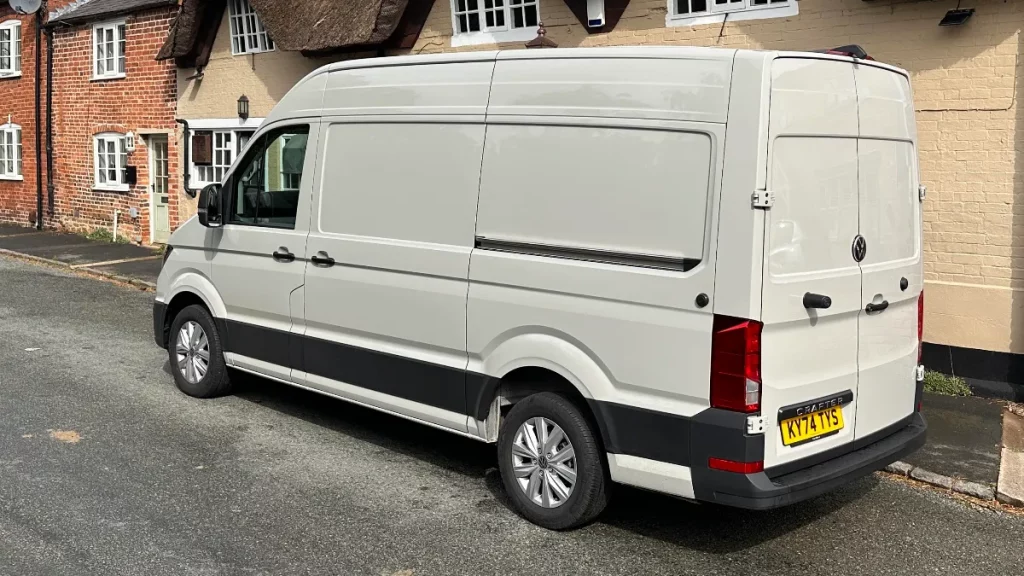
Power comes from Volkswagen’s 2-litre TDI diesel engine, most commonly offered in 140PS and 177PS outputs in the UK. This is the same engine offered in the previous generation of Crafter built from 2017
Lower power versions have been available in previous model years, but current availability should be confirmed with a dealer. Buyers can choose between a six-speed manual or an eight-speed automatic transmission, and between front-wheel drive, rear-wheel drive and 4MOTION all-wheel drive depending on their operational needs.
From behind the wheel, the Crafter remains one of the most refined large vans on sale. The steering is light and accurate thanks to its electromechanical setup, and visibility is excellent.
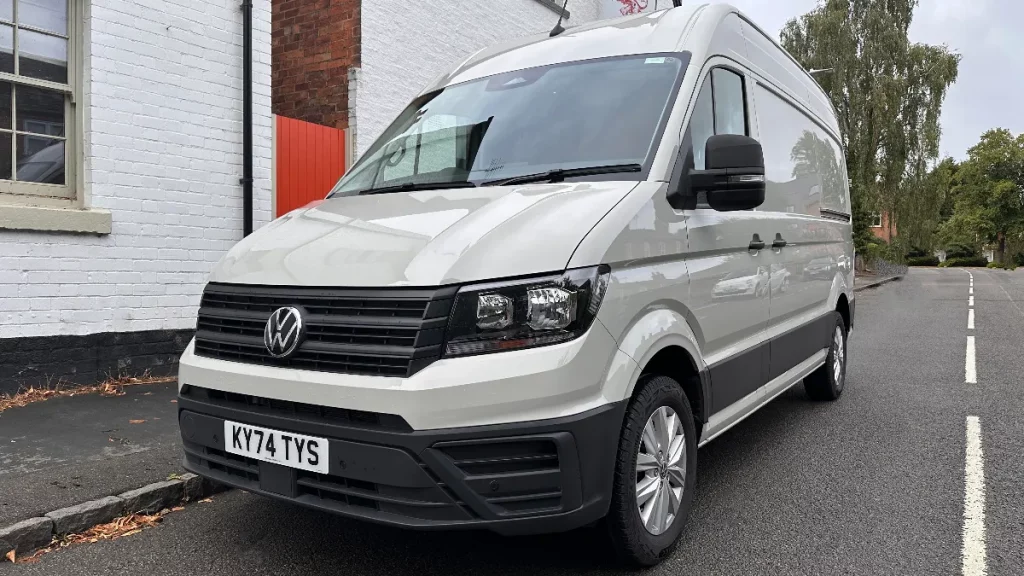
Despite its size, it feels manageable in urban environments and stable at motorway speeds. Engine noise is well suppressed, and vibration levels are low for a commercial vehicle in this class.
The automatic transmission suits multi-drop work particularly well, smoothing progress in heavy traffic and reducing driver fatigue.
Even in high-roof, long-wheelbase form, the Crafter feels composed and predictable rather than unwieldy.
In the UK, the Crafter is typically offered in Startline, Trendline and Highline trims. Specification improves progressively through the range, with higher trims adding upgraded infotainment, additional driver assistance systems and enhanced interior finishes.
Recent updates have modernised the cabin significantly. Depending on specification, the Crafter now features a large central touchscreen, a digital instrument cluster and wireless smartphone connectivity, along with USB-C ports and an electronic parking brake.
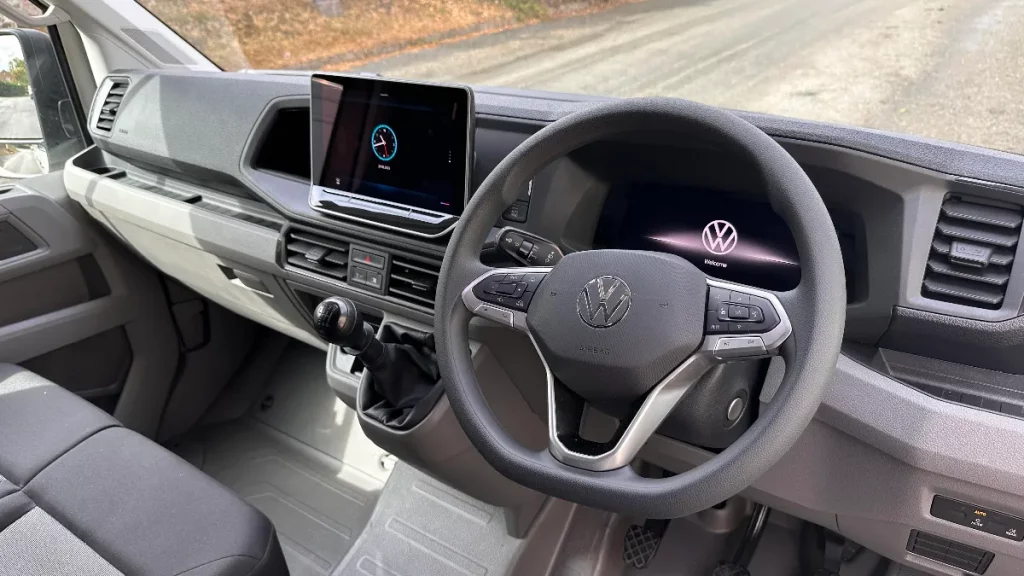
That shift to an electronic handbrake may seem minor, but it modernises the cabin and removes a traditional wear item that fleet managers have long had to factor into running costs.
Storage remains a strong point. There are multiple compartments across the dashboard, in the doors and beneath the seats, and the overall driving environment feels closer to a large SUV than a traditional van.
Electromechanical steering enables a broad suite of advanced driver assistance systems. Autonomous emergency braking, crosswind assist and lane keeping support are widely available, while higher specifications can include adaptive cruise control with Stop & Go functionality, blind spot monitoring, rear traffic alert and trailer assist.
Recent model updates have expanded the ADAS offering further, with additional radar and camera technology enabling more sophisticated semi-automated features.
For long motorway runs or intensive urban delivery cycles, these systems materially reduce driver workload and enhance safety.
Volkswagen previously offered the e-Crafter in limited numbers. A next-generation electric large van is expected later in the decade, but for now, the Crafter range remains centred on diesel power.
The Volkswagen Crafter’s appeal lies in how complete it feels. It combines a broad range of body styles and weight ratings with a refined driving experience and a cabin that would not feel out of place in a modern passenger vehicle.
It is practical without being crude, comfortable without sacrificing durability and technologically advanced without becoming complicated.
The latest interior and safety updates do not fundamentally alter the character of the Crafter, but they sharpen its position as one of the benchmarks in the large van segment.
If you need serious carrying capacity but want a vehicle that is easy to live with day in and day out, the Crafter remains one of the strongest options in the class. It's why we named it as our best large van in the Van Reviewer Awards.