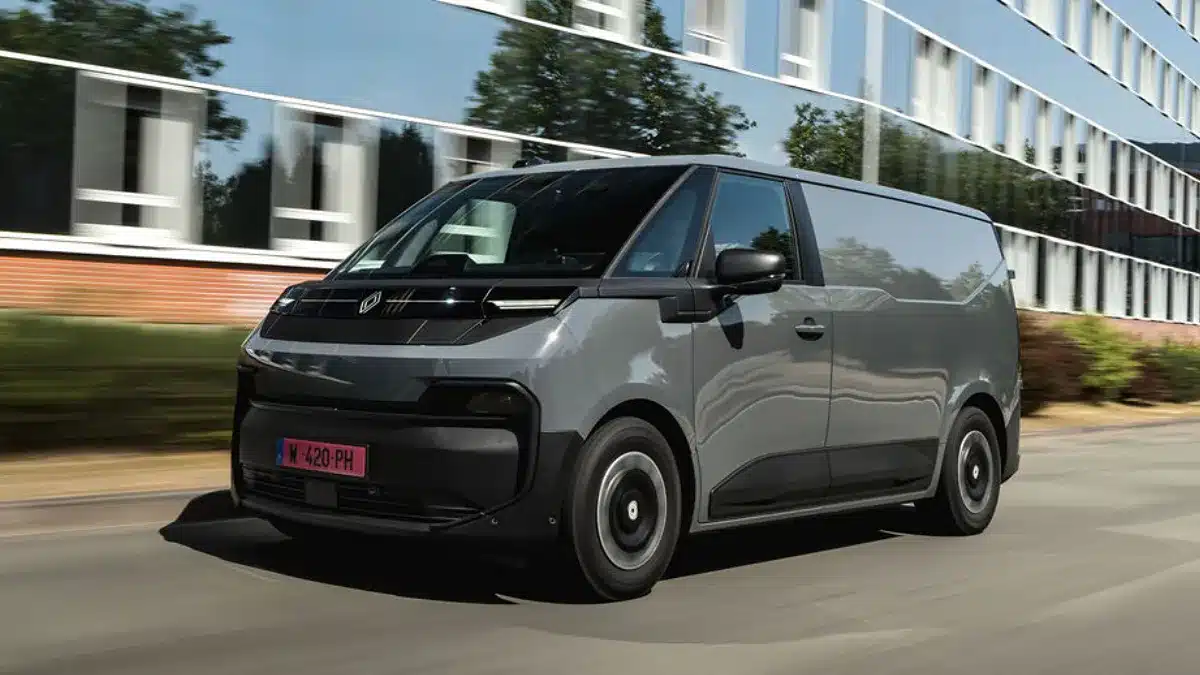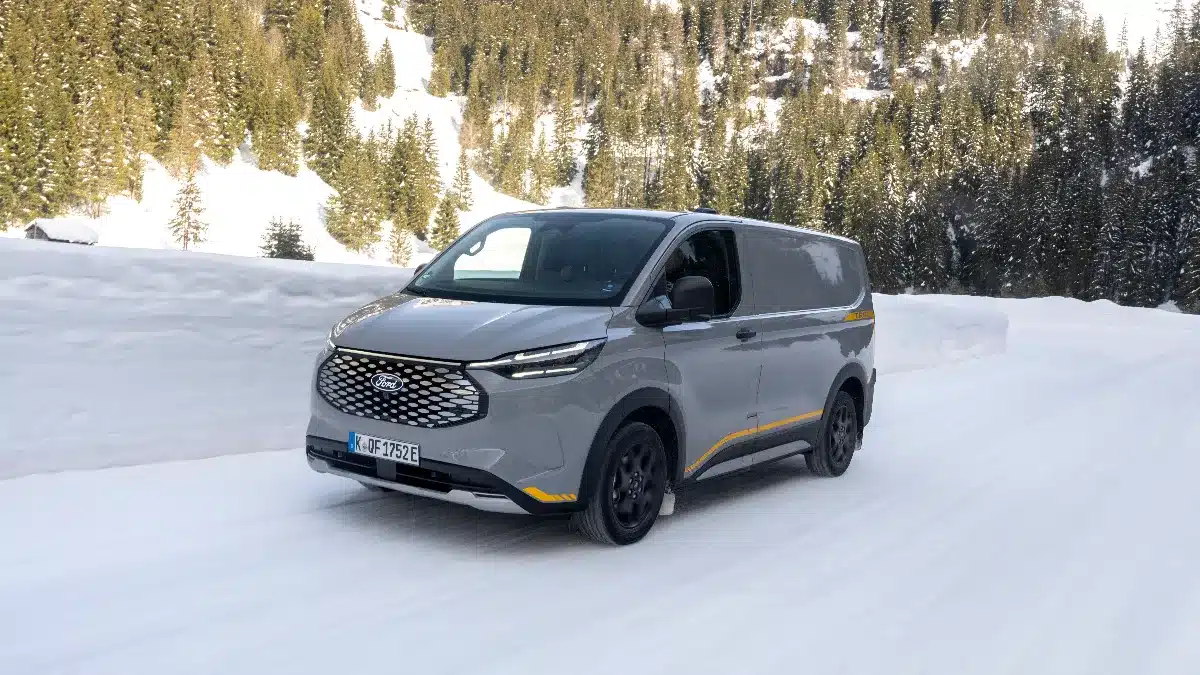
Is the Ford Explorer Van the answer to the car-derived problem businesses never knew they had, and is it a cheap entry-point to an electric van?
Car-derived vans used to be a fairly popular, but still niche corner of the market. There was a Fiesta, a Corsa and we had some Astras and even a few renegade models from Peugeot, but they fell out of fashion as vans got more purposeful and more like cars. Now though, they're making a come back, and the Ford Explorer Van is an interesting extension to the considerably and critically acclaimed Ford van range.
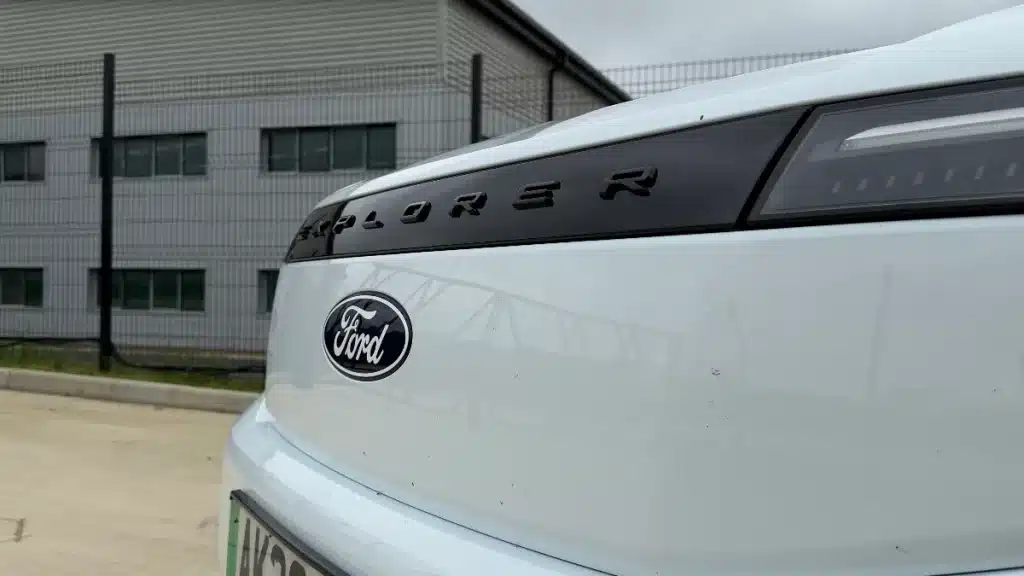
I think it's important to say what the Ford Explorer Van isn't, before we say what it is. So the first thing the Ford Explorer Van isn't is a Transit Van. It's doesn't get the prestige of being a Transit (possibly because its name doesn't beging with a C) but that's probably due to two things.
The most important part is that the Ford Explorer isn't actually made by Ford. It's a shared product with Volkswagen and is built on their MEB platform, like the ID Buzz Cargo and other ID Passenger cars. So it's not a Ford. If it's not a Ford, it's also not been developed as a commercial vehicle, so while it might get the N1 classification that's all important for your tax, VED and BIK - and Ford's green credentials for the ZEV Mandate - it's most definitely not a proper van. So... not a Transit.
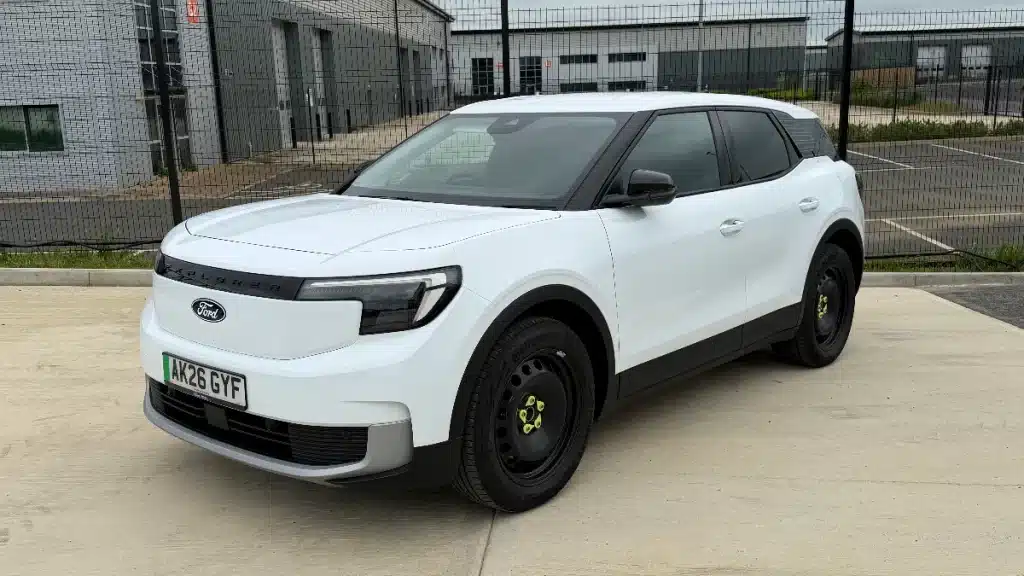
What the Ford Explorer Van is, though, is a very thorough conversion into a van. It's not a half-arsed attempt, which is reassuring.
Previously CDVs were small hatchbacks with the rear seats ripped out and some metal panels welded in. They'd probably have the manaul window winders removed, and there'd be a token suggestion of a bulkhead that had a previous life as an aftermarket dog gaurd from an estate car (remember those?).

They appealed to tradespeople who wanted low running costs and car-like driving manners, but didn't want a rough and ready van on their driveway.
Now though, with the increasing need for electric vehicle sales, OEMs have turned on to this forgotten subsection of the CV world and they're making a comeback. It's a happy coincidence that they're also improving their position under the UK’s ZEV Mandate, in doing so.
Developing a dedicated electric van platform is hugely expensive. Converting an existing electric SUV or hatchback into a commercial vehicle is considerably easier.
The result is a new generation of electric CDVs that are far more sophisticated than the old Fiesta Van or Corsavan formula. Vehicles like the BYD Dolphin Surf Cargo, Citroën ë-C3 Van and Volvo EX30 Cargo are targeting fleets that need limited carrying capacity but plenty of comfort, range and technology.
Even the Škoda Enyaq Cargo has emerged as a specialist fleet solution for operators wanting something more refined than your average electric van.
The Ford Explorer Van is effectively a commercial version of the Volkswagen-derived ID 4 electric car. Or in Ford's world, the Explorer which is a fully rebodied EV.
It is aimed less at delivery drivers and more at engineers, supervisors and infrastructure teams who spend most of the day driving between sites carrying tools, paperwork and specialist equipment.
And after spending time behind the wheel for this test, it feels very much like that brief has been nailed.
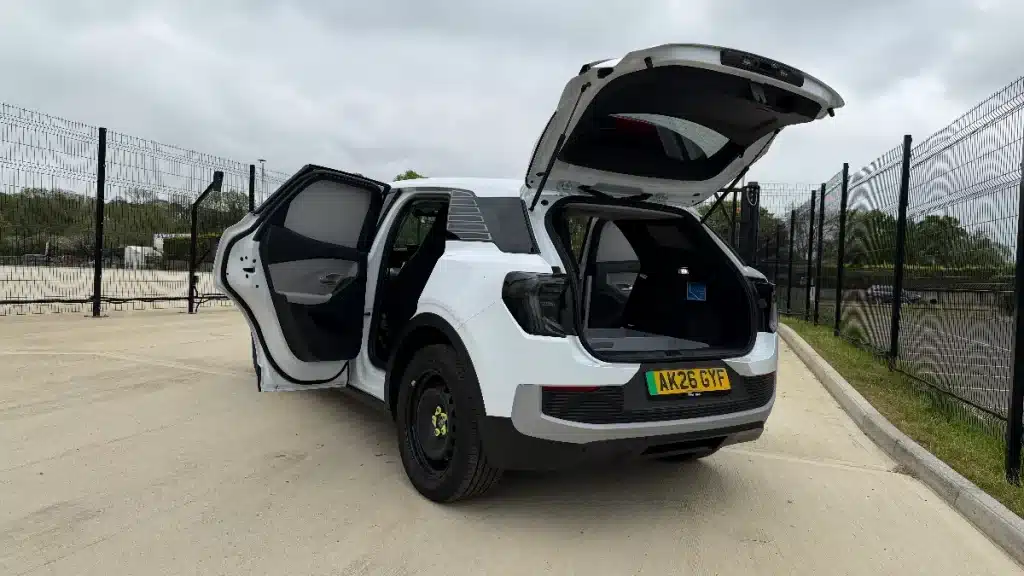
The Explorer Van is based on the all-electric Ford Explorer SUV, itself built on Volkswagen Group’s MEB platform shared with the Volkswagen ID.4 and Volkswagen ID. Buzz Cargo.
Read our Volkswagen ID Buzz Cargo review
This particular version is the 25.75MY 77kWh RWD model. It uses a 77kWh battery paired with a rear-mounted electric motor producing 210kW and 545Nm of torque. An all-wheel drive version is also available with 250kW and 679Nm of torque.
Ford claims a maximum driving range of up to 374 miles, although real-world figures will obviously vary depending on speed, weather and payload.
During this test drive, efficiency while driving sensibly was sitting at over 3.0 miles per kWh, which is respectable for a vehicle of this size and weight.
Read our guide to the Ford Explorer Van battery, range and charging
Unlike many aftermarket conversions, this is a fully engineered in-house product developed by Ford Pro Special Vehicles and converted at Ford’s Dagenham Conversion Centre.
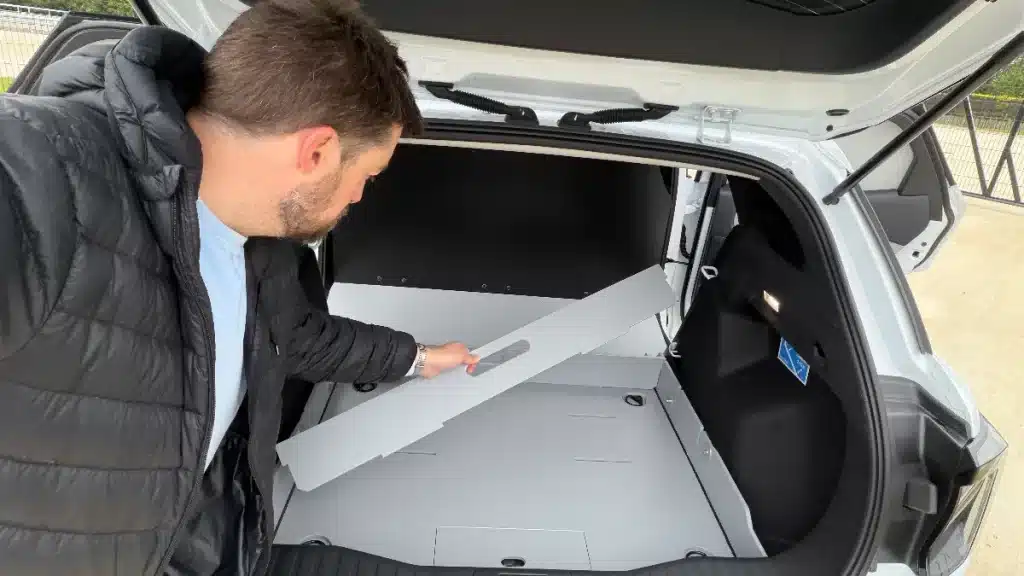
The rear seats are removed and replaced with a flat load floor, moveable dividers, lashing points and a full copolymer bulkhead.
Ford says payload is up to 650kg, while towing capacity reaches 1,000kg for the RWD model and 1,200kg for the AWD version.
The Explorer Van’s cabin immediately feels familiar if you have spent time in Volkswagen’s MEB-based products. In fact, much of the dashboard architecture feels remarkably similar to the ID Buzz.
Ahead of the driver is a small digital display showing speed, adaptive cruise control information and range data, while the centre console houses the large portrait infotainment screen.
The movable centre console is one of the cleverest touches, though. It uses a small release tab, and the whole unit slides backwards and forwards depending on how you are sitting. It sounds gimmicky, but it genuinely works well and makes the cabin feel surprisingly versatile, and helps to reposition the screen to avoid glare.
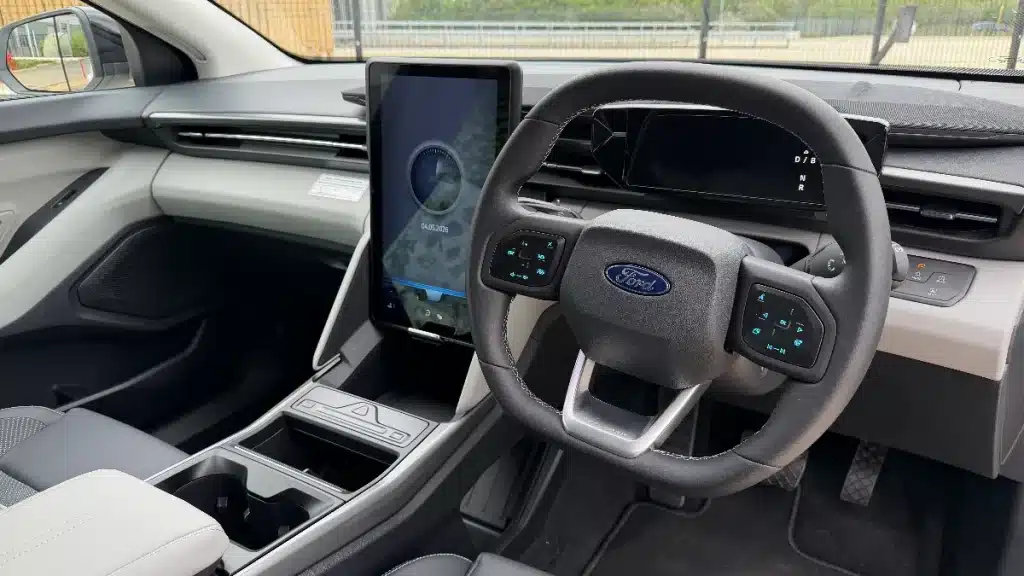
Storage is excellent too. There are twin cup holders, a wireless charging cubby, large door bins capable of holding decent-sized bottles, a generous centre storage compartment with removable trays and a respectable glovebox. Ford’s huge MegaConsole storage area is genuinely useful.
The cabin itself wraps around the occupants in a very car-like way - no surprise there.
The dash almost bends from the doors into the dashboard, giving the interior a cossetting, integrated feel rather than the utilitarian atmosphere you often get in commercial vehicles. You definitely feel like you're in a car, rather than a van, which we guess is the point and appeal.
Seat comfort is excellent. The electrically adjustable driver’s seat moves backwards automatically during entry and exit, making access particularly easy. For operators climbing in and out multiple times per day, that will matter more than you might initially think, but even for lazy people like your author it makes life a little easier getting in and out.
Not everything is perfect though. The reliance on touch controls remain one of Volkswagen Group’s weaker design decisions and something that Ford seems to have been unable to shake in their own iteration. On the steering wheel they are an awkward halfway-house between physical buttons and haptic sliders and they never feel entirely intuitive. They are easily the most frustrating part of the interior experience.
There is also a full-width soundbar-style speaker arrangement across the dashboard which looks visually interesting, although opinions on the styling will probably vary.
Still, overall quality is excellent. This does not feel like a cheap conversion from the driver's seat.
The loadspace and its limited but useful practicality is where the Explorer Van starts to justify its existence.
Yes, fundamentally it is a converted SUV. But the load area is genuinely useful.
Read our Ford Explorer Van dimensions guide
The rear compartment is flat, well finished and intelligently designed. The moveable divider system helps stop smaller items sliding around, while the bulkhead retains a useful viewing hatch that still allows visibility through the rear-view mirror.
That sounds like a trivial detail, but it makes the Explorer Van feel significantly less claustrophobic than some car-derived van conversions.
Optional accessories such as roof racks, protective seat covers and utility-focused storage packs further reinforce the Explorer Van’s intended role as a mobile support vehicle rather than a delivery van.
It's not something you buy to carry loads around in all day. Instead, it's a van for site surveyors and engineers, maybe even the occasional manager who doesn't need rear seats in his company car. You trade modest cargo space for genuine comfort and performance for those that spend long hours behind the wheel. Oh, and don't forget a (small) tax benefit compared to a personal car.
Quite simply, it drives like a car. What a surprise. That's because fundamentally it is one. Shock horror.
The steering is precise, body control is impressive and performance from the 210kW rear-wheel drive setup is quite frankly, rapid. There is loads of power available and acceleration feels brisk despite the additional, minimal, weight of the conversion.
It does feel heavy under braking at times, but that is hardly surprising given the sizeable battery pack underneath. It didn't take long for us to really lose their effectiveness after a bit of spirited driving, but it's not really the sort of vehicle where you'd see that being a major issue.

The weight though is a small downside, but whose ever heard of a light and agile SUV. Ford isn't along in having a frumpy SUV on their hands, as an EV.
Ride comfort is excellent, though and refinement is leagues ahead of most traditional vans. Long motorway journeys or daily commuting between sites would be effortless in this thing.
Regenerative braking is controlled through the familiar VW twist selector, allowing drivers to increase braking regeneration depending on preference, and it works well in taking some of the strain away from those overly worked brakes.
During our test drive, the Explorer Van certainly felt comfortable, composed and genuinely enjoyable to drive. It never really feels commercial vehicle-like in the traditional sense.
Most importantly, the conversion didn't let the side down either. We didn't hear any alarming squeaks, rattles of knocking. In fact the usual hum of the loadspace wasn't even all the great either.

The Ford Explorer Van will not replace a Transit Custom, in fact for most operators it won't even replace the much more comparable E-Transit Courier. But it's not intended to.
It's an alternative. A highly specialised product aimed at fleets and businesses that prioritise comfort, refinement, image and electric range over outright carrying ability. A different product for a different way of life or way of looking at things.
It's a way of electrify company cars while retaining commercial vehicle tax advantages and modest carrying capability to increase its usablilty for a working life.
The conversion quality is excellent, the driving experience is genuinely impressive and the overall package feels thoughtfully engineered rather than rushed together.
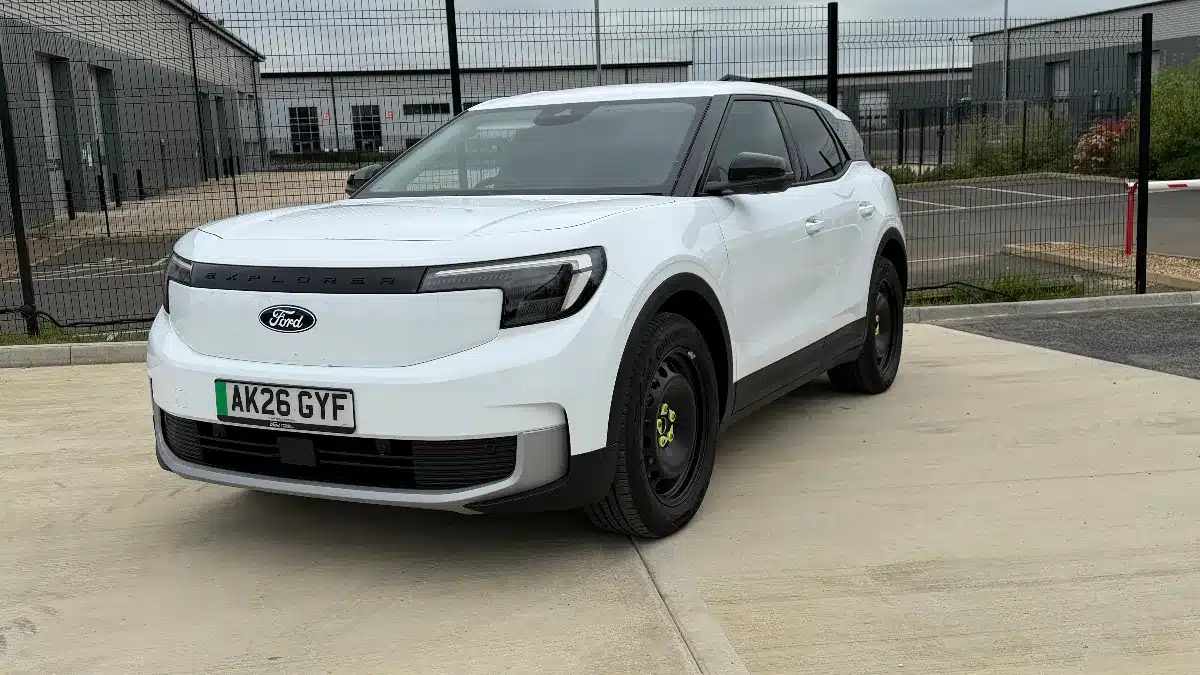
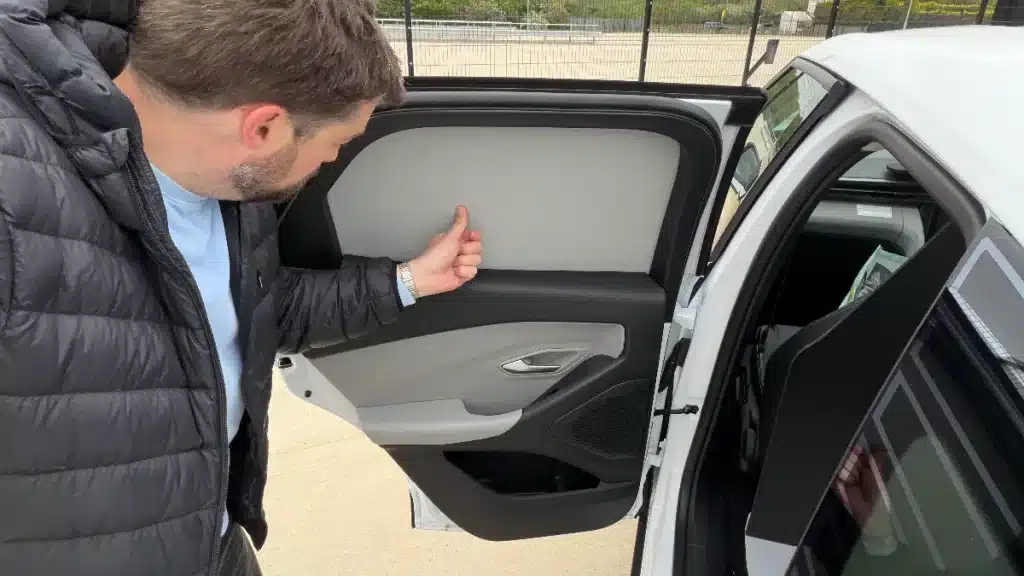
There are still compromises. Payload is modest by van standards and it remains, fundamentally, a converted passenger vehicle. We'd personally prefer a fully integrated panel van appearance rather than retaining the rear side glass, and I'm sure some fleets would look at that as a security concern too, but we shouldn't grumble too loudly about that, as this is after all something of an add-on.
Compared with many previous car-derived vans, this sits right at the top end of the scale in our eyes.
We also like the way it looks honest on steel wheels. It's not trying too hard. It feels well executed and crucially, it understands exactly what it is trying to be
Efficiency is one of the Explorer Van’s strongest attributes, we returned over 3 miles per kWh during real-world driving.
Yes. The rear-wheel drive model can tow up to 1,000kg, while the all-wheel drive version increases towing capacity to 1,200kg.
Ford Explorer Van has a payload of up to 650kg.
The rear seats have been replaced with, a flat load floor and a full bulkhead. The rear windows have also been obscured. Additionally, Ford has added lashing points and a load divider tray.
For the right fleets, absolutely thanks to its long electric range, rapid charging, car-like comfort, usable loadspace and commercial vehicle tax treatment.